A Geopolitical Domino Effect: Oil, Fertilizer, and the Next Inflation Wave
When One Conflict Sends Ripples Through the Global Economy Ever notice how the biggest economic shocks rarely start in financial markets? Sometimes they begin in places most investors barely think about—shipping lanes, fertilizer factories, or a narrow stretch of ocean that…
When One Conflict Sends Ripples Through the Global Economy
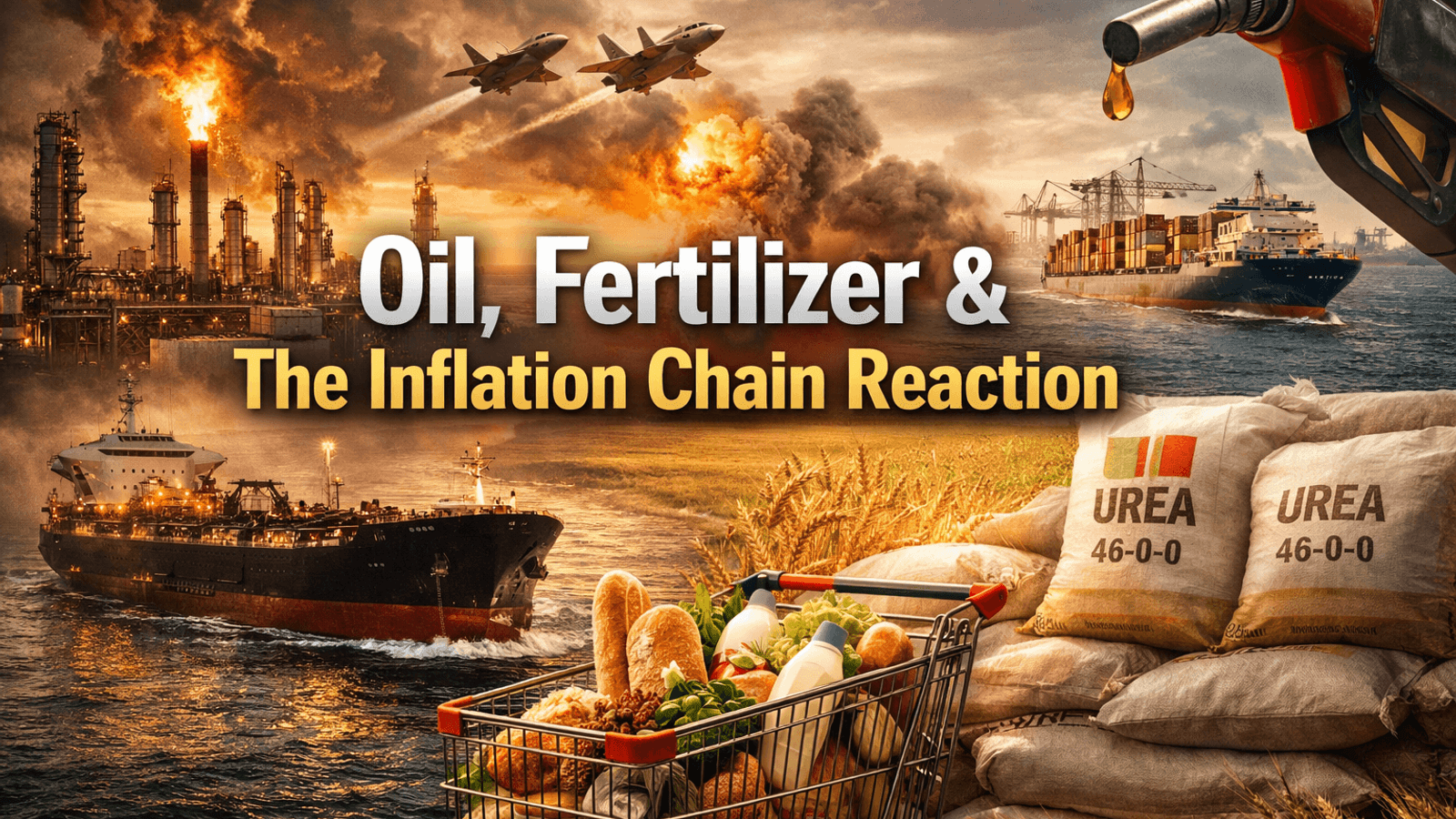
Ever notice how the biggest economic shocks rarely start in financial markets? Sometimes they begin in places most investors barely think about—shipping lanes, fertilizer factories, or a narrow stretch of ocean that suddenly becomes the most important piece of real estate on Earth. Recent geopolitical tensions involving the United States, Israel, and Iran have reminded markets of a simple truth: global trade runs through fragile arteries. When pressure builds in one corner of the world, oil prices react, shipping routes change, and eventually grocery bills feel the impact. For investors, the real story isn’t just a military confrontation. It’s the economic domino effect quietly unfolding behind it—one that connects energy markets, global supply chains, fertilizer production, and food prices. Understanding how those pieces interact can help you read market signals long before they appear in earnings reports.
Energy Markets React First: Why Oil Prices Spike Quickly
Energy markets tend to respond instantly when geopolitical risk appears near critical trade routes. One location dominates the conversation: the Strait of Hormuz, a narrow maritime corridor connecting the Persian Gulf to global shipping lanes. Roughly 20% of the world’s oil supply passes through this channel, making it one of the most strategically sensitive trade routes on the planet. When security concerns increase in the region, energy traders waste no time reacting. Oil prices recently surged above $100 per barrel, a level that quickly grabs the attention of policymakers and investors alike. Higher oil prices ripple outward through the economy. Transportation costs increase. Manufacturing expenses climb. Airlines, shipping companies, and logistics firms suddenly face tighter margins. Inflation, which many central banks hoped was cooling, can quickly reheat when energy costs rise. In other words, oil rarely stays an isolated story. Smart Capital Signal: Periods of energy volatility often highlight opportunities in energy producers, oil infrastructure firms, and commodity-linked investments, while industries heavily dependent on fuel may experience short-term pressure.
Shipping Routes and Supply Chains Start Adjusting
Energy markets move fast. Supply chains move slightly slower—but the effects can last longer. Airlines and cargo companies have rerouted flights away from sensitive airspace across the Middle East. Shipping firms navigating the Persian Gulf are adjusting routes and insurance policies as security concerns rise. Those detours add time and cost to global trade. Manufacturers depend on a tightly choreographed system of shipping schedules, raw material deliveries, and port logistics. Even small disruptions can create delays across industries ranging from electronics to fashion manufacturing. Several companies have already reported interruptions affecting industrial metals, chemical components, and manufacturing inputs. After years of pandemic-related supply disruptions, businesses had only recently begun to stabilize their logistics networks. A geopolitical shock introduces yet another unpredictable variable. Supply chains, after all, thrive on stability—not uncertainty. Tactical Insight: Companies with diversified sourcing, regional manufacturing hubs, and resilient logistics networks tend to outperform during supply disruptions. Businesses dependent on narrow shipping corridors often face higher operational risk.
The Overlooked Link: Fertilizer and Agricultural Costs
Energy shocks often dominate headlines, but agriculture quietly sits at the center of the economic chain reaction. Fertilizer production depends heavily on both energy prices and international shipping routes. Several essential fertilizer components—including urea, ammonia, and sulfur—travel through shipping corridors connected to the Middle East. When transportation risks rise, fertilizer supply can tighten. Higher fertilizer prices eventually reach farmers around the world. Farmers facing increased costs must adjust planting decisions, fertilizer usage, or crop prices. That’s where the next domino appears. Food prices. Agricultural economists often describe the process as a slow transmission mechanism: higher fuel costs, tighter fertilizer supplies, increased farming expenses, and, eventually, rising grocery prices. Developing economies tend to feel the effects more quickly because food represents a larger share of household spending. Food inflation rarely arrives overnight. But when it appears, it tends to linger. Investor Radar: Companies involved in fertilizer production, agricultural technology, irrigation systems, and crop optimization often gain strategic importance when fertilizer markets tighten, and food security concerns rise.
The Economic Chain Reaction Investors Should Watch
Geopolitical tensions rarely impact just one market. Energy disruptions affect transportation. Transportation influences fertilizer supply. Fertilizer costs shape agricultural production. Agricultural production affects food prices and inflation. Each link connects to the next. Economists describe such scenarios as systemic economic shocks, in which a single event triggers multiple secondary effects across industries and regions. Markets sometimes underestimate these chain reactions early on. Investors focused solely on oil prices might miss the broader macro story unfolding across supply chains and agriculture. Watching the entire system—energy, logistics, fertilizer, and food—offers a clearer picture of where inflation pressures may emerge next. Strategic Lens: Rather than reacting to geopolitical headlines alone, experienced investors focus on structural themes such as energy security, resilient supply chains, and global food systems. Those trends often shape investment landscapes long after headlines fade.
When Global Systems Shift, Investors Pay Attention
Markets love predictability. Geopolitics rarely provides it. Modern economies depend on physical infrastructure—shipping lanes, pipelines, fertilizer supply chains, and transportation networks. When disruptions occur within those systems, markets adjust quickly. Energy shocks, supply chain shifts, and agricultural costs rarely coincide. They form part of a broader economic ecosystem. Understanding the ecosystem helps investors interpret global events with greater clarity. Short-term volatility often dominates headlines. Long-term structural shifts, however, tend to create the most meaningful investment opportunities. Occasionally, the most important financial signals aren’t coming from stock exchanges or central banks. They’re coming from oil tankers, fertilizer shipments, and the narrow waterways connecting the global economy.
Sources
- Reuters – Global business disruptions linked to Middle East conflict
- Euronews – Economic risks tied to the Iran war and global markets
- Business Insider – Fertilizer and food inflation risks linked to shipping disruptions
- S&P Global – Agriculture market analysis on fertilizer and fuel supply risks
- The Guardian – Supply chain vulnerabilities and global food security risks
Market Munchies and Mode Mobile communications are for informational purposes only and are not a recommendation, solicitation, or research report relating to any investment strategy, security, or digital asset. All investments involve risk, including the loss of principal, and past performance does not guarantee future results.
Any information contained in this commentary does not purport to be a complete description of the securities, markets, or developments referred to in this material. The information has been obtained from sources considered to be reliable, but we do not guarantee that the foregoing material is accurate or complete. There is no guarantee that any statements or opinions provided herein will prove to be correct.