Big Bets, Bigger Bots: Why Apple, Palo Alto, and South Korea Are Reshaping the AI Battlefield
🧠 Is AI Leaving the Cloud Behind? Why Apple, Cybersecurity Giants & Robot Nations Are Betting on Real-World Intelligence Investors chasing the next AI wave are often looking up—toward the cloud, the models, and the data centers. However, where is the real source of…
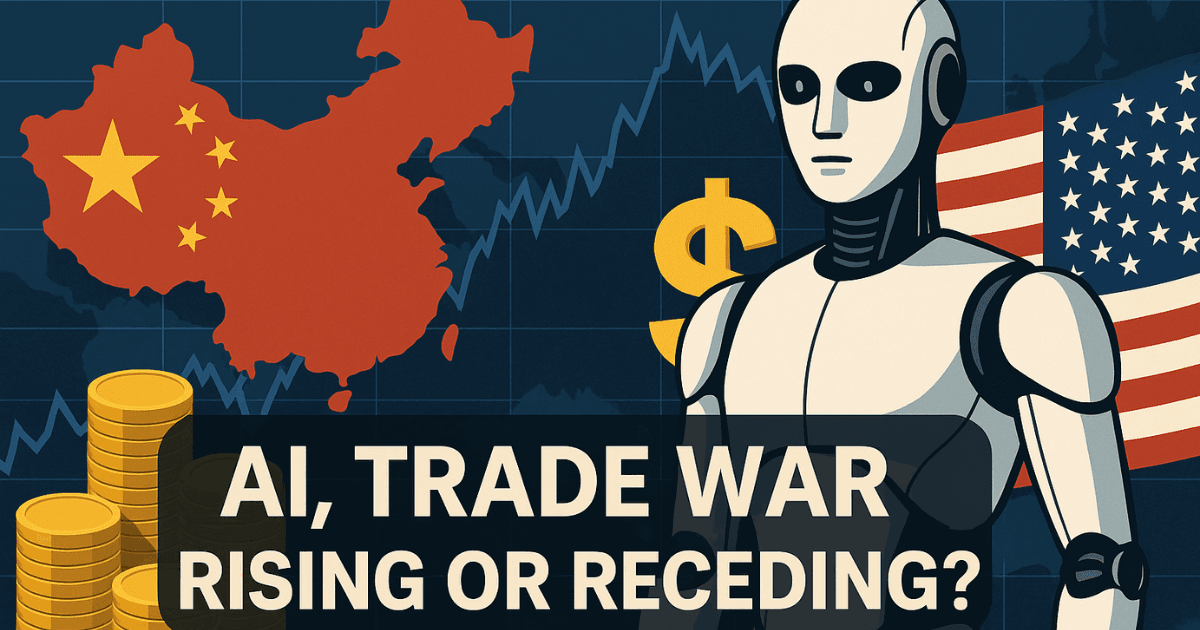
🧠 Is AI Leaving the Cloud Behind?
Why Apple, Cybersecurity Giants & Robot Nations Are Betting on Real-World Intelligence Investors chasing the next AI wave are often looking up—toward the cloud, the models, and the data centers. However, where is the real source of intelligent investment? It’s quietly shifting its focus to where AI interacts with physical systems: phones, factories, firewalls, and even humanoid limbs. In the latest flurry of moves, Apple, Palo Alto Networks, and even South Korea’s government are making bold plays—not for clicks, but for control. Your devices are under your control. They aim to gain control over your enterprise's digital identity. In the case of Korea, this includes gaining control over a future robotic workforce. The topic isn’t sci-fi—it's capital strategy. From tariff-squeezed iPhones and $25B cybersecurity megadeals to national humanoid moonshots, the race is no longer just about smarter algorithms—it's about who can physically deploy intelligence at scale. Let's explore the key strategies that are reshaping the AI landscape, and understand why the future may not lie in code, but rather in the realms of bodies, bots, and borders.
🍽️ Appetizer of Disruption: Apple’s AI Hunger Grows as Hardware Fatigue Bites
Apple is no stranger to high-stakes narratives, but recent developments have intensified the pressure on its growth story. With its stock down 16% year-to-date and U.S. iPhone demand visibly cooling, the market’s appetite for something—anything—new from Cupertino is rising fast. The $900 million tariff exposure tied to Chinese-assembled products is slicing into margins like a chef with a new set of knives. On the hardware front, innovation fatigue is a real concern. Consumers are no longer lining up for incremental iPhone upgrades. But what's the real twist? Apple may be prepping a quiet pivot toward AI supremacy. Reports suggest Apple is in talks to acquire Perplexity.ai, a search engine startup valued at around $2 billion. If true, this move signals Apple’s ambition to move from AI follower to contender, injecting new life into its Apple Intelligence platform—and possibly replacing Siri’s outdated DNA.
"We're entering an era where on-device intelligence will define premium user experiences," hinted an Apple exec during WWDC.
📌 Smart Capital Signal: Investors shouldn’t focus solely on iPhone sales. The AI stack, especially on-device capabilities paired with privacy optics, may become Apple’s next flagship product line—just without the packaging.
🔐 Firewall Frenzy: Palo Alto Goes All-In With $25B CyberArk Grab
When cybersecurity giant Palo Alto Networks announced its all-stock acquisition of CyberArk for a whopping $25 billion, jaws dropped—especially those watching sector valuations and margin pressure. The deal is about more than scale. It’s a direct attempt to build a Microsoft-level unified security ecosystem, one that merges endpoint defense, privileged access, identity, and AI-based threat modeling. The companies framed it as a necessary leap into AI-first cybersecurity orchestration, where the battlefield is no longer network perimeters—it’s identity. Still, not all investors are convinced. The stock took a 4% dip following the announcement, reflecting concerns over integration, overlap, and potential dilution.
"We’re not just adding capabilities—we’re re-architecting the entire fabric of cyber defense," said Palo Alto’s CEO during the merger call.
Tactical Insight: Despite the looming risks of M&A indigestion, this deal could equip Palo Alto with the necessary power to compete in the competitive arena of AI-integrated enterprise defense, a field dominated by established players such as CrowdStrike and Microsoft.
🤖 Rise of the Robot Realists: AI-Powered Robotics Is Now Infrastructure, Not Hype
Forget the dancing humanoids and novelty gadgets. AI-powered robotics has entered a new era—one defined not by spectacle, but by infrastructure-grade utility. According to a SiliconANGLE commentary, today’s robotics are being integrated into critical systems such as shipping, utility management, and infrastructure automation, closely tied to stablecoin-like programmable money systems. In simple terms? Robots aren’t just doing tasks—they’re following rules set by smart contracts. South Korea’s bold move underscores this shift. The government has launched the K-Humanoid Alliance, a national moonshot aimed at producing a 60 kg humanoid robot with a 20 kg lift capacity, a speed of 2.5 m/s, and over 50 joints by 2028. Backed by ₩2 trillion (~ USD 1.5 billion), the alliance integrates academia, industry, and public funding into a synchronized humanoid mission. And for more intuitive control? Researchers have unveiled a Meta Quest 3-based voice-driven AR system that enables humans to control robotic avatars in real-time—hands-free, simply by speaking. 📌 Investor Radar: This isn’t robotics-as-sideshow—it’s robotics-as-sovereign-asset. Expect a new wave of capital investment in robotics infrastructure, AI-robot symbiosis, and telepresence tools, particularly in regions experiencing demographic decline and labor shortages in the industrial sector.
🧠 Closing Bite: The Real AI Arms Race Isn’t Just Digital
The Battle for Intelligence Is Getting Physical Apple wants your pocket. Palo Alto wants your cloud. South Korea wants your future workforce to have joints, limbs, and government funding. While the world remains fixated on tokens, chatbots, and models, these three headlines reveal a deeper shift: AI is moving into the physical, regulated, and infrastructural layers of society. From consumer hardware to national robotics moonshots, the race is no longer about who builds the smartest bot but who deploys them first, fastest, and most effectively. For savvy investors, this means watching not just software companies but also those creating the pipes, platforms, and policies that enable AI to move from code to consequence. Capital is starting to reward AI embodiment—in devices, robots, and integrated systems. Those late to this flavor of the AI boom may find their portfolios a bit... undercooked.
🔍 Sources
Market Munchies and Mode Mobile communications are for informational purposes only, and are not a recommendation, solicitation, or research report relating to any investment strategy, security, or digital asset. All investments involve risk including the loss of principal and past performance does not guarantee future results.
Any information contained in this commentary does not purport to be a complete description of the securities, markets, or developments referred to in this material. The information has been obtained from sources considered to be reliable, but we do not guarantee that the foregoing material is accurate or complete. There is no guarantee that any statements or opinions provided herein will prove to be correct.