China Accuses U.S. of Stealing 127,000 Bitcoin: Who Really Owns the $13 Billion Stash?
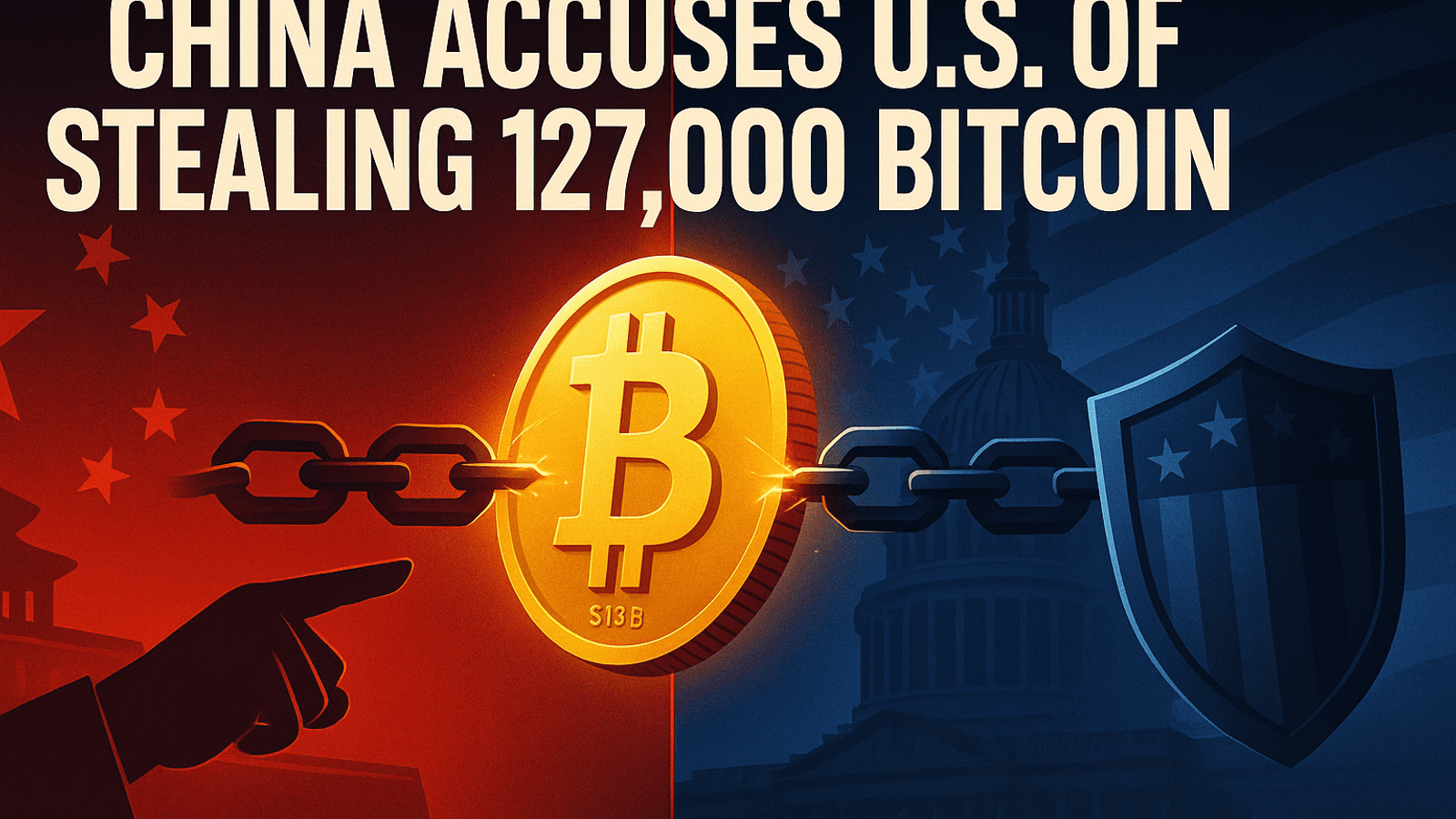
🚨 China's Explosive Accusation Against the United States China's National Computer Virus Emergency Response Center has accused the U.S. government of orchestrating what it calls a state-backed theft of over 127,000 bitcoins from the LuBian mining pool in December 2020. The…
🚨 China's Explosive Accusation Against the United States
China's National Computer Virus Emergency Response Center has accused the U.S. government of orchestrating what it calls a state-backed theft of over 127,000 bitcoins from the LuBian mining pool in December 2020. The accusation, amplified by Global Times, claims American agents stole digital assets now worth approximately $13.1 billion at current prices. This marks the first time China has directly accused Washington of cryptocurrency theft, transforming what appeared to be a routine cybercrime investigation into a geopolitical flashpoint. For investors watching U.S. bitcoin holdings, the dispute raises fundamental questions about asset legitimacy and government transparency. The timing is particularly sensitive given Trump's recent executive order prohibiting the sale of government-held bitcoins, which could include these contested funds.
⏱️ The Timeline: How 127,000 BTC Disappeared
The LuBian mining pool began operations in April 2020 and quickly captured a 6% share of global hashrate, making it the sixth-largest mining operation worldwide. On December 28, 2020, an unidentified attacker executed a brute-force hack, draining 127,272 bitcoins representing 90% of LuBian's total holdings. The stolen funds, worth $3.5 billion at the time, sat untouched in attacker-controlled wallets for nearly four years before moving to U.S. government addresses in June 2024. According to Arkham Intelligence's investigation, desperate messages sent from LuBian representatives to the attackers between 2021 and 2024 begged for fund returns and offered rewards. For mining pool operators and their users, the case highlights the catastrophic risks of inadequate security infrastructure in an industry where millions can vanish within hours.
⚖️ U.S. Claims Criminal Proceeds, Not State Theft
The Department of Justice tells a dramatically different story. In October 2025, the DOJ announced criminal charges against Chen Zhi, chairman of the Cambodia-based Prince Group, claiming the organization operated forced-labor scam compounds conducting pig butchering fraud schemes. According to the DOJ indictment, only 30% of funds held by LuBian originated from legitimate bitcoin mining, while the remainder came from wire fraud and money laundering operations. The U.S. characterized the 127,000 BTC forfeiture as the largest in history and part of a broader crackdown on Southeast Asian scam operations that cost Americans at least $10 billion in 2024. For retail investors, the DOJ's narrative suggests these bitcoins funded criminal enterprises that specifically targeted U.S. citizens through sophisticated cryptocurrency investment scams.
🔓 The Security Flaw That Enabled the Hack
Technical analysis reveals LuBian's vulnerability stemmed from catastrophically weak private key generation. Security researchers at MilkSad discovered the mining pool used the Mersenne Twister pseudorandom number generator initialized with only a 32-bit seed, creating effective entropy of merely 32 bits. According to technical analysis, a standard gaming computer could brute-force these weak keys within days, not years. Over 5,000 wallets were compromised using this vulnerability, similar to the CVE-2023-39910 flaw found in Libbitcoin Explorer. For protocol developers and mining operations, the incident demonstrates how fundamental cryptographic failures can override all other security measures, making proper entropy sources non-negotiable for protecting digital assets worth billions.
🏦 Impact on U.S. Strategic Bitcoin Reserve
The disputed bitcoins significantly impact America's cryptocurrency holdings strategy. President Trump's March 2025 executive order established a Strategic Bitcoin Reserve and explicitly prohibited selling government-held bitcoins, consolidating previously scattered assets across agencies into centralized storage. According to Arkham Intelligence data, the U.S. now controls approximately 325,000 BTC worth over $37 billion, including the 127,272 contested coins. However, the DOJ traditionally recommends returning forfeited assets to verified victims, as evidenced by plans to return 94,000 BTC stolen from Bitfinex to the exchange. For traders analyzing government bitcoin supply dynamics, the key question becomes whether these coins remain permanently locked in reserve or eventually flow to restitution claims, potentially creating unexpected market supply.
🎯 Conclusion: Geopolitical Crypto Warfare
The LuBian bitcoin dispute represents more than a disagreement over stolen cryptocurrency. It marks the first direct accusation of state-sponsored crypto theft between major powers, elevating digital assets to instruments of geopolitical leverage. China's domestic cryptocurrency ban contrasts sharply with its aggressive pursuit of bitcoin ownership claims, while U.S. enforcement actions increasingly target international crypto crime networks. Investors face heightened uncertainty as government transparency around digital asset holdings remains limited, with no official public ledgers confirming exact amounts or legal statuses. The outcome will establish precedent for how nations adjudicate cross-border cryptocurrency ownership disputes and whether forfeited assets become strategic reserves or victim restitution. For market participants, the case underscores growing sovereign interest in bitcoin as geopolitical tensions transform cryptocurrency from purely financial instruments into tools of international power struggles and state competition.
Sources
https://crypto.news/china-says-the-u-s-stole-lubians-127000-bitcoin-who-does-the-stash-actually-belong-to/ https://www.globaltimes.cn/page/202511/1347745.shtml https://crypto.news/lubian-suffers-silence-arkham-uncovers-crypto-hack/ https://www.justice.gov/usao-edny/pr/chairman-prince-group-indicted-operating-cambodian-forced-labor-scam-compounds-engaged https://news.futunn.com/en/post/64629432/technical-traceability-analysis-report-on-the-lubian-mining-pool-hack https://ixbroker.com/blog/u-s-governments-bitcoin-holdings-estimated-at-325000-btc-not-327000-data-shows/