Crypto's Place in Retirement Accounts Sparks Fierce Debate After $2 Trillion Wipeout
💥 Market Crash Reignites Fiduciary Concerns Bitcoin's brutal 50% plunge from its October peak has wiped out over $2 trillion in market value and thrust crypto's role in retirement savings back into the spotlight. The violent selloff has industry observers questioning whether…
💥 Market Crash Reignites Fiduciary Concerns
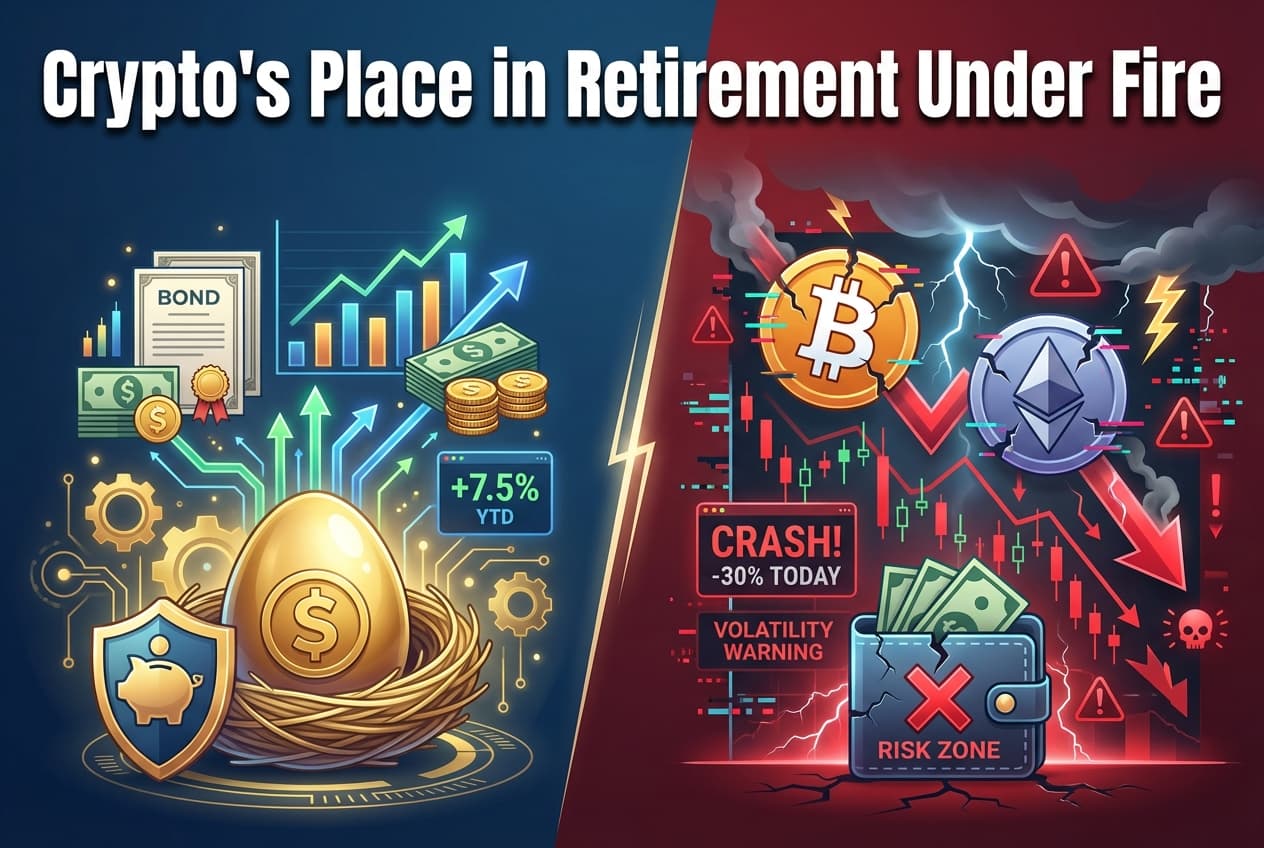
Bitcoin's brutal 50% plunge from its October peak has wiped out over $2 trillion in market value and thrust crypto's role in retirement savings back into the spotlight. The violent selloff has industry observers questioning whether volatile digital assets belong in America's $12.5 trillion 401(k) market, which was designed for stability and long-term wealth building. Lee Reiners, a lecturing fellow at the Duke Financial Economics Center, made the stakes clear. "401ks exist to help people save for a secure retirement, not gamble on speculative assets with no intrinsic value," he said. The timing is particularly awkward given recent regulatory momentum toward crypto adoption. Just last week, SEC chair Paul Atkins declared the time is right to open retirement markets to crypto, mere days before the latest brutal selloff began. For retirement plan sponsors and fiduciaries already navigating complex legal obligations, the crash represents a stark reminder of the risks inherent in digital assets.
⚖️ Trump Order Opens Door, Legal Risks Remain
President Donald Trump's executive order in August 2025 cleared the way for 401(k) and other defined-contribution plans to access alternative assets, including digital currencies. The order marked a dramatic policy shift, especially after the Department of Labor rescinded its 2022 guidance that had urged fiduciaries to exercise "extreme caution" with crypto investments. However, the regulatory green light doesn't eliminate fiduciary responsibility. Plan sponsors remain bound by ERISA's core duties of prudence, loyalty, and diversification, regardless of what Washington permits. Reiners pointed out that many retirement plans already have indirect crypto exposure through major equity indices that include companies like Coinbase. "Unless Congress changes the law, plan sponsors are unlikely to include crypto, or ETFs, as plan options because they don't want to be sued by their employees," he explained. The legal landscape remains treacherous for employers considering direct crypto offerings. For any companies that were contemplating adding digital assets to their 401(k) lineups, recent market events have likely triggered serious reconsideration.
📉 Volatility Makes Retirement Planning Treacherous
The fundamental problem with crypto in retirement accounts comes down to volatility versus stability. Traditional retirement investing relies on buy-and-hold strategies with assets like the S&P 500, which typically sees major swings only during Black Swan events like the 2008 financial crisis or COVID-19 pandemic. Even then, robust regulatory frameworks and government intervention help protect investors. Crypto operates in a different universe entirely. Weekend price swings can evaporate billions in value with no regulatory backstops or circuit breakers to halt the bleeding. The recent market rout proved this point dramatically. BlockTrust IRA, an AI-powered retirement platform that added $70 million in IRA funds over the past year, was caught in the selloff despite its sophisticated analytics. "Sometimes we look at things that we say, 'you know what, we should get out,' and sometimes we don't. And last week, we did not get out as quickly," Chief Technical Officer Maximilian Pace admitted. The confession underscores a hard truth for retirement savers. Even professional managers with advanced tools struggle to navigate crypto's extreme price action, making it a questionable fit for accounts meant to fund decades of post-work life.
🎲 Long-Term Perspective Versus Speculation
Despite the volatility concerns, some industry figures argue crypto can work in retirement accounts if approached with the right mindset and time horizon. BlockTrust's Pace advocates thinking like a venture capitalist rather than a day trader when it comes to 401(k) crypto allocations. "You would be better thinking like a venture capitalist rather than like a day trader," Pace said. "There are ways of de-risking the investment, either from a time perspective or from a strategy perspective, that make it more attractive or more acceptable for things like 401(k) programs." His firm's Animus Fund outperformed bitcoin throughout 2025, posting 27% gains from January to December while bitcoin buy-and-hold strategies were down 6% to 13% over the same period. The performance suggests active management and longer time horizons might mitigate some crypto risk. However, the counter-argument remains compelling. Retirement accounts represent many Americans' primary financial lifeline, and exposing that capital to an asset class barely over a decade old carries profound consequences. The debate divides even financial professionals with fiduciary duties to clients.
🔗 Blockchain Technology Offers Alternative Path
Perhaps the more promising application of blockchain in retirement isn't buying volatile tokens at all, but rather using the technology to revolutionize how retirement accounts are managed. Robert Crossley, Franklin Templeton's global head of industry and digital advisory services, envisions a future where onchain wallets hold tokenized assets instead of speculative cryptocurrencies. The retirement industry is siloed, slow-moving, and over-regulated, Crossley argues, creating fragmentation that leaves individuals juggling multiple providers for saving, investing, and spending. Blockchain-based tokenization could consolidate these activities into programmable digital wallets that give users direct control. "When something becomes tokenized, it becomes software. That software can be an asset, but it also could be a benefit, it also could be a liability. It could be a whole 401(k)," Crossley explained. This approach would leverage blockchain's transparency and efficiency without requiring retirement savers to bet on bitcoin's next move. Major financial institutions are already exploring this path. The Depository Trust Company received SEC authorization in December 2025 to tokenize select assets, with production expected by mid-2026. For investors, tokenization represents a way to capture blockchain benefits while avoiding crypto's notorious price swings.
🎯 Conclusion: The Future Hangs in Balance
The brutal crypto selloff has exposed the tension between innovation and prudence in retirement investing. While Trump's executive order and regulatory shifts have opened the door to crypto in 401(k) plans, recent market chaos demonstrates why fiduciaries remain hesitant. The legal risks of exposing employees' retirement savings to extreme volatility remain substantial, regardless of political winds. For investors, the debate highlights two distinct paths forward. Direct crypto allocations may appeal to those with high risk tolerance and long time horizons, but they remain unsuitable for the majority of retirement savers who need stability above all. The more promising route involves blockchain technology itself through tokenized traditional assets, which could modernize retirement infrastructure without the speculation. Plan sponsors weighing these options face a stark choice. They can maintain conservative strategies with indirect crypto exposure through equity indices, or they can embrace blockchain innovation through tokenization rather than volatile tokens. Given the ongoing market turbulence and potential litigation exposure, most fiduciaries will likely stick with caution until crypto matures considerably or regulations provide clearer liability protections.
Sources
https://www.coindesk.com/business/2026/02/06/crypto-s-eligibility-for-401k-retirement-is-under-fire-after-brutal-market-rout-wipes-out-usd2-trillion https://www.pillsburylaw.com/en/news-and-insights/us-department-labor-crypto-guidance-401k-plan-fiduciaries.html https://www.cnbc.com/2026/01/14/elizabeth-warren-warns-of-crypto-risks-in-401ks-what-investing-pros-say.html https://www.dtcc.com/digital-assets/tokenization
Market Munchies and Mode Mobile communications are for informational purposes only, and are not a recommendation, solicitation, or research report relating to any investment strategy, security, or digital asset. All investments involve risk including the loss of principal and past performance does not guarantee future results.
Any information contained in this commentary does not purport to be a complete description of the securities, markets, or developments referred to in this material. The information has been obtained from sources considered to be reliable, but we do not guarantee that the foregoing material is accurate or complete. There is no guarantee that any statements or opinions provided herein will prove to be correct.
Get fresh insights, breaking news, and hidden gems in the world of crypto—delivered straight to your inbox with our Crypto Cookies newsletter. Don't miss out—sign up now and get your first bite of insider knowledge!