Emerging Markets Are Cracking First—But the Real Inflation Story Is Bigger Than Oil
🍽️ Why Your Next Inflation Shock Might Already Be Cooking Ever wondered why global inflation trends never hit all economies at the same time? Developed markets debate rate cuts and soft landings. Meanwhile, you’re watching a different movie entirely—one where emerging markets…
🍽️ Why Your Next Inflation Shock Might Already Be Cooking
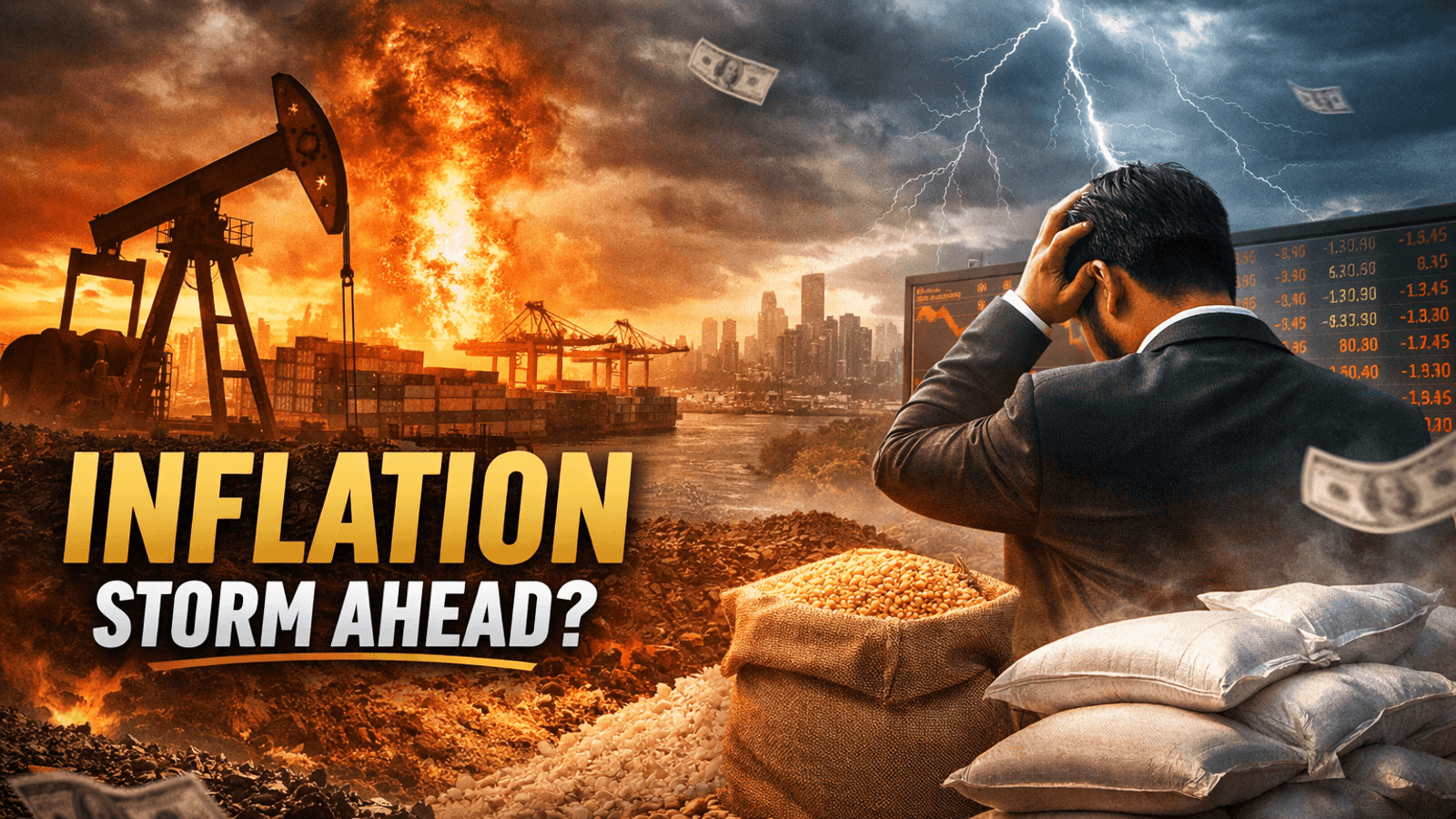
Ever wondered why global inflation trends never hit all economies at the same time? Developed markets debate rate cuts and soft landings. Meanwhile, you’re watching a different movie entirely—one where emerging markets quietly absorb the first wave of pressure. No dramatic headlines. Just currencies slipping, import bills swelling, and policymakers adjusting the knobs behind the curtain. Recent global macroeconomic trends suggest something familiar is back on the menu. Oil prices climb, supply chains tighten, and suddenly, fragile economies begin to wobble. Question worth asking: Are you looking where the real stress is building—or only where the noise is loudest?
📉 Emerging Markets Crisis: Currency Pressure Comes First
Start with the basics. Rising energy costs don’t just impact fuel—they reshape entire economies. Across multiple regions, signs of an emerging markets crisis are quietly forming:
- Currency depreciation in emerging markets has accelerated against the U.S. dollar
- Oil import bills are widening current account deficits
- Capital flows are reversing as investors chase safer yields
Countries like India, Turkey, and parts of Southeast Asia are already experiencing pressure. Even a 5–10% currency slide can significantly amplify imported inflation. Central banks face a tough choice:
- Raise rates → protect currency, hurt growth
- Hold rates → support growth, risk inflation
Neither plate looks particularly appetizing.
🧠 Smart Capital Signal:
Currency stress usually arrives before equity or credit stress. When currency depreciation in emerging markets begins to trend, history suggests broader economic pressures aren’t far behind.
🌏 Asia Energy Crisis: Where Inflation Travels Fastest
Shift your focus to Asia, where the energy crisis in global markets hits hardest. Energy-import-heavy economies—Japan, India, and South Korea—are experiencing a direct pass-through effect. Oil prices rise, and inflation follows almost immediately. Recent data and policy responses show:
- Governments are preparing fuel subsidy expansions
- Corporates a warning about margin compression (2–4% in some sectors)
- Currency volatility is creeping into central bank decision-making
Asia essentially becomes the frontline of inflation transmission. And here’s the kicker—many businesses can’t fully pass rising costs to consumers without hurting demand. That creates a squeeze from both ends.
🔍 Tactical Insight:
Search interest around the Asian energy crisis and inflation has been rising steadily. Markets often treat Asia as an early indicator. Policy responses here can hint at the direction of broader global inflation trends.
🌾 Fertilizer Prices Rising: The Hidden Food Inflation Pipeline
Energy inflation is loud. Food inflation is patient. Behind the scenes, fertilizer price increases are building a second wave of inflation. Fertilizer production depends heavily on natural gas, and disruptions are pushing prices higher—analysts estimate a 15–20% increase. Follow the chain:
- Higher fertilizer costs
- Lower or adjusted crop yields
- Reduced supply
- Higher food prices
Timeline matters:
- 0–3 months: Input cost pressure builds
- 3–6 months: Farming decisions adjust
- 6–12 months: Food inflation shows up
FAO data has already hinted at early upward movement in food price indices. Regions most exposed?
- South Asia
- Sub-Saharan Africa
- Import-heavy Southeast Asian economies
🌿 Investor Radar:
Search queries like "food inflation forecast 2026" and "fertilizer price increase impact" are gaining traction. Food inflation tends to be stickier than energy inflation, meaning it lingers longer in the system.
⚖️ Global Trade Tariffs: The Invisible Cost Layer
Tariffs don’t trend on social media. But they quietly shape global economic risks for investors. Lingering global trade tariff impacts continue to
- Increase manufacturing input costs
- Force supply chain rerouting
- Reduce efficiency across global trade networks
Corporate earnings calls often reference:
- “Higher structural costs”
- “Supply chain adjustments”
Translation? Margins are under pressure, even before energy costs are fully priced in. According to WTO data, global trade efficiency has declined in recent years due to fragmentation—costs that don’t disappear overnight.
📊 Strategic Lens:
Search interest in supply chain disruption and global trade remains elevated. Tariffs may not shock markets, but they quietly compound inflation pressure—especially when layered on top of energy and food costs.
🧠 Connecting the Dots: Inflation Is Becoming Multi-Layered Again
Take a step back. Look at the full plate.
- Oil price impact on the economy → immediate inflation
- Fertilizer → food inflation causes and effects → delayed pressure
- Tariffs → structural costs → persistent drag
Markets often expect inflation to fade once energy stabilizes. Reality tends to be messier. Multiple inflation layers rarely unwind simultaneously.
📉 Investor Positioning Thought:
Search behavior around inflation outlook for investors reflects growing uncertainty. Markets are no longer debating “if” inflation returns—but “how persistent” it will become.
🧾 Final Bite: Smart Investors Watch the Kitchen, Not the Menu
Markets love headlines. Smart capital watches underlying ingredients. Currency pressure in emerging markets. Rising fertilizer costs. Policy shifts in Asia. Trade inefficiencies quietly squeeze margins. None of these signals screams crisis on its own. Together? They tell a story. A story where global inflation trends evolve rather than disappear. Where early signals appear in less obvious places. Where timing matters more than noise. Next time oil spikes, ask a better question: What’s already cooking behind it? Because by the time inflation shows up on your plate, the ingredients were added months ago.
🔗 Sources
Market Munchies and Mode Mobile communications are for informational purposes only, and are not a recommendation, solicitation, or research report relating to any investment strategy, security, or digital asset. All investments involve risk including the loss of principal and past performance does not guarantee future results.
Any information contained in this commentary does not purport to be a complete description of the securities, markets, or developments referred to in this material. The information has been obtained from sources considered to be reliable, but we do not guarantee that the foregoing material is accurate or complete. There is no guarantee that any statements or opinions provided herein will prove to be correct.