Energy Shock, Strong Dollar, Frozen Rates: The Market Is Calm… But Should You Be?
You’re Seeing Calm Headlines… But What Are Markets Actually Telling You? You open your portfolio. Things don’t look that bad. Stocks aren’t crashing. Oil isn’t spiking wildly. The panic—at least on the surface—feels contained. So the obvious question hits: Is the risk really…
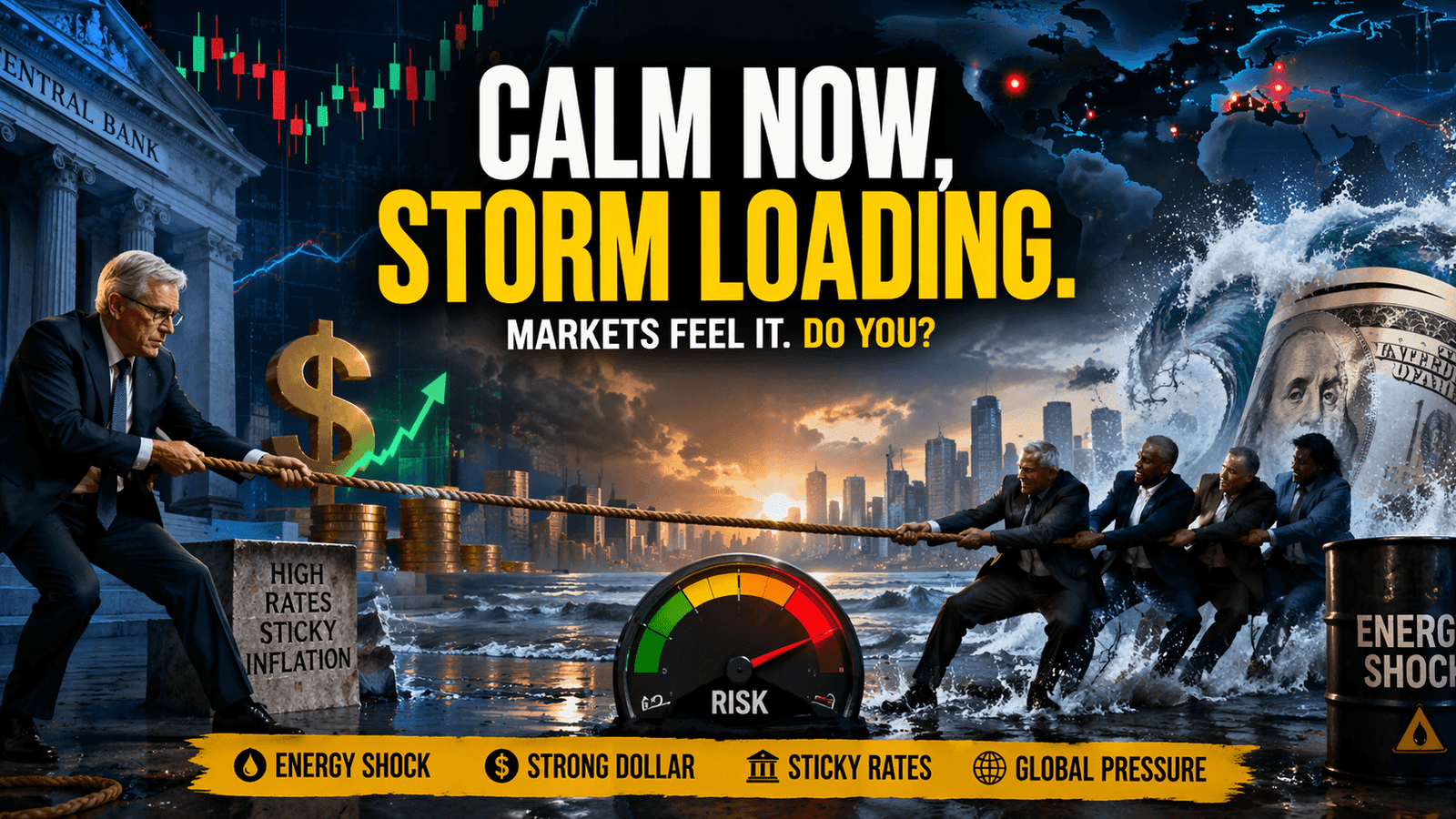
You’re Seeing Calm Headlines… But What Are Markets Actually Telling You?
You open your portfolio. Things don’t look that bad. Stocks aren’t crashing. Oil isn’t spiking wildly. The panic—at least on the surface—feels contained. So the obvious question hits: Is the risk really fading… or just quietly spreading? Because beneath the calmer headlines, something more subtle—and far more important—is unfolding. The kind of shift that doesn’t scream. It tightens. Slowly. Systematically. And if you’re paying attention, the signals are all there.
The IMF Just Dropped a Warning—And It’s Bigger Than Oil
Recent commentary from the International Monetary Fund (IMF) wasn’t dramatic—but it was clear: “Everyone will feel the impact” of the ongoing energy shock. This isn’t just about higher fuel prices. It’s about how that shock travels. Energy prices rise → inflation creeps back → central banks remain restrictive → global liquidity tightens. That chain reaction? That’s the real story. Emerging markets are already feeling it:
- Higher import costs
- Weaker currencies
- Rising debt pressure
Meanwhile, global debt is hovering near 94% of GDP, with projections indicating it will rise further.
Smart Capital Signal
When energy becomes a financial transmission mechanism, not just a commodity story, risk doesn’t disappear—it spreads across balance sheets.
Bonds Aren’t Buying the Optimism
Equities may be holding up. But bonds? They’re not convinced. Yields remain elevated. The market isn’t rushing to price in rate cuts. In fact, it’s doing the opposite—pricing in persistence. Why? Because energy-driven inflation is sticky, it doesn’t fade like demand shocks. It lingers. It complicates policy. Even the IMF has nudged governments to avoid broad subsidies and maintain discipline. Translation: No quick fixes. No easy relief.
Tactical Insight
When stocks feel optimistic but bonds remain cautious, history tends to favor bonds. Quiet skepticism often beats loud optimism.
The Dollar Is Getting Stronger—Quietly, but powerfully.
No fireworks here. No dramatic headlines. But the US dollar is firming up again. That matters more than it looks. In times of uncertainty, capital flows toward safety. And right now, that means:
- USD assets
- US Treasuries
- Liquidity hubs
Here’s the kicker: oil is priced in dollars. So when both oil prices and the dollar rise, the rest of the world feels a double squeeze. Emerging markets, especially energy importers, get hit hardest.
Investor Radar
A stronger dollar isn’t just a currency move—it’s global tightening in disguise. Watch capital flows, not just FX charts.
Central Banks Are Stuck—and They Know It
This might be the most important piece of the puzzle. Central banks aren’t cutting rates anytime soon. Not because they don’t want to, but because they can’t. They’re trapped in a classic dilemma:
- Cut rates → risk reigniting inflation
- Hold rates → slow growth further
There’s no clean exit here. And policymakers are being unusually transparent about it. Targeted support? Yes. Broad stimulus? Not happening.
Macro Lens
When policy becomes reactive instead of proactive, markets lose their safety net. That’s when volatility tends to reprice rather than disappear.
The Bigger Picture: A System Under Subtle Pressure
Put it all together, and a pattern emerges. This isn’t a crash setup. It’s something more nuanced—and arguably more dangerous.
- Energy is back as a core macro-driver
- Liquidity is tightening globally
- Policy flexibility is shrinking
- Markets are diverging (stocks vs bonds)
It’s not chaos. It’s a constraint. And constraint has a way of showing up later—usually when markets least expect it.
🍷 One Last Thought Before You Rebalance
Here’s the uncomfortable truth: Markets aren’t pricing “everything is fine.” They’re pricing “things aren’t getting worse—for now.” That’s a big difference. As global trends evolve, the real risk isn’t sudden panic. It’s gradual tightening—the kind that chips away at growth, squeezes liquidity, and quietly reshapes portfolios. So while the holiday mood may nudge investors toward optimism, it’s worth asking: Are you positioned for calm… Or for what comes after it? Because in this environment, patience isn’t just a virtue—it’s a strategy.
Sources
- IMF & World Bank Meetings Coverage - Reuters
- IMF Warning on Energy Shock & Subsidies - Reuters
- Developing Nations & Global Stress Outlook - Reuters
- Global Debt & Energy Shock Risks - The Guardian
Market Munchies and Mode Mobile communications are for informational purposes only, and are not a recommendation, solicitation, or research report relating to any investment strategy, security, or digital asset. All investments involve risk including the loss of principal and past performance does not guarantee future results.
Any information contained in this commentary does not purport to be a complete description of the securities, markets, or developments referred to in this material. The information has been obtained from sources considered to be reliable, but we do not guarantee that the foregoing material is accurate or complete. There is no guarantee that any statements or opinions provided herein will prove to be correct.