Fragile Calm or Brewing Storm? Inside Markets’ Latest Warning Signs for Investors
The Calm Before a Possible Shake-Up 🌐 Markets often wear a poker face. On the surface, volatility looks calm, equity indices seem solid, and central bankers sound cautiously upbeat. But beneath the surface, signs of market fragility are mounting. The Financial Times’ “OK,…
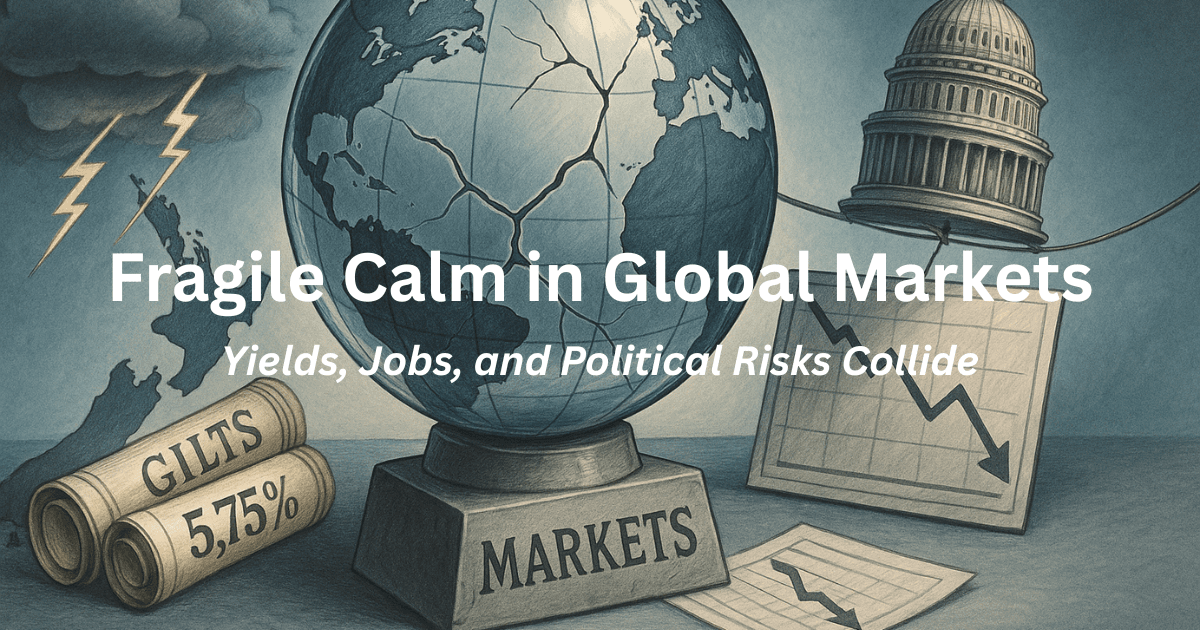
The Calm Before a Possible Shake-Up 🌐
Markets often wear a poker face. On the surface, volatility looks calm, equity indices seem solid, and central bankers sound cautiously upbeat. But beneath the surface, signs of market fragility are mounting. The Financial Times’ “OK, Doomer” episode warned of overstretched tech valuations, speculative crypto trades, and mounting risks in AI infrastructure. Add in global bond market volatility, and it’s fair to ask: is this genuine stability, or a fragile lull before disruption?
UK Gilt Drama: Yields Surge to 27-Year High 💷
The UK’s debt market made headlines with stories of surging UK gilt yields, as 30-year borrowing costs spiked to 5.75%, the highest since 1998. The Bank of England’s Governor Andrew Bailey admitted fiscal credibility and central bank independence are at stake, even as he downplayed panic. The pound slid, and gilt issuance costs ballooned, drawing attention to the UK’s fiscal instability. The government delayed its Autumn Budget to November, betting on a more detailed plan to restore trust. Investors remain sceptical. High yields mean rising borrowing costs across sectors, and global buyers could demand even steeper premiums. Smart Capital Signal: The bond market volatility in London is not isolated—it sets the tone for the European and U.S. Treasury markets. Political uncertainty investing becomes riskier when the credibility of fiscal policy is unclear.
U.S. Jobs Numbers Underwhelm 📉
The August non-farm payrolls report disappointed, with only 22,000 jobs added, against expectations of 75,000. The unemployment rate ticked to 4.3%, and revisions showed the first job loss since 2020—a true U.S. jobs slowdown. This weak print strengthens the case for further Fed rate cut prospects, though inflation data remains decisive. As one analyst quipped, “The Fed might want to cut—but not too fast, not too deep.” Investors cheered the idea of cheaper money, but the reality is more nuanced: weak jobs growth isn’t bullish for long-term earnings. Tactical Insight: Rate cuts may look like a gift, but slower hiring could drag corporate profits. Better to treat this as investor warning signs, not a green light.
New Zealand: Storms, Strikes, and Stumbles 🌧️✈️
Far from Wall Street, New Zealand storms' impact on headlines reminded investors that geography doesn’t shield from shocks. Severe weather hit Auckland and Waikato, while the government rushed airline support loans worth NZ$30 million to regional carriers. At the same time, 36,000 nurses staged a two-day strike—the NZ nurse strike halted thousands of appointments, adding to the fragility of the healthcare system amid storm disruptions. Meanwhile, retailer Smiths City entered administration, showing that consumer resilience is stretched thin. Investor Radar: Local disruptions may look small, but they highlight systemic fragility. For emerging-market investors, incorporating “periphery” risks, such as labour unrest and natural disasters, is essential in global economic pulse models.
Washington Tightrope: Trump Faces Policy Pile-Up 🇺🇸
Across the Atlantic, the U.S. juggles its own turbulence. President Trump faces a looming government shutdown deadline, alongside court rulings that limit his authority on tariffs and emergency powers. Additionally, new Trump tariff risks include 25% duties on Indian imports, which could fuel tensions in the textiles and IT sectors. Markets dislike uncertainty. A fiscal standoff in Congress could freeze consumer confidence, while trade measures risk squeezing supply chains. With Washington gridlocked, political uncertainty has brought investing back into focus. Portfolio Pulse: Investors must factor Trump's tariff risks into supply-chain-heavy sectors. U.S. fiscal gridlock, combined with tariffs, equals fragile confidence.
Final Words: Fragile Calm, Fragile Confidence ✨
So, what’s the takeaway? Between the surge in UK gilt yields, a clear U.S. jobs slowdown, the disruptive impact of New Zealand storms, and the messy risks of Trump's tariffs, the calm looks less like strength and more like controlled vulnerability. The global economic pulse beats unevenly, reminding investors that stability can mask fragility. Final Reflection: Fragility doesn’t announce itself—it whispers. Smart investors will hear it, hedge early, and capitalize on low-competition investor insights before the crowd catches on.
Sources
- Financial Times – Unhedged: OK, Doomer
- Reuters – Sterling, gilts face fresh selling pressure
- The Guardian – UK borrowing costs hit 27-year high
- U.S. Bureau of Labor Statistics – Employment Situation, August 2025
- Reuters – U.S. unemployment rises
- RNZ – Nurses strike in New Zealand
- Wikipedia – 2025 in New Zealand
- Reuters – Why would the U.S. government shut down?
- Wikipedia – Second Presidency of Donald Trump
Market Munchies and Mode Mobile communications are for informational purposes only, and are not a recommendation, solicitation, or research report relating to any investment strategy, security, or digital asset. All investments involve risk including the loss of principal and past performance does not guarantee future results.
Any information contained in this commentary does not purport to be a complete description of the securities, markets, or developments referred to in this material. The information has been obtained from sources considered to be reliable, but we do not guarantee that the foregoing material is accurate or complete. There is no guarantee that any statements or opinions provided herein will prove to be correct.