From Cool Inflation to Hot Oil: How Investors Got Burned Overnight
The Hook: When Calm Turns to Chaos Just weeks ago, markets were beginning to breathe again. Inflation looked like it was cooling, central bankers were cautiously hinting at eventual rate cuts, and investors were allowing themselves to imagine smoother waters ahead. Then oil…
The Hook: When Calm Turns to Chaos
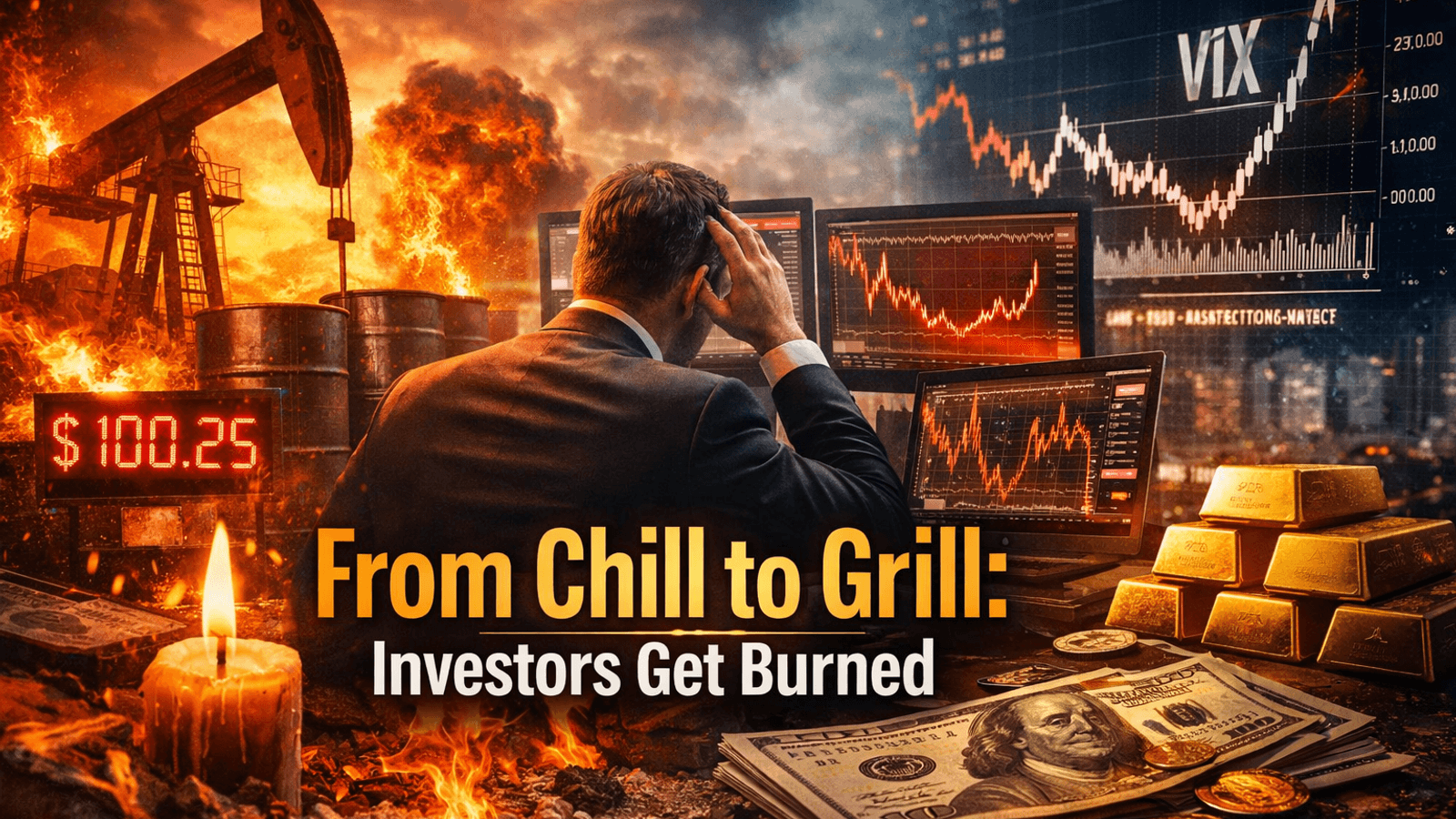
Just weeks ago, markets were beginning to breathe again. Inflation looked like it was cooling, central bankers were cautiously hinting at eventual rate cuts, and investors were allowing themselves to imagine smoother waters ahead. Then oil crashed the party. Brent crude moved back above $100 a barrel, quickly shifting the market narrative from relief to alarm. What felt like a controlled glide toward lower inflation suddenly looked more like a sharp turn back into turbulence. It’s the kind of overnight pivot that makes portfolios sweat and forces investors to ask a familiar question: how did the kitchen get so hot so quickly?
Inflation Outlook Complicated by Oil Rally
Oil isn’t just a commodity—it’s the quiet ingredient in nearly every economic recipe. When crude prices jump, transportation costs rise, manufacturing expenses climb, and supply chains start passing those costs down the line. From shipping containers to supermarket shelves, energy prices ripple through the global economy. The International Energy Agency said the disruption to flows through the Strait of Hormuz has created the largest supply disruption in the history of the global oil market, underscoring how quickly energy stress can spill into inflation, growth, and market sentiment. If energy inflation spreads through logistics and production costs, central banks may be forced to keep interest rates higher for longer than investors had hoped. Smart Capital Signal: Energy-driven inflation tends to move faster than policymakers expect. Investors should be prepared for the possibility that the disinflation story may take longer to play out fully.
Bond Yields Rise as Inflation Fears Return
Bond markets rarely panic loudly, but they speak clearly through yields. The U.S. 10-year Treasury yield rose to about 4.28%, while the 30-year reached roughly 4.90%, reflecting a sharp repricing of inflation risk and a market that no longer looks as confident about near-term rate cuts. The ripple effects quickly spread beyond the United States. Bond yields in other major markets also moved higher as investors reassessed inflation risks, energy exposure, and the likelihood that central banks may need to stay cautious for longer. Emerging markets face a particularly difficult equation. Higher oil prices strain government budgets while rising global yields increase borrowing costs. Tactical Insight: When inflation expectations rise, bond markets reprice rapidly. For investors, it’s a reminder that fixed income can lose value quickly when the inflation outlook shifts.
Global Stock Markets Stumble on Energy Shock
Equity markets dislike surprises—especially expensive ones. As oil prices surged, stock markets from Asia to the United States came under pressure. Import-dependent economies in Asia appeared especially exposed to the jump in energy costs, while U.S. stocks ended a third straight week of declines. The shift triggered a familiar pattern: investors rotating away from high-growth sectors and toward more defensive industries. Utilities, healthcare, and consumer staples suddenly looked far more attractive compared with technology and cyclical stocks that rely heavily on economic expansion. Investor Radar: Energy shocks often spark sector rotations. Defensive companies with stable demand typically outperform when growth expectations weaken.
Volatility Index Climbs as Risk Appetite Falls
If there was any doubt about investor nerves, the VIX, often called Wall Street’s fear gauge, provided the answer. The VIX rose into the high 20s, signaling stronger demand for portfolio protection and a clear rise in market anxiety. In India and other oil-importing markets, currencies, bonds, and equities all came under added pressure as investors recalibrated for a more volatile backdrop. Periods of elevated volatility often create a more fragile trading environment. Liquidity thins, price swings widen, and markets become far less forgiving of mistakes. Market Pulse: When volatility rises, discipline matters more than conviction. Smaller positions and careful risk management often outperform aggressive bets.
Final Reflection: Staying Cool in a Hot Market
Markets, much like kitchens, inevitably heat up from time to time. Oil shocks, inflation scares, and rising bond yields are recurring ingredients in the global financial cycle. What matters most isn’t avoiding the heat—it’s knowing how to adapt the recipe. Investors who remain diversified, disciplined, and patient tend to navigate these periods best. The headlines may shift quickly, but markets eventually settle. And when the stove finally cools again, the investors who stayed calm during the heat will likely be the ones still sitting comfortably at the table.
Sources
Market Munchies and Mode Mobile communications are for informational purposes only, and are not a recommendation, solicitation, or research report relating to any investment strategy, security, or digital asset. All investments involve risk including the loss of principal and past performance does not guarantee future results.
Any information contained in this commentary does not purport to be a complete description of the securities, markets, or developments referred to in this material. The information has been obtained from sources considered to be reliable, but we do not guarantee that the foregoing material is accurate or complete. There is no guarantee that any statements or opinions provided herein will prove to be correct.