How Trump's Crypto Empire Became the Center of a New Influence Economy
📋 The Report's Core Allegations A congressional staff report released by House Judiciary Committee Ranking Member Jamie Raskin alleges that President Donald Trump has leveraged his office to expand a cryptocurrency portfolio valued as high as $11.6 billion, with income…
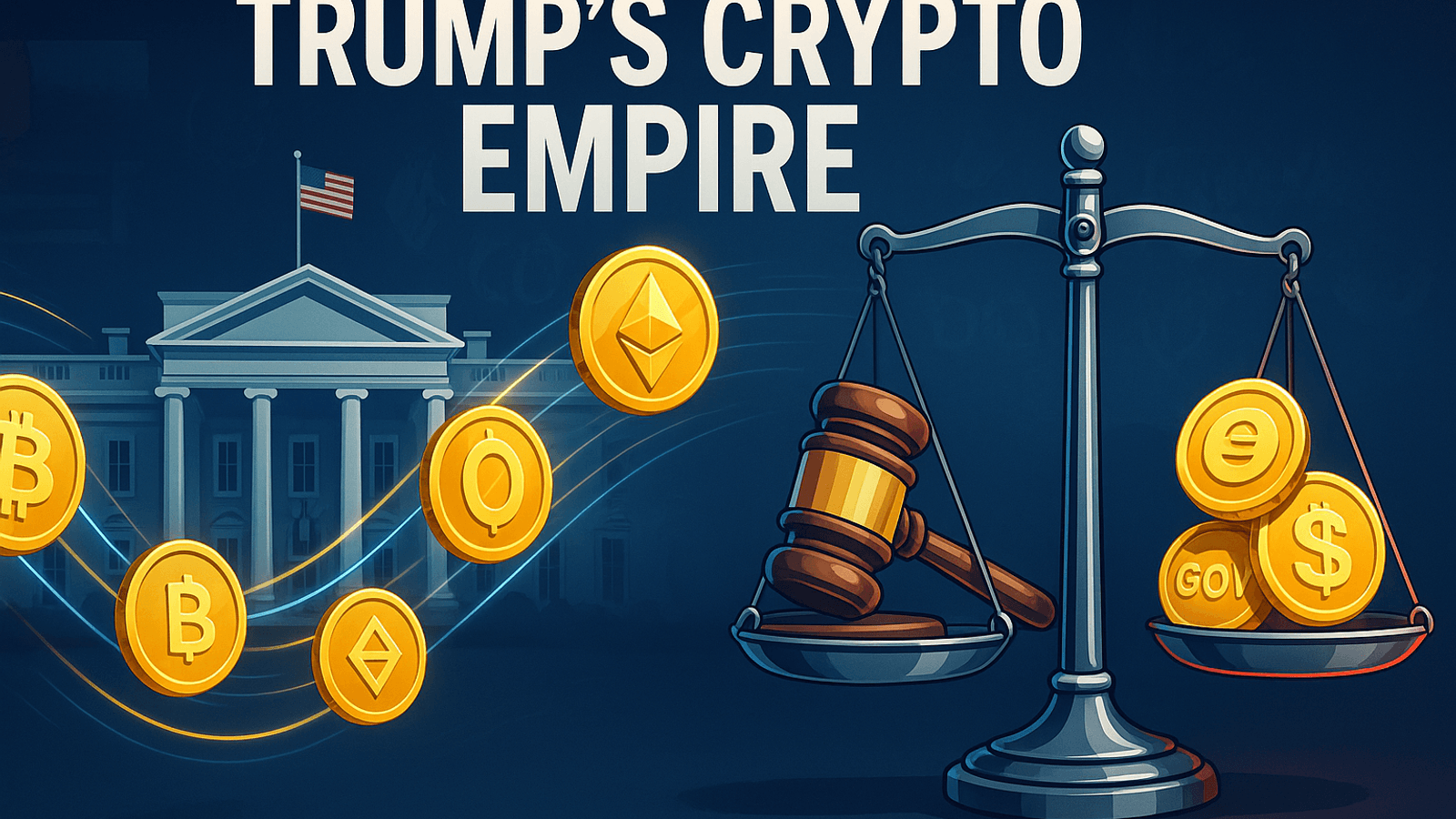
📋 The Report's Core Allegations
A congressional staff report released by House Judiciary Committee Ranking Member Jamie Raskin alleges that President Donald Trump has leveraged his office to expand a cryptocurrency portfolio valued as high as $11.6 billion, with income exceeding $800 million in the first half of 2025 alone. The 50-page document titled "Trump, Crypto, and a New Age of Corruption" contends that holdings in World Liberty Financial and the TRUMP memecoin create structural conflicts of interest that federal ethics laws are ill-equipped to address. For oversight officials, the report represents an attempt to document potential regulatory gaps in how government officials interact with digital assets. For investors in Trump-linked tokens, the allegations raise questions about whether policy decisions affecting token valuations constitute a form of self-dealing. The committee argues that foreign and corporate actors have used these platforms to bypass traditional campaign finance restrictions, effectively creating what it calls an unregulated lobbying channel.
💰 The Shadow Lobbying Mechanism
The report introduces the concept of "shadow lobbying" through cryptocurrency, describing a dynamic where foreign actors and corporate interests purchase tokens or provide liquidity to Trump-linked DeFi protocols as an alternative to regulated political donations. Unlike traditional contributions capped and disclosed to the Federal Election Commission, token purchases on decentralized exchanges can theoretically be unlimited and pseudonymous. The committee staff alleges that by holding governance tokens rather than traditional equity, the President benefits from price appreciation driven by his own policy announcements. World Liberty Financial, which booked roughly $802 million in the first half of 2025 primarily from token sales, operates through a registered Delaware company under US regulatory oversight. For corporate actors seeking policy influence, this mechanism offers a new pathway that operates outside traditional lobbying disclosure requirements. The report warns that current anti-bribery and conflict-of-interest statutes are predicated on conventional financial instruments and do not adequately cover decentralized digital assets, creating what lawmakers describe as a legally permissible but ethically problematic channel of influence.
⚖️ The Binance-CZ Pardon Timeline
The committee highlights a specific sequence involving Binance and its former CEO Changpeng "CZ" Zhao as evidence of the alleged influence mechanism. Binance agreed to a $4.3 billion settlement with the Department of Justice in 2023, with Zhao stepping down as part of the plea deal. According to the report's timeline, Binance-linked entities subsequently provided promotional support and capital to World Liberty Financial in the months that followed. On October 23, 2025, President Trump issued a full pardon to Zhao. For exchange users and industry participants, the pardon raised questions about whether support for presidential ventures influences enforcement outcomes. The report draws a direct correlation between World Liberty Financial support and executive clemency, describing the pardon as part of a pattern in which actors who support the President's ventures receive relief from federal penalties. The White House has not issued a formal response to these specific allegations, leaving the interpretation of the timeline contested between Democratic oversight officials and the administration's defenders.
🛡️ Regulatory Dismantling Benefits Trump Ventures
The committee staff report details extensive changes to federal regulatory structure, which it claims were designed to protect the President's investors and donors. Specifically, the report cites the dissolution of the DOJ's National Cryptocurrency Enforcement Team, a unit established to prosecute criminal activity in the digital asset space. The document alleges the administration has intervened to halt or terminate investigations into several major cryptocurrency firms, including Coinbase, Kraken, Ripple, and Gemini, all of which or their executives have been significant supporters of the President's political and business endeavors. For retail investors, the dismantling of enforcement mechanisms raises concerns about consumer protection in an already volatile market. The report also examines the market impact of the administration's "crypto-strategic reserve" policy, noting that the decision to include specific tokens such as Solana and Ripple in the Federal Reserve led to immediate price appreciation of 25% and 33%, respectively. The committee argues that by selecting specific assets for state backing, the administration has manipulated market valuations to benefit donors who hold large positions in those particular tokens.
🌐 National Security and Foreign Investment Concerns
Beyond domestic financial policy, the report raises national security concerns regarding dealings with foreign entities. It details an alleged transaction involving MGX, a UAE-based investment firm, and G42, a technology holding company. According to the report, MGX invested billions into Binance, capital that the committee claims indirectly supported the Trump crypto ecosystem. Simultaneously, the report alleges that White House officials, including World Liberty Financial co-founder Steve Witkoff, negotiated to provide G42 with access to advanced American-made artificial intelligence chips. For technology sector participants and security officials, this arrangement proceeded despite objections from the National Security Council regarding potential technology diversion to China. The report states that six NSC staff members were fired after expressing concerns about the deal, suggesting that national security protocols were subordinated to financial interests. This alleged pattern represents what the committee describes as a troubling convergence of presidential business interests, foreign capital flows, and sensitive technology transfers that traditional oversight mechanisms have struggled to monitor or constrain.
🎯 Legislative Gaps and Future Implications
The report concludes by identifying what it describes as severe weaknesses in current anti-bribery and conflict-of-interest laws, arguing that statutes such as the Foreign Agents Registration Act and domestic bribery laws do not adequately cover decentralized digital assets. The committee warns that without legislative reform, the pseudonymous nature of cryptocurrency creates a new channel of influence that is technically legal but ethically compromising. For policymakers, this presents a challenge: how to craft regulations that address potential conflicts without stifling legitimate innovation in the digital asset space. The document arrives at a critical juncture when the Senate's market structure bill for crypto is immersed in close negotiations among lawmakers. For the crypto industry, the allegations represent a political risk that could influence the direction of future regulation, particularly if lawmakers use concerns about presidential conflicts to justify stricter disclosure requirements or limitations on government officials holding digital assets. Ranking Member Raskin is calling for immediate congressional reforms to close these loopholes and restore accountability to the executive branch, setting up what is likely to be a contentious debate over where legitimate business activity ends and conflicts of interest begin in the digital age.
Sources
https://cryptoslate.com/how-trumps-crypto-empire-became-the-center-of-a-new-influence-economy/ https://democrats-judiciary.house.gov/sites/evo-subsites/democrats-judiciary.house.gov/files/evo-media-document/2025-11-24.hjc-dem-staff-report-trump-crypto-corruption-small_0.pdf https://www.tradingview.com/news/cointelegraph:276caacc6094b:0-how-the-trump-family-turned-crypto-into-an-800m-gold-rush/ https://www.coindesk.com/policy/2025/11/26/house-democrats-issue-report-detailing-trump-s-crypto-ties-as-new-age-of-corruption https://cryptoslate.com/changpeng-zhao-files-for-us-presidential-pardon-praises-trumps-business-like-leadership-style/ https://cryptoslate.com/abu-dhabis-mgx-invests-2b-in-binance-marking-largest-institutional-stablecoin-backed-crypto-deal/
Market Munchies and Mode Mobile communications are for informational purposes only, and are not a recommendation, solicitation, or research report relating to any investment strategy, security, or digital asset. All investments involve risk including the loss of principal and past performance does not guarantee future results.
Any information contained in this commentary does not purport to be a complete description of the securities, markets, or developments referred to in this material. The information has been obtained from sources considered to be reliable, but we do not guarantee that the foregoing material is accurate or complete. There is no guarantee that any statements or opinions provided herein will prove to be correct.