India Upgraded, Tariffs Escalate—Is the Market Underestimating Resilience?
🔑 A New Playbook in India’s Economic Theatre Now and then, an economy throws investors a curveball that’s part opportunity, part risk. India just delivered one of those moments. On one side, a $20B India GST reform stimulus is designed to fuel domestic demand and cut…
🔑 A New Playbook in India’s Economic Theatre
Now and then, an economy throws investors a curveball that’s part opportunity, part risk. India just delivered one of those moments. On one side, a $20B India GST reform stimulus is designed to fuel domestic demand and cut inflation. On the other hand, a sovereign India sovereign rating upgrade to BBB—the first in nearly two decades—that screams long-term confidence. And just when things looked smooth, Washington decided to stir the pot with tariffs that could unsettle the balance. For investors, this isn’t a neat story of winners and losers. It’s a layered narrative of India's economic resilience analysis, policy hedge strategy, and shifting alliances. India is tightening its domestic policies, finding leverage abroad, and navigating India-US trade tensions without losing its stride. The real question is whether the market is reading this blend correctly—or underestimating just how resilient India's domestic consumption boost has become. Let's explore.
💸 Stimulus Served Hot: GST Gets a Two-Rate Diet—Game Changer or Just a Sugar Rush?
Prime Minister Narendra Modi’s India GST simplification 2025 has reshaped the Goods and Services Tax into just two simple rates: 5% and 18%. Gone are the multiple slabs that confused businesses and consumers alike. Essentials and everyday goods now fall into the lower bracket, while cars, appliances, and luxury items face reduced but still notable rates. The government estimates that this change will trim inflation by 20–25 basis points, making groceries and staples more affordable, while nudging aspirational demand. For India’s vast middle class, it feels like more room to breathe; for SMEs, it’s simplified compliance. Smart Capital Signal: While near-term revenue dips are expected, India's domestic demand stimulus is likely to create stronger, long-term consumption-led growth. For investors, the India investor insights GST point to opportunities in retail, FMCG, and discretionary sectors.
📈 S&P Upgrade: Confidence Stamped on the Balance Sheet—But Is It Priced In?
For the first time in 18 years, S&P Global upgraded India’s sovereign rating to BBB with a stable outlook. The reasons? Fiscal consolidation, infrastructure investment, stable inflation, and the ability to sustain growth even under India's export headwinds and tariffs. S&P now projects GDP growth close to 6.5% in FY26, which is striking given global headwinds. As one analyst put it, India’s “domestic engine is running stronger than external shocks can derail.” Tactical Insight: A stronger India S&P upgrade investors signal means lower borrowing costs and friendlier conditions for bonds, infra plays, and international capital inflows.
🌾 RBI’s Calm Voice Amid Trade Turbulence—Steady Hand or Silent Gamble?
The Reserve Bank of India’s MPC minutes reinforced the tone: no panic, no rush. Rates remain steady at 5.5%, with the bank sticking to its neutral stance. Good monsoon rains, steady exports, and India's consumption-led growth are keeping the economy’s floor solid—even as US-India tariffs threaten to erode its ceiling. RBI Governor Sanjay Malhotra noted: “Growth remains resilient, and inflation is moderating—though vigilance remains crucial.” Investor Radar: For equity markets, this means predictable liquidity and steady credit flows. For foreign investors, the RRBI's neutral stance on growth ensures India won’t over-tighten policy at a time when trade uncertainty lingers.
⚔️ U.S.–India Tariff Clash: Necessary Pushback or Strategic Misstep?
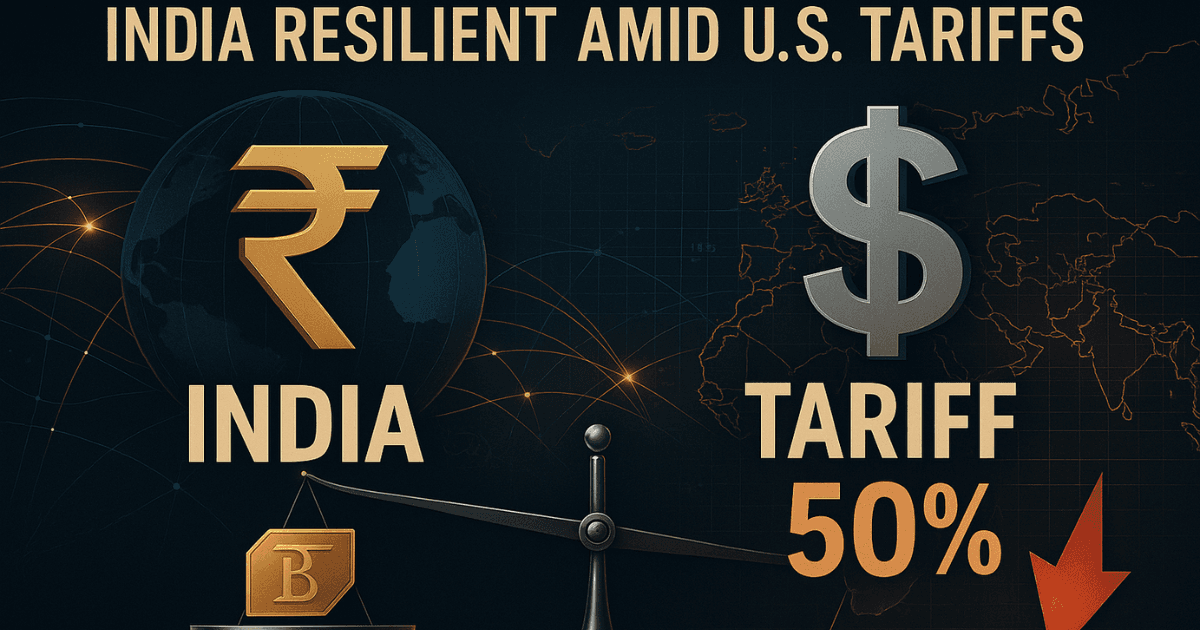
The less cheerful development? The Trump administration imposed an additional 25% tariff on Indian goods, raising duties to a total of 50%. The official reason: India’s continued imports of Russian oil. The fallout? Trade talks scheduled in New Delhi were abruptly cancelled. India’s officials branded the move “unfair and unjustified,” insisting they’ll secure energy from wherever best serves their economy. Markets are now concerned about the ripple effects on cooperation—particularly in defense, outsourcing, and pharmaceutical exports. Capital Compass: For investors, the outlook for India tariffs depends on which sectors are most exposed. US-India tariffs could impact the IT outsourcing and pharmaceutical industries, while domestically driven firms stand relatively insulated.
🌍 Tariffs as Tools, Alliances in Flux—Is India Quietly Pivoting East?
Beyond the U.S.–India duel, tariffs are becoming Washington’s new foreign policy weapon—deployed against Canada, Brazil, and others. Diplomatic levers are giving way to tariff triggers. For India, the result is a subtle but noticeable tilt toward Beijing. High-level exchanges with China are accelerating, underscoring India’s preference for a hedging strategy and flexibility in its policy towards a multipolar world. Strategic Cue: Investors should read this not as India “choosing sides,” but as hedging risk. As India's trade tensions with the US escalate, the country will likely diversify its trade and security links, creating new opportunities for investors beyond the traditional U.S. corridor.
🎯 The Final Bite: Resilience With a Side of Risk—Or Just a New Normal?
India’s latest moves tell a layered story. On one side: a bold India GST reform stimulus, a sovereign rating upgrade to BBB, and an RBI that radiates calm. On the other hand, tariff shocks from Washington could shake up trade. For investors, it’s not a binary tale—it’s a reminder of how India's economic resilience analysis and careful hedging shape a country’s long-term trajectory. India is signaling: “We’ll take a hit if needed, but we’re building a bigger buffer.” That’s not drama. That’s strategy.
Sources
Market Munchies and Mode Mobile communications are for informational purposes only, and are not a recommendation, solicitation, or research report relating to any investment strategy, security, or digital asset. All investments involve risk including the loss of principal and past performance does not guarantee future results.
Any information contained in this commentary does not purport to be a complete description of the securities, markets, or developments referred to in this material. The information has been obtained from sources considered to be reliable, but we do not guarantee that the foregoing material is accurate or complete. There is no guarantee that any statements or opinions provided herein will prove to be correct.