Iran War and Oil Shock: Why Geopolitical Chaos Could Delay the Crypto Bull Run
💥 Market Chaos: $128 Million in Liquidations Within Hours When reports of the IRGC's "Operation True Promise 4" hit the wires, the crypto market did not pause to assess. It panicked. CoinGlass data shows more than $128 million in liquidations across the market in just four…
💥 Market Chaos: $128 Million in Liquidations Within Hours
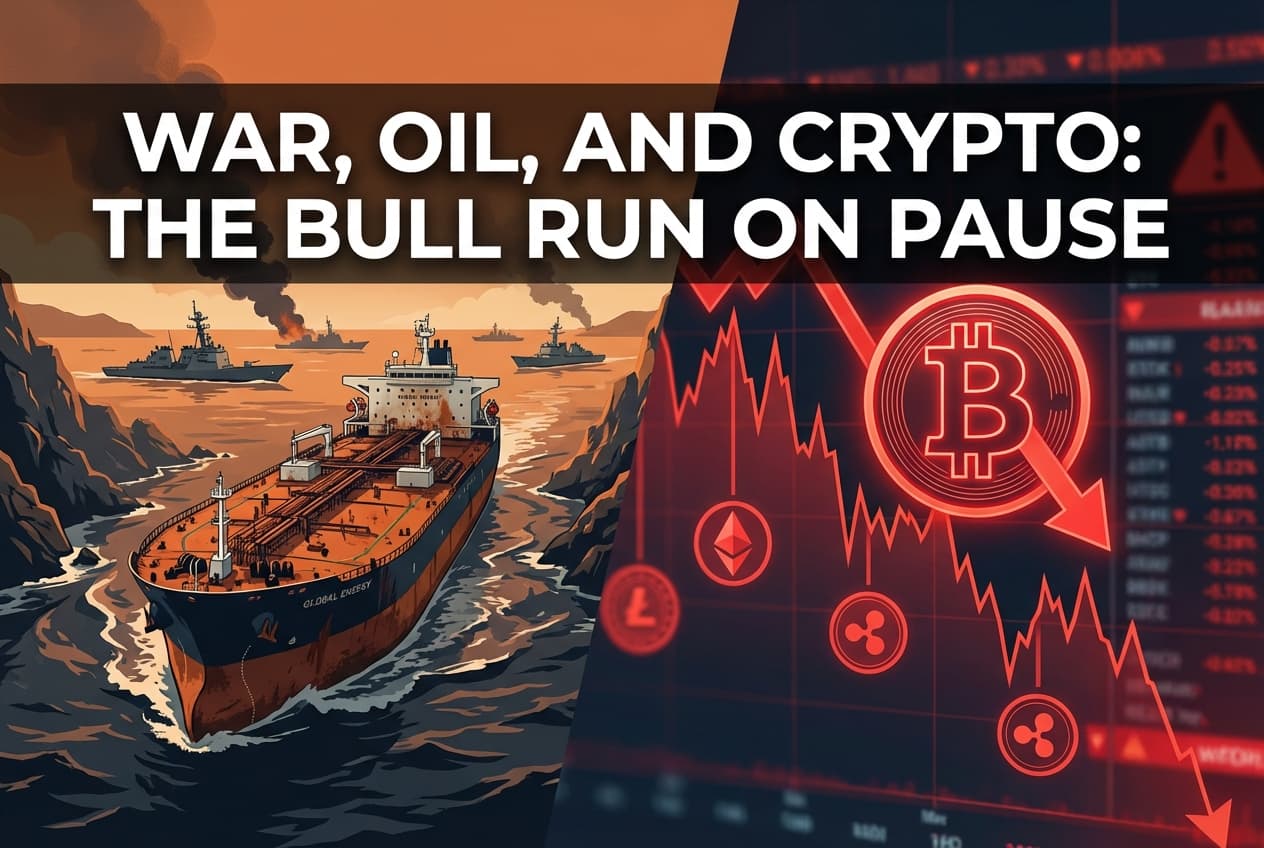
When reports of the IRGC's "Operation True Promise 4" hit the wires, the crypto market did not pause to assess. It panicked. CoinGlass data shows more than $128 million in liquidations across the market in just four hours, with nearly 80% coming from long positions. Leverage traders had been leaning bullish heading into the week, and the sudden escalation caught most desks flat-footed. Bitcoin initially dropped toward $63,000 as headlines cascaded, before staging a modest bounce when more details emerged. That bounce, however, lacked conviction. Open Interest cooled sharply during the session, a signal that traders are trimming exposure rather than buying the dip. This is the kind of behavior that follows a genuine macro shock, not a routine news cycle. When risk managers hit the sell button, momentum buyers get wiped before they even know what hit them.
🛢️ The Strait of Hormuz Wildcard Every Investor Should Know
The real risk to crypto is not a missile exchange. It is a narrow strip of water 21 miles wide between Iran and Oman. The Strait of Hormuz carries roughly 20% of the world's daily oil supply. As military activity in the region intensified, war-risk insurance premiums on shipping lanes jumped sharply, and Brent crude surged as much as 13% in a single session, its largest single-day move since Russia's invasion of Ukraine in 2022. CoinDesk reported the strait was effectively closed per Bloomberg, sending Asian equities down 1.4% and U.S. equity futures down 0.7%. For crypto investors, a sustained oil supply disruption translates directly into inflation risk. Higher energy costs mean higher consumer prices, which push central banks toward keeping rates elevated rather than cutting them. That macro chain reaction is more damaging to speculative assets than any single day of liquidations.
🏦 The Fed Rate Cut Timeline Just Got Pushed Back
Before Iran tensions escalated, traders had been pricing in Federal Reserve rate cuts somewhere in the second half of 2026. The conflict has reshuffled that timeline. According to LSEG data and Fox Business reporting, expectations for a 25-basis-point cut were pushed back from July to September in just days. Treasury yields climbed to their highest level in over a week. For crypto, this matters enormously. Bitcoin has consistently traded as a high-beta liquidity asset. When government bonds offer rising real yields, capital rotates out of speculative positions and into fixed income. The dynamic pressures crypto valuations from two directions at once: higher funding costs make leveraged positions more expensive to hold, and broad risk-off sentiment removes the retail and institutional bid that has driven prices in calmer periods. The bull case depends heavily on looser monetary conditions, and those just moved further away.
📉 Bitcoin's Digital Gold Narrative Faces Another Reality Check
The Iran conflict has revived a familiar debate: is Bitcoin actually a safe haven during geopolitical crises? The answer, once again, is complicated. During the 2020 Soleimani strike, Bitcoin rallied from $7,200 to above $7,300 because the market was smaller, less institutional, and retail traders treated geopolitical uncertainty as a reason to buy. Today's market is structurally different. Research published in 2025 found that Bitcoin's correlation with gold as a crisis hedge has diverged significantly since the Trump administration's crypto-friendly policies attracted large institutional players. According to Morningstar analysis, gold continues to outperform Bitcoin during periods of geopolitical or market stress. Gold climbed to $5,350 per ounce during the initial shock while Bitcoin sold off. Institutional crypto buyers now behave more like equity traders than inflation hedgers, meaning Bitcoin moves with risk assets instead of against them.
⛏️ Iran's Shadow Crypto Economy Enters the Spotlight
The conflict has also drawn fresh attention to Iran's role in the global crypto ecosystem. Blockchain analytics firm Chainalysis estimates Iran's total crypto activity reached $7.78 billion in 2025, growing faster than the prior year. The Islamic Revolutionary Guard Corps (IRGC) holds an outsized position in that ecosystem: IRGC-linked addresses accounted for more than 50% of Iranian crypto inflows in Q4 2025, receiving over $3 billion in value. Iran also accounts for an estimated 2-5% of global Bitcoin hashrate, leveraging heavily subsidized electricity with mining costs around $1,320 per Bitcoin. CoinDesk reported that a prolonged conflict disrupting Iranian energy infrastructure could reduce hashrate and affect network economics modestly. For investors watching the broader picture, this is a reminder that crypto's supply side has geopolitical exposure points that rarely get priced in until a crisis forces the conversation.
🎯 What Investors Should Actually Be Watching Right Now
The honest takeaway from this week is that crypto has matured enough to be caught in macro crossfire, but not yet mature enough to escape it. Whether the bull run pauses or collapses depends on a few specific variables worth tracking closely. First, the Strait of Hormuz: if shipping lanes reopen and oil prices recede, inflation fears fade quickly and the Fed timeline could snap back. Second, diplomatic signals: conflicting reports emerged about whether Iran would pursue nuclear negotiations, and any credible talks would reduce the risk premium baked into oil prices. Third, institutional behavior: ETF inflows into spot Bitcoin products were already showing resilience before the shock, and continued institutional buying on dips suggests professional investors see this as a buying opportunity rather than a structural reversal. Analysts at Mudrex noted that over-leveraged traders being flushed tends to create cleaner setups for spot buyers. The bull run is delayed, not dead, but patience is now required.
Sources
https://cryptonews.com/news/iran-war-oil-price-impact-crypto-bull-run/ https://www.coindesk.com/markets/2026/03/02/bitcoin-cryptos-under-pressure-as-oil-spikes-6-and-global-markets-price-in-u-s-iran-conflict https://www.coindesk.com/business/2026/02/28/iran-conflict-throws-the-regime-s-usd7-8-billion-crypto-ecosystem-and-bitcoin-mining-network-into-spotlight https://global.morningstar.com/en-nd/markets/gold-vs-bitcoin-why-safe-haven-debate-is-shifting-2025 https://mudrex.com/learn/us-israel-iran-war-impact-on-global-markets-and-crypto-in-2026/ https://www.foxbusiness.com/markets/us-stocks-march-3-2026-dow-falls-oil-spikes-middle-east-tensions
Market Munchies and Mode Mobile communications are for informational purposes only, and are not a recommendation, solicitation, or research report relating to any investment strategy, security, or digital asset. All investments involve risk including the loss of principal and past performance does not guarantee future results.
Any information contained in this commentary does not purport to be a complete description of the securities, markets, or developments referred to in this material. The information has been obtained from sources considered to be reliable, but we do not guarantee that the foregoing material is accurate or complete. There is no guarantee that any statements or opinions provided herein will prove to be correct.
Get fresh insights, breaking news, and hidden gems in the world of crypto—delivered straight to your inbox with our Crypto Cookies newsletter. Don't miss out—sign up now and get your first bite of insider knowledge!