Iran's Foreign Minister Is in Moscow. The Peace Talks Are Going Nowhere. Here's Why That Matters for Markets.
The weekend that was supposed to produce a breakthrough in U.S.-Iran negotiations ended with Trump canceling his envoys' trip to Pakistan, Iran's foreign minister flying to Moscow to meet Vladimir Putin, and the Strait of Hormuz still effectively closed. For investors watching…
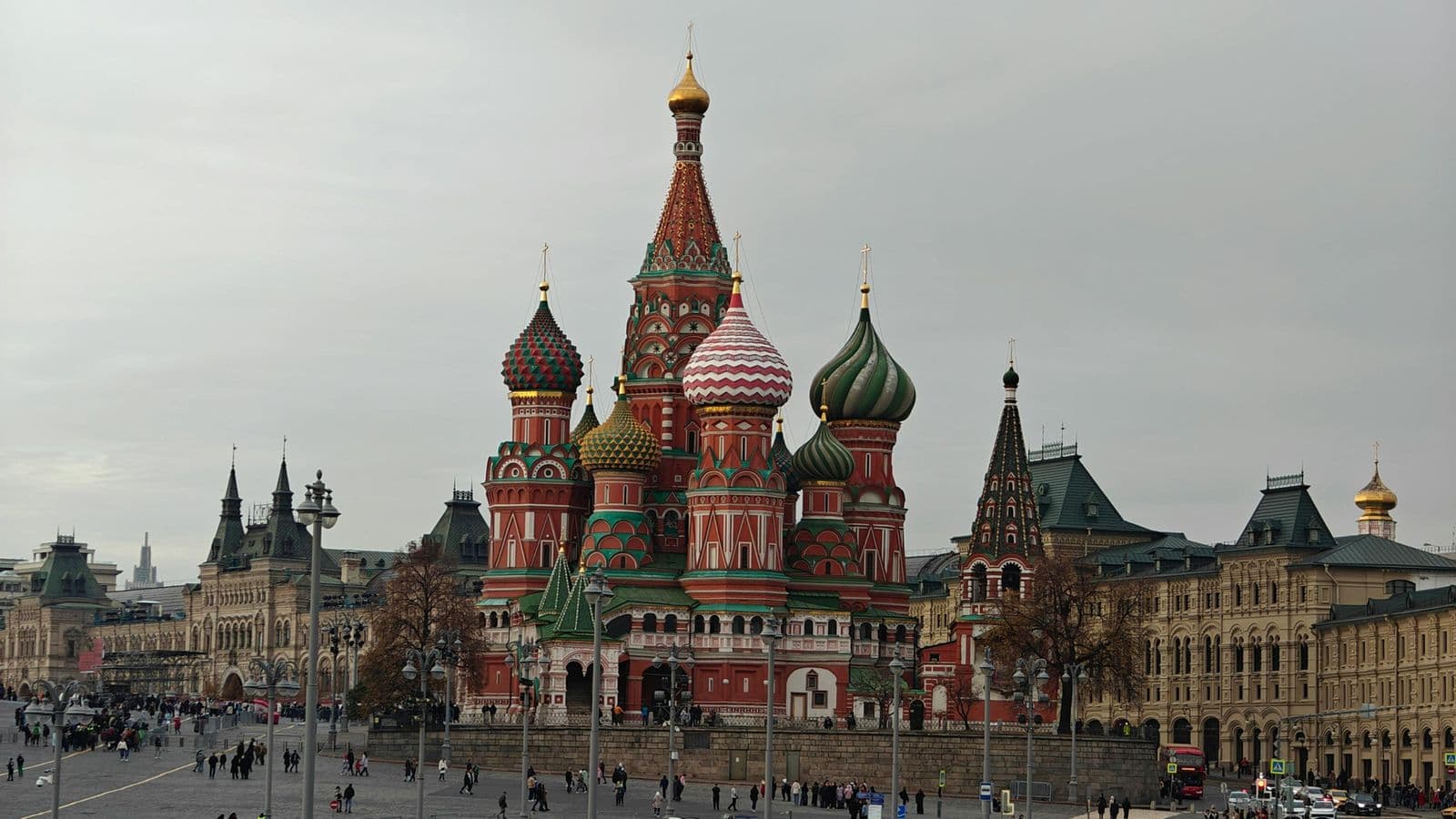
The weekend that was supposed to produce a breakthrough in U.S.-Iran negotiations ended with Trump canceling his envoys' trip to Pakistan, Iran's foreign minister flying to Moscow to meet Vladimir Putin, and the Strait of Hormuz still effectively closed.
For investors watching oil prices, the sequence of events over the past 72 hours is the clearest signal yet that a durable deal remains further away than markets had hoped.
What Happened This Weekend
The framework had looked promising heading into Saturday. Special envoy Steve Witkoff and Jared Kushner were scheduled to fly to Islamabad for what the White House described as direct talks with Iranian officials. Iranian Foreign Minister Abbas Araghchi had already arrived in Pakistan, meeting with Prime Minister Shehbaz Sharif and Army Chief Asim Munir.
Then it fell apart.
Trump canceled the Witkoff-Kushner trip on Saturday, writing on Truth Social that there was "too much time wasted on traveling, too much work" and blaming "tremendous infighting and confusion" within Iranian leadership. He added: "Nobody knows who is in charge, including them. Also, we have all the cards, they have none! If they want to talk, all they have to do is call!!!"
Trump told reporters separately that Iran had submitted a new proposal that was "not enough," but that a better offer arrived within ten minutes of him canceling the trip. He described it as "much better," though he did not elaborate on the terms.
Araghchi, for his part, described his Pakistan visit as "very fruitful" but said he had "yet to see if the U.S. is truly serious about diplomacy." He departed Pakistan for Oman on Saturday evening, returned to Islamabad on Sunday for a second round of meetings, then flew to St. Petersburg overnight to meet Putin on Monday.
Why the Moscow Visit Matters
Iran going to Moscow immediately after U.S. peace talks collapsed is not incidental. It is a deliberate signal.
Russia vetoed the UN Security Council resolution on the Strait of Hormuz earlier this month, blocking a Bahraini-drafted measure that called for an end to Iranian attacks and coordinated defensive efforts for shipping access. Moscow and Beijing have consistently shielded Iran diplomatically throughout the conflict.
Araghchi framed Monday's meeting as routine consultation. "I am confident that these consultations and coordination between the two countries will be of particular importance," he told Iranian media on arrival. But the visit serves a broader purpose: reinforcing to Washington that Iran has powerful political backers willing to block multilateral pressure, and that any deal will have to come through negotiation rather than isolation.
Russian involvement in the Iran talks is not a path to a faster resolution. Every time Moscow's weight enters the equation — through UN vetoes, diplomatic cover, or direct consultation — it makes the negotiating landscape more complicated for the U.S., not less.
Where the Negotiations Stand
The core sticking point has not changed. The U.S. wants Iran to suspend uranium enrichment for at least a decade and remove its enriched uranium stockpile from the country. Iran has submitted what it is calling written messages to the U.S. via Pakistani mediators that address "some of the red lines of the Islamic Republic of Iran, including nuclear issues and the Strait of Hormuz," according to Iran's ISNA news agency — though it stressed these messages are not part of any formal negotiations.
Iran's latest proposal, delivered before the weekend's collapse, attempts to bypass the nuclear deadlock entirely. It prioritizes reopening the Strait of Hormuz and ending the U.S. naval blockade first, with nuclear talks deferred to a later stage. Trump's team has so far rejected that sequencing, recognizing that lifting the blockade removes the primary source of leverage for extracting nuclear concessions.
Iran's top military command added a warning over the weekend: if the U.S. continues its blockade of Iranian ports, it will "face the response of Iran's powerful armed forces." The statement from the Khatam al-Anbiya Central Headquarters said Iran is "ready and determined, while monitoring the behaviour and movements of enemies in the region."
Trump, asked about the path forward on Sunday, told Fox News: "If they want to talk, they can come to us, or they can call us. You know, there is a telephone."
What This Means for Markets
Oil markets spent Friday trading lower after the White House confirmed Witkoff and Kushner were heading to Pakistan — a peace premium priced in on expectations of progress. Then the talks collapsed, and WTI futures ended the week up 13%, the largest weekly gain since the initial surge triggered by the war in early March.
The whipsaw illustrates the market dynamic in play. Every hint of diplomatic progress sends oil lower. Every setback sends it higher. With Brent crude sitting near $95 this morning and the Hormuz strait still effectively closed to non-Iranian commercial traffic, the energy market remains acutely sensitive to the pace and direction of negotiations.
Chevron CEO Mike Wirth, appearing on "Face the Nation" on Sunday, captured the macro picture plainly: the global energy system "has lost an incredible amount of flexibility" since the start of the Iran war.
The most important catalyst to watch this week is not the tech earnings parade or the FOMC meeting — it is whether Trump's "they can call us" posture produces any response from Tehran, and whether Araghchi's Moscow visit shifts Russia's diplomatic positioning in any meaningful way. The Hormuz strait re-opening, if and when it comes, would be the single largest positive shock the global economy could receive right now. The weekend's events suggest it is not imminent.
Sources
- Al Jazeera — "Iran's top diplomat visits Russia as part of efforts to end the war": https://www.aljazeera.com/news/2026/4/27/iran-foreign-minister-in-russia-for-putin-talks
- Al Jazeera — "Iran war live: Araghchi to meet Putin; Strait of Hormuz remains shut": https://www.aljazeera.com/news/liveblog/2026/4/27/iran-war-live-araghchi-to-meet-putin-trump-says-tehran-can-call-for-talks
- CNN — "Live updates: Iran's top diplomat in Russia for Putin meeting as US peace talks stall": https://edition.cnn.com/2026/04/27/world/live-news/iran-war-trump-israel
- Axios — "Iran offers US deal to reopen Hormuz strait, postpone nuclear talks": https://www.axios.com/2026/04/27/iran-us-hormuz-strait-nuclear-talks-proposal-pakistan
- Washington Post — "Trump calls off Witkoff, Kushner trip to Pakistan for Iran peace talks": https://www.washingtonpost.com/world/2026/04/25/iran-us-pakistan-ceasefire-talks/
- CBS News — "Live Updates: Iran's foreign minister travels to Pakistan and Russia after U.S. envoys' trip canceled": https://www.cbsnews.com/live-updates/us-iran-war-trump-strait-of-hormuz-hezbollah-lebanon-israel-ceasefire/
- Fox News — "Live Updates: Trump calls off Witkoff, Kushner's trip to Pakistan for US-Iran talks": https://www.foxnews.com/live-news/iran-war-trump-us-ceasefire-deal-strait-hormuz-pakistan-talks-april-25
- Euronews — "Iranian foreign minister heads to Moscow for meeting with Putin": https://www.euronews.com/2026/04/26/iranian-foreign-minister-returns-to-pakistan-before-heading-to-moscow-for-meeting-with-put
- The Moscow Times — "Iranian FM Arrives in St. Petersburg for Talks With Putin": https://www.themoscowtimes.com/2026/04/27/iranian-fm-arrives-in-st-petersburg-for-talks-with-putin-a92608
- NBC News — "Live Updates: Iran's foreign minister travels to Pakistan and Russia": https://www.nbcnews.com/world/iran/live-blog/live-updates-us-envoys-heading-pakistan-uncertainty-iran-talks-rcna342031
- Jefferson City News-Tribune / TNS — "Trump cancels trip to Pakistan for Kushner, Witkoff for Iran talks": https://www.newstribune.com/news/2026/apr/26/trump-cancels-trip-to-pakistan-for-kushner/
- House of Commons Library — "Israel/US-Iran conflict 2026: Reopening the Strait of Hormuz": https://commonslibrary.parliament.uk/research-briefings/cbp-10636/
Market Munchies and Mode Mobile communications are for informational purposes only, and are not a recommendation, solicitation, or research report relating to any investment strategy, security, or digital asset. All investments involve risk including the loss of principal and past performance does not guarantee future results.
Any information contained in this commentary does not purport to be a complete description of the securities, markets, or developments referred to in this material. The information has been obtained from sources considered to be reliable, but we do not guarantee that the foregoing material is accurate or complete. There is no guarantee that any statements or opinions provided herein will prove to be correct.