Markets Feel Calm… But Are You Missing the Real Risk? A Smarter Stock Market Outlook for 2026
Everything Looks Fine—So Why Does Your Investor Gut Feel Nervous? You scroll through the latest financial market headlines today . No panic. No crash. Oil prices are cooling. Volatility is behaving. Feels like a smooth dinner service after a chaotic kitchen rush, right? But…
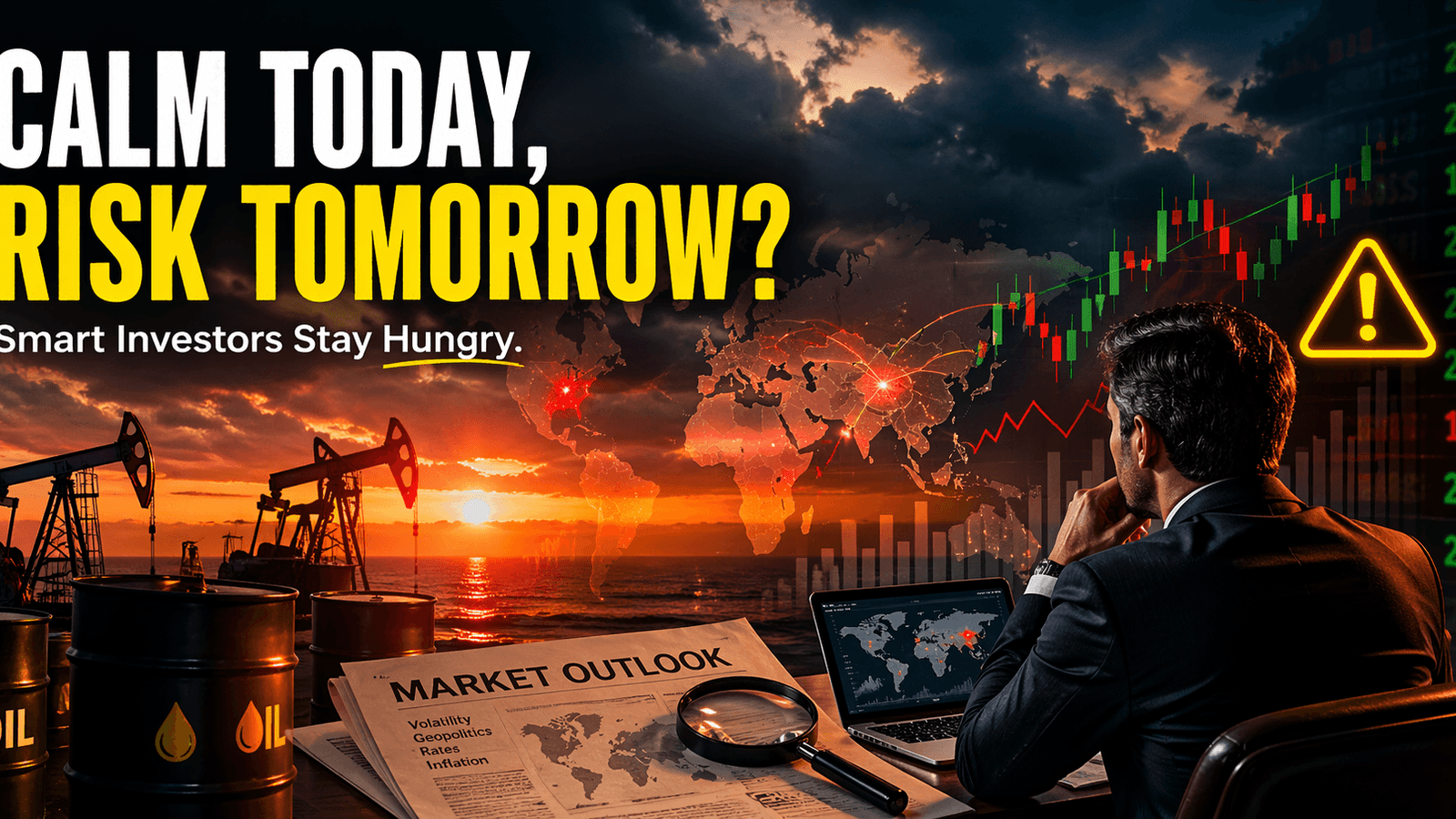
Everything Looks Fine—So Why Does Your Investor Gut Feel Nervous?
You scroll through the latest financial market headlines today. No panic. No crash. Oil prices are cooling. Volatility is behaving. Feels like a smooth dinner service after a chaotic kitchen rush, right? But here’s the twist—markets right now aren’t serving stability. They’re serving “less chaos.” And if you’ve been investing long enough, you already know: Calm markets can hide the most expensive mistakes. So let’s unpack what’s really happening inside the current stock market outlook and how you should position your portfolio while everyone else relaxes a bit too early.
Oil Prices Dropped… But the Kitchen Is Still Hot 🔥
Recent oil price trends show a pullback. Brent slipping below key levels gave markets a breather. But here’s the part most investors gloss over:
- Global oil demand still sits around 102 million barrels/day (IEA data)
- Spare production capacity remains tight—under 3–4% globally
- Key geopolitical zones continue to carry supply disruption risk
Translation? Lower prices ≠ , lower risk. Energy markets are reacting to headlines—not structural fixes. That lingering gap is exactly where the market risk premium lives.
Investor Radar 🍽️
Short-term dips in oil often lure investors into energy stocks at the wrong time. Watch supply signals, not just price charts.
Markets Aren’t Stable—They’re Just Less Scared
Let’s call it what it is. Current global market analysis shows investors pricing in
- Fewer shocks
- Slower escalation
- Temporary calm
Not long-term confidence. That’s why the market volatility index (VIX) can drop to near 12–14 levels while uncertainty still lingers in macro data. Markets are basically saying the following: “Dinner won’t burn… but we’re still watching the stove.”
Tactical Insight 🧠
A market driven by reduced fear—not strong conviction—often leads to sideways moves with sudden spikes. Great for traders. Tricky for long-term investors.
The Hidden Risks in Financial Markets No One Talks About
Here’s where things get interesting. A calm market often hides layered risks that don’t show up in daily headlines:
- Geopolitical tensions remain unresolved
- Supply chains are improving—but not fully healed
- Interest rates are still restrictive in major economies
- Corporate earnings growth is slowing toward single digits
S&P 500 earnings growth projections? Around 6–8% forward estimates—not exactly explosive. So why do markets feel okay? Because investors are adjusting expectations—not eliminating risk.
Smart Capital Signal 💡
Periods of low volatility often reward selective investing rather than aggressive exposure. Think quality over quantity.
Why False Stability Tricks Even Smart Investors
Let’s talk psychology. After weeks of heavy headlines, even slightly positive news feels like a win. That’s when investors start leaning bullish—not because fundamentals improved, but because stress faded. That’s how hidden risks in financial markets quietly build. You’ll notice patterns like the following:
- Increased retail participation
- More short-term trades
- Lower hedging activity
Sounds familiar?
Investor Edge 🍷
Stability without strong macro support is often temporary. Treat calm markets like a soft dessert—not the main course.
Where Smart Money Is Actually Positioning Right Now
Institutional investors aren’t celebrating yet. They’re adjusting quietly. Here’s what the data suggests:
- Global funds are holding higher cash allocations (~5–6%)
- Defensive sectors like healthcare and utilities are seeing steady inflows
- Tech remains dominant—but more selective, not broad-based
Meanwhile, emerging markets—especially in regions like South Asia—are gaining attention due to valuation gaps.
Portfolio Pulse 📊
Broad exposure works less efficiently in uncertain markets. Precision matters more than ever.
So… Where Should You Invest During Market Uncertainty?
Now the real question—what should you do? Instead of chasing trends, focus on positioning:
🍴 Smarter Moves in a “Less Chaos” Market
- Prioritize cash flow-positive companies
- Stay diversified across energy, tech, and defensive sectors
- Avoid overexposure to hype-driven rallies
- Keep a liquidity buffer for sudden volatility
🍷 Safe Investment Strategies 2026 (Reality Check)
No strategy is truly “safe.” But resilient portfolios share common traits:
- Strong balance sheets
- Pricing power
- Global revenue exposure
Strategic Takeaway 🧭
Patience isn’t passive. It’s positioning before the next move.
Final Bite: Calm Markets, Complex Risks
Markets right now feel like a well-plated dish—clean, controlled, appealing. But behind the scenes? The kitchen is still active.
- Risks haven’t disappeared
- Volatility hasn’t died
- Confidence hasn’t fully returned
So don’t confuse quiet with safe. Smart investors stay curious. Slightly skeptical. Always prepared. Because in investing, the biggest wins don’t come from reacting to chaos— They come from understanding calm. And right now? Calm deserves a closer look.
Sources
- International Energy Agency (IEA) – Oil Market Report (Latest Edition)
- U.S. Energy Information Administration (EIA) – Short-Term Energy Outlook (STEO)
- International Monetary Fund (IMF) – Global Financial Stability Report (October 2025)
- World Bank – Commodity Markets Outlook (April 2025 Edition)
- Cboe Global Markets – CBOE Volatility Index (VIX) Overview & Data
Market Munchies and Mode Mobile communications are for informational purposes only, and are not a recommendation, solicitation, or research report relating to any investment strategy, security, or digital asset. All investments involve risk including the loss of principal and past performance does not guarantee future results.
Any information contained in this commentary does not purport to be a complete description of the securities, markets, or developments referred to in this material. The information has been obtained from sources considered to be reliable, but we do not guarantee that the foregoing material is accurate or complete. There is no guarantee that any statements or opinions provided herein will prove to be correct.