Markets Feel Calm—But Liquidity Is Quietly Tightening (Here’s What You’re Missing)
You’re Not Panicking… So Why Are Markets Getting Nervous? You check your portfolio. Nothing dramatic. No crash headlines. No chaos. So naturally, you assume things are… fine. But here’s the uncomfortable question: What if the real shift isn’t loud but slow, quiet, and already…
You’re Not Panicking… So Why Are Markets Getting Nervous?
You check your portfolio. Nothing dramatic. No crash headlines. No chaos. So naturally, you assume things are… fine. But here’s the uncomfortable question: What if the real shift isn’t loud but slow, quiet, and already underway? Because right now, beneath the surface of steady markets, something more subtle is happening. Central banks are hesitating. Bond yields are climbing. Banks are getting cautious. Credit is tightening—without making a scene. It’s not a crisis. It’s something trickier. It’s a slow squeeze on liquidity—and that’s where smart investors start paying attention.
🏦 Central Banks Are Stalling—And That’s Not Bullish
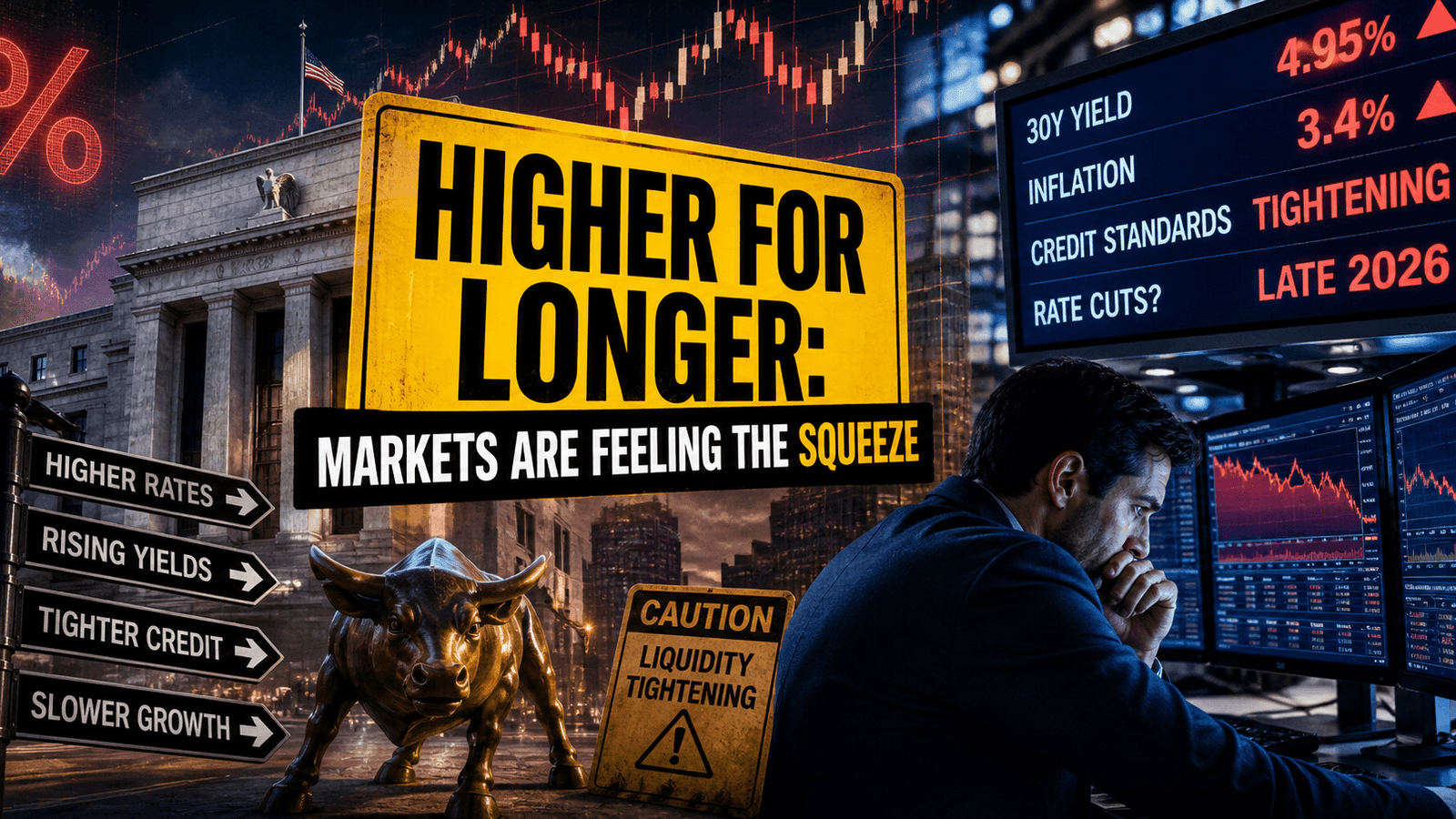
You were probably expecting rate cuts by now. Most people were. Instead? They’re not coming anytime soon. The Federal Reserve, alongside the European Central Bank and the Bank of England, is holding rates steady. Not because everything is great, but because inflation refuses to cool off, especially in services and wages fully. Policymakers keep repeating the same phrase: “data-dependent.” Markets hear something else: “We’re not ready to ease.” So rate cuts? They’ve quietly drifted further out—late 2026 territory. Smart Capital Signal: When central banks hesitate, it usually means they’re balancing risk—not solving it. 👉 For you: Expect tight financial conditions to stick around longer than markets like.
📈 Bond Yields Are Rising—And That Changes Everything
Here’s where things get more interesting. The 30-year U.S. Treasury yield is flirting with ~5%. That’s not just a number—it’s a message. Why? Because long-term yields moving up this fast aren’t about growth optimism. They’re about supply pressure and structural shifts. Governments are borrowing more. Central banks are buying less. And global demand? Not as strong as before. So yields rise. Quietly. Relentlessly. And when yields rise:
- Stocks get revalued
- Tech gets sensitive
- Real estate starts sweating
Investor Radar: Higher yields = higher “gravity” on asset prices. 👉 For you: Be cautious with valuation-heavy sectors—they feel this first.
🏦 Banks Look Strong… But They’re Acting Careful
On paper, banks are doing well. Higher rates mean strong net interest margins. Profits look decent. Earnings don’t scream trouble. But look closer—and the tone changes. Banks are:
- Increasing loan loss provisions
- Watching credit card delinquencies rise
- Staying cautious on commercial real estate exposure
It’s like a restaurant still making money—but quietly stocking up before a supply shortage. They’re not reacting to a crisis. They’re preparing for one. Tactical Insight: When banks start playing defense early, it’s rarely random. 👉 For you: Watch consumer credit and real estate signals closely—they’re early stress indicators.
🧊 Credit Is Tightening—And Almost No One Is Talking About It
This might be the most important piece—and the least visible. Credit conditions are tightening. Not dramatically. Not headline-worthy. But steadily. Lenders are:
- Raising approval standards
- Reducing loan availability
- Becoming more selective
Businesses are finding it harder to borrow. Consumers are leaning more on existing debt. No panic. Just… friction. And historically, that’s how slowdowns begin:
- Credit tightens
- Growth slows
- Stress shows up later
Market Pulse Check: Liquidity doesn’t disappear overnight—it fades quietly. 👉 For you: Watch for reduced risk appetite across markets before price drops confirm it.
🎄 Holiday Optimism vs. Financial Reality
Here’s where things get a bit ironic. Consumer-facing data might still look okay—especially during holiday-driven spending cycles. People travel. Shop. Spend. But under the hood?
- Borrowing costs are high.
- Credit is tighter
- Banks are cautious
So while the surface shows seasonal strength, the foundation is slowly tightening. It’s like celebrating a great dinner… while the pantry quietly empties.
🧠 The Bigger Picture: It’s Not Panic—It’s Pressure
Put it all together:
- Central banks aren’t easing
- Bond markets are tightening conditions
- Banks are preparing for stress
- Credit is becoming harder to access
Nothing is breaking. But everything is leaning in the same direction.
📌 The Final Thought: Liquidity Doesn’t Leave Loudly
You won’t get a siren. No flashing red lights. Just subtle shifts:
- Slightly higher yields
- Slightly tighter credit
- Slightly more cautious lending
Until one day, markets feel heavier—and you’re wondering when that started.
Investor Takeaway
The biggest risk right now isn’t volatility. It’s underestimating slow-moving pressure. 👉 Stay selective. 👉 Respect liquidity. 👉 And don’t confuse calm with comfort. Because in markets, the quiet phases? They’re often where the real story begins.
Sources
- Federal Reserve — FOMC Statement (March 19, 2025
- Bank of England — Monetary Policy Summary (March 2025)
- Federal Reserve (FRED) — 30-Year Treasury Yield (DGS30 – Live Data Series)
- Federal Reserve — Charge-Off & Delinquency Rates (Consumer Credit Trends)
- International Monetary Fund — Global Financial Stability Report (Latest Full Report)
Market Munchies and Mode Mobile communications are for informational purposes only, and are not a recommendation, solicitation, or research report relating to any investment strategy, security, or digital asset. All investments involve risk including the loss of principal and past performance does not guarantee future results.
Any information contained in this commentary does not purport to be a complete description of the securities, markets, or developments referred to in this material. The information has been obtained from sources considered to be reliable, but we do not guarantee that the foregoing material is accurate or complete. There is no guarantee that any statements or opinions provided herein will prove to be correct.