NYSE Plans Blockchain Venue for 24/7 Tokenized Stock Trading
📈 The Big Board Goes Digital The New York Stock Exchange is building a blockchain-based trading venue designed to allow investors to buy and sell tokenized stocks and ETFs around the clock. The initiative, announced by parent company Intercontinental Exchange, would combine…
📈 The Big Board Goes Digital
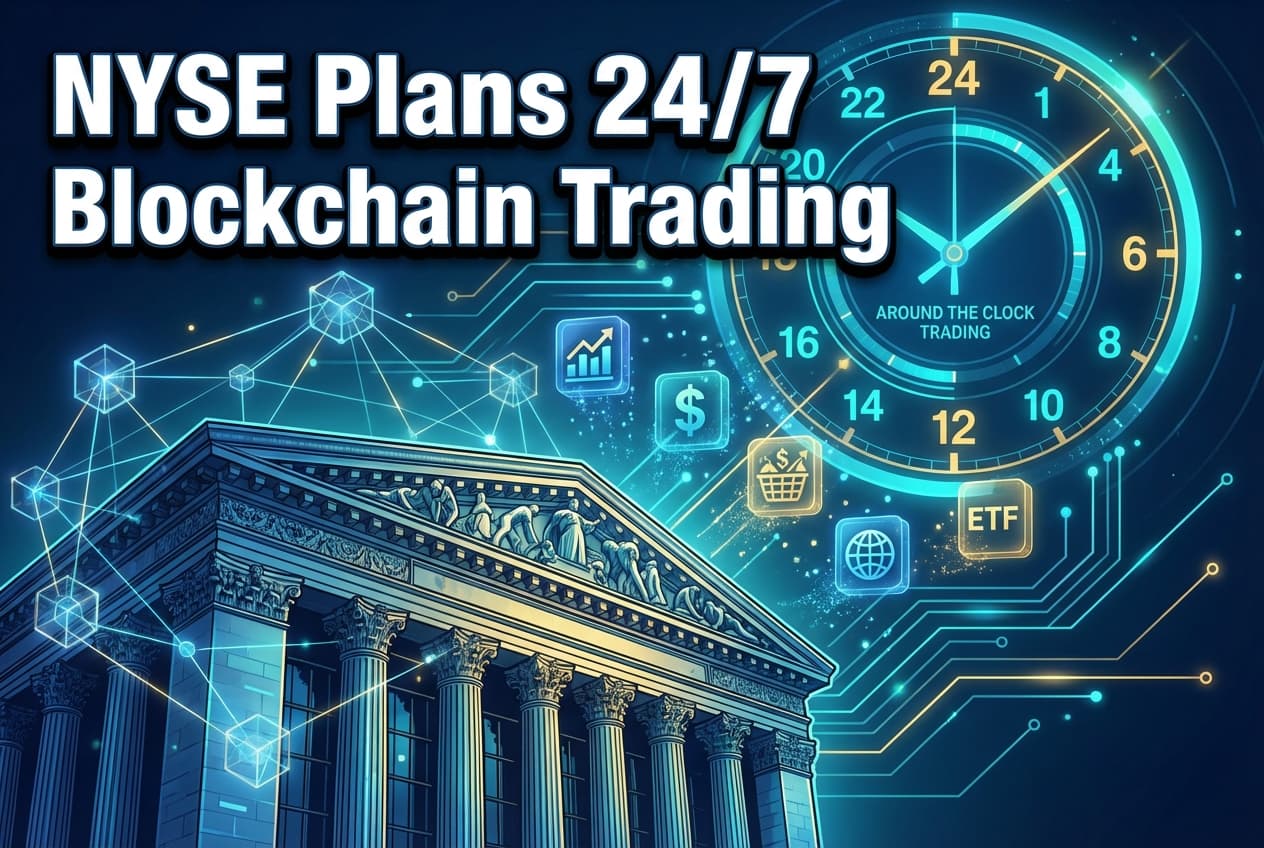
The New York Stock Exchange is building a blockchain-based trading venue designed to allow investors to buy and sell tokenized stocks and ETFs around the clock. The initiative, announced by parent company Intercontinental Exchange, would combine NYSE's existing order-matching technology with private blockchain networks to enable real-time trading, funding, and settlement of tokenized securities. Michael Blaugrund, vice president of strategic initiatives at ICE, told Bloomberg that the move creates new opportunities for retail investors to participate in stablecoin-funded markets. The exchange aims to launch the platform later this year, pending approval from the U.S. Securities and Exchange Commission. For retail traders accustomed to limited market hours, this represents a fundamental shift in how and when they can access traditional securities.
⚡ Real-Time Settlement Changes the Game
Unlike traditional equity markets where trades settle the following business day, NYSE's proposed venue would allow transactions to be funded and settled in real time. This infrastructure addresses growing investor demand for markets that never close, according to Blaugrund. Tokenized securities are digital representations of stocks or funds recorded on a blockchain rather than held in conventional brokerage accounts. The structure enables investors to immediately reuse capital outside standard market hours, potentially including stablecoin-funded transactions that settle instantly. For active traders, this could eliminate the two-day wait for funds to clear before being redeployed. The continuous trading environment mirrors crypto markets, which have operated 24/7 since inception, but brings that accessibility to traditional securities with the regulatory protections of a major exchange.
🔓 Fractional Ownership Opens New Doors
Tokenization allows for fractional ownership, enabling investors to buy small portions of assets previously out of reach. This breaks down large, illiquid investments into smaller, more manageable units that can potentially trade more easily on secondary markets. According to industry analysis, this makes previously inaccessible assets available to a broader audience and offers more flexibility for investors looking to enter or exit positions. For retail investors with limited capital, the ability to own a fraction of high-value stocks or ETFs without minimum investment thresholds represents a significant democratization of market access. The structure could also deepen liquidity by attracting new participants who were previously priced out of certain securities. Institutional investors may find value in the improved operational efficiency and reduced settlement risk that comes with blockchain-based clearing and custody.
🏛️ SEC Approval Remains the Critical Path
ICE is in active discussions with the SEC as it seeks permission to operate the new platform. Regulators' response will be closely watched across the industry as traditional exchanges and digital asset firms push for clearer rules around tokenized assets. The move puts NYSE in direct competition with Nasdaq, which in September asked regulators to allow tokenized versions of stocks to trade on its public exchange. Nasdaq proposed that tokenized securities follow the same execution and disclosure rules as their underlying shares and be clearly labeled as tokenized assets. The SEC has shifted focus from enforcement toward providing clearer guidance for digital asset issuers, a trend expected to continue throughout 2026. Chairman Paul Atkins noted that tokenized securities are securities since they represent ownership of a financial instrument, suggesting regulatory treatment will follow existing frameworks. For market participants, the pace of regulatory approval will determine how quickly this infrastructure can scale beyond pilot programs.
🌉 Bridging Traditional Finance and Blockchain
NYSE has already taken steps toward extended trading hours. Its Arca equities venue outlined plans to offer trading for 22 hours on weekdays, a proposal that received initial SEC approval in February, subject to upgrades to market data feeds. The new digital venue represents another step toward non-stop trading while helping bridge traditional financial markets and blockchain-based infrastructure. ICE is also exploring new clearing systems to support 24/7 trading and working with banks on tokenized deposits that could allow money to move outside traditional banking hours. Meanwhile, the Depository Trust & Clearing Corporation is working to tokenize securities on the Ethereum blockchain, aiming for modernization without full decentralization. For investors, these parallel initiatives suggest the infrastructure for tokenized markets is being built across multiple layers of the financial system simultaneously, not just at the exchange level.
🎯 What This Means for Investors
Skeptics caution that while the technology may change, underlying risks tied to lending, leverage, and market volatility remain the same. Widespread adoption will depend on winning over regulators, institutional investors, and market participants wary of operational and systemic risks. However, if approved, NYSE's blockchain venue would mark one of the most significant moves yet by a major U.S. exchange to bring tokenization into the heart of Wall Street. For retail investors, the promise of 24/7 access to traditional securities with instant settlement could reshape how portfolios are managed and rebalanced. Institutional players may benefit from reduced counterparty risk and operational costs. The key question is whether the regulatory framework can evolve quickly enough to support innovation while maintaining investor protections. As Larry Fink of BlackRock has noted, tokenization represents the next major evolution of market infrastructure, and NYSE's initiative signals that transformation is accelerating.
Sources
https://crypto.news/nyse-wants-to-go-24-7-big-board-plans-blockchain-venue-for-tokenized-stocks/ https://www.bloomberg.com/news/articles/2026-01-19/nyse-builds-venue-for-24-7-trading-of-tokenized-stocks-etfs https://www.rwa.io/post/rwa-tokenization-investment-for-2026 https://etedge-insights.com/markets/how-tokenisation-is-rewiring-capital-markets-in-2026/ https://www.skadden.com/insights/publications/2026/2026-insights/sector-spotlights/with-supportive-new-regulations-digital-assets-are-likely-to-proliferate-in-2026 https://www.carltonfields.com/insights/publications/2025/sec-staff-no-action-letter-to-dtc-for-tokenization-services
Market Munchies and Mode Mobile communications are for informational purposes only, and are not a recommendation, solicitation, or research report relating to any investment strategy, security, or digital asset. All investments involve risk including the loss of principal and past performance does not guarantee future results.
Any information contained in this commentary does not purport to be a complete description of the securities, markets, or developments referred to in this material. The information has been obtained from sources considered to be reliable, but we do not guarantee that the foregoing material is accurate or complete. There is no guarantee that any statements or opinions provided herein will prove to be correct.
Get fresh insights, breaking news, and hidden gems in the world of crypto—delivered straight to your inbox with our Crypto Cookies newsletter. Don't miss out—sign up now and get your first bite of insider knowledge!