Oil Shock Meets Strong Data as Markets Reprice Risk
Wednesday’s bounce looked like the start of a reset. After two brutal sessions tied to the Iran conflict and energy-price shock, buyers leaned back into tech and growth, helped by a brief cooling in oil and a flicker of optimism that diplomacy might slow the escalation. Then…
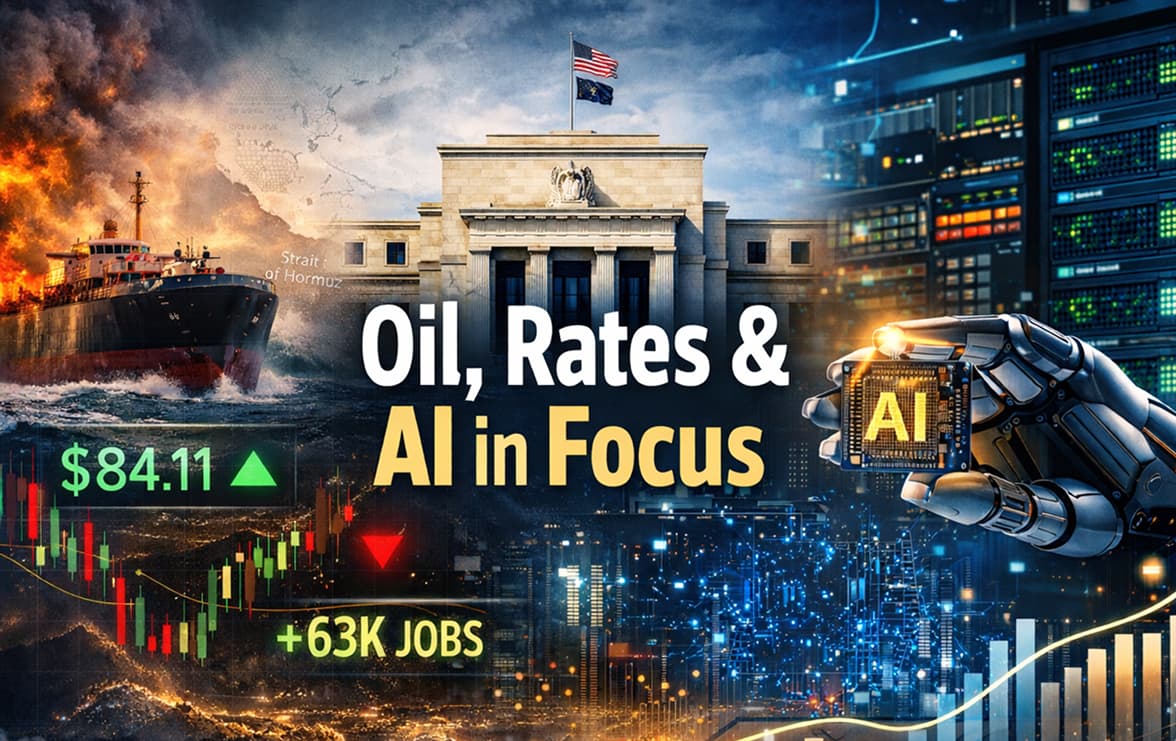
Wednesday’s bounce looked like the start of a reset. After two brutal sessions tied to the Iran conflict and energy-price shock, buyers leaned back into tech and growth, helped by a brief cooling in oil and a flicker of optimism that diplomacy might slow the escalation.
Then the overnight tape changed. Iran publicly denied reports that it had messaged Washington about peace talks, and crude pushed higher again as the market refocused on shipping risk and supply constraints around the Strait of Hormuz.
At the same time, the macro data came in hot enough to matter. A strong services PMI and a better-than-expected ADP jobs print hardened the idea that the Federal Reserve can afford to wait, especially with energy threatening to leak back into inflation. In that setup, “safe haven” behaves differently, yields move higher alongside oil, and investors start treating rate cuts like a late-summer or early-fall story instead of a near-term cushion.
Stock of Interest Today: Hewlett Packard Enterprise (HPE)
Hewlett Packard Enterprise is heading into Monday’s fiscal Q1 2026 earnings report with a setup that is unusually clean for a large-cap infrastructure name. The stock is being treated as a live referendum on whether the AI buildout is still accelerating in the real economy, not just in investor narratives. HPE reports Monday, March 9.
The bull case starts with demand visibility. In its most recent quarter, HPE said AI systems orders reached $1.9B in Q4 and it signed $6.8B in new AI system orders across fiscal 2025, with sovereign and enterprise bookings accounting for more than 60% of cumulative AI orders since Q1 fiscal 2023. That mix matters because it suggests the pipeline is not solely hyperscaler-driven and it may be less fragile than a single customer cohort.
Then there is the backlog signal. In its Q4 FY25 materials, HPE showed cumulative AI orders of $13.4B and AI backlog of $4.7B as of Q4, a record level that reinforces the idea that demand is there even if revenue recognition can be uneven quarter to quarter. Management has been explicit that conversion can be lumpy, with a meaningful portion of backlog weighted to the second half and beyond, which is exactly why this print matters.
The second pillar is the networking pivot. With Juniper folded in, HPE has framed the combined portfolio as “AI-native networking,” and management guidance implied networking growth in the 145% to 155% range year over year on an as-reported basis, which is effectively the “integration tailwind” investors expect to see reflected in mix and margins.
Finally, valuation is part of the debate. Analysts’ published targets cluster around the mid-$20s, and MarketBeat’s consensus page shows an average price target near $25.29 with the stock recently around $21.6. The question is whether Monday’s results make that upside feel earned through execution, or merely hoped for through theme exposure.
Current price: $21.57Analyst target: $25.29
Five Market Setups
The near-term playbook is being written by three inputs that reinforce each other: the oil risk premium, the path of rate cuts, and whether AI infrastructure can stay insulated from a tighter financial backdrop. None of these are binary, but the market is likely to treat each new data point as evidence for one narrative or the other.
Below are the five factors most likely to shape positioning and volatility over the next few sessions, based on Wednesday’s close and the information now in play.
1) Iran’s talk denial keeps energy overweight on the table
If the market concludes the conflict is headed for a longer phase, the oil premium can persist even without a dramatic escalation. Reuters has reported that the conflict’s spread has strained supply and shipping conditions, including tanker incidents and a large number of vessels stranded near the Strait of Hormuz.
What to watch next: Any signs that shipping disruptions are easing, or that tanker traffic is normalizing. If not, energy equities can remain a relative safe pocket, while fuel-sensitive industries face renewed margin pressure.
2) Strong services and jobs data can keep the Fed timeline pushed out
The latest read on U.S. services activity and private payrolls leans toward a “resilient enough to wait” narrative, which can make it harder for markets to pull forward aggressive easing expectations if energy prices stay elevated. ISM Services rose to 56.1, and ADP showed 63,000 private-sector jobs added in February, both consistent with an economy that is still absorbing higher rates.
What to watch next: The next big labor and wage prints, plus whether market-based inflation expectations start drifting higher alongside crude. If wages and expectations firm up at the same time, investors may keep nudging the first clearly priced cut further out, even if equities try to stabilize.
3) A 4.13% 10-year yield can become a pressure point for long-duration trades
The 10-year yield pushing to around 4.13% is not just a rates headline. It is a valuation filter. If yields stay pinned at multi-week highs, investors tend to demand more immediate earnings clarity and punish “later” cash flows.
What to watch next: Whether the move in yields is driven by inflation expectations (oil-driven) rather than growth fears. In oil shocks, bonds do not always behave like a classic safe haven, which can keep cross-asset volatility elevated.
4) Volatility may stay headline-driven, with reversals more likely than trends
Deutsche Bank’s Jim Reid summed up the dynamic simply: the situation is “moving fast” and oil is moving again. That is a reminder that the market may struggle to build a stable trend when the base case can flip on one confirmed or denied headline.
What to watch next: Whether diplomacy headlines stop oscillating and begin to converge. Until then, risk assets can experience sharp intraday rotations that look like “new leadership,” then fade quickly when the next update hits.
5) AI infrastructure can stay bid, but only where conversion is visible
AI spending can remain one of the few durable growth pillars even in a higher-yield environment, but the market tends to reward execution, not enthusiasm. For HPE, the narrative is already well-defined: sizable AI orders and backlog create visibility, and the next step is proving that demand converts into revenue on a predictable cadence without sacrificing margins.What to watch next: Monday’s HPE report for specific cues on backlog conversion timing, gross margin trajectory, and how management frames demand across hyperscalers versus enterprise and sovereign buyers. If guidance reads “conversion is accelerating and margins are holding,” the group can stay supported. If it reads “timing is still lumpy and profitability is under pressure,” higher yields can make the market less patient.
Bottom Line
Wednesday’s rebound was built on the idea that the worst-case energy shock might cool quickly. Iran’s denial of outreach risks bringing the oil premium back, and strong U.S. data makes it easier for markets to keep sliding rate-cut expectations later into the year. If yields stay near multi-week highs, the market’s tolerance for vague growth narratives shrinks, which is exactly why HPE’s next report is less about excitement and more about conversion, margins, and proof.
Sources:
- https://www.reuters.com/business/wall-street-futures-slip-middle-east-conflict-oil-driven-inflation-concerns-2026-03-04/
- https://www.reuters.com/world/middle-east/iran-denies-axios-report-that-messages-were-sent-us-2026-03-04/
- https://www.reuters.com/business/energy/oil-prices-rise-iran-conflict-widens-2026-03-05/
- https://www.wsj.com/economy/u-s-services-sector-activity-continues-to-rise-in-february-1c821b38
- https://www.prnewswire.com/news-releases/adp-national-employment-report-private-sector-employment-increased-by-63-000-jobs-in-february-annual-pay-was-up-4-5-302703846.html
- https://adpemploymentreport.com/
- https://www.reuters.com/world/europe/bond-markets-gripped-by-oil-driven-inflation-fear-traders-slash-bets-rate-cuts-2026-03-03/
- https://www.reuters.com/world/africa/currencies-take-beat-dollar-rally-pauses-2026-03-05/
- https://www.bloomberg.com/news/articles/2026-03-05/treasury-yields-climb-to-three-week-high-as-inflation-fears-grow
- https://www.barrons.com/livecoverage/stock-market-news-today-030526/card/stock-futures-drop-oil-rallies-after-iran-denies-peace-talks-Io0bvPqNu1cIYIMXoazv
- https://www.barrons.com/articles/oil-price-rally-iran-war-24861c93
- https://www.hpe.com/us/en/newsroom/press-release/2026/02/hpe-to-present-live-audio-webcast-of-fiscal-2026-first-quarter-earnings-conference-call.html
- https://investors.hpe.com/~/media/Files/H/HP-Enterprise-IR/documents/q4-2025/q4-earnings-transcript-final.pdf
- https://investors.hpe.com/~/media/Files/H/HP-Enterprise-IR/documents/q4-2025/q4-2025-earnings-press-release.pdf
- https://investors.hpe.com/~/media/Files/H/HP-Enterprise-IR/documents/q4-2025/q4-2025-earnings-presentation.pdf
- https://www.marketwatch.com/investing/stock/hpe/options
- https://www.marketbeat.com/stocks/NYSE/HPE/forecast/
- https://www.gurufocus.com/term/forward-pe-ratio/HPE
- https://www.gurufocus.com/term/forward-pe-ratio/DELL
- https://www.gurufocus.com/term/forward-pe-ratio/SMCI
- https://www.barrons.com/news/seoul-leads-rebound-across-asian-stocks-oil-extends-gains-a8bd6382
Market Munchies and Mode Mobile communications are for informational purposes only, and are not a recommendation, solicitation, or research report relating to any investment strategy, security, or digital asset. All investments involve risk including the loss of principal and past performance does not guarantee future results.
Any information contained in this commentary does not purport to be a complete description of the securities, markets, or developments referred to in this material. The information has been obtained from sources considered to be reliable, but we do not guarantee that the foregoing material is accurate or complete. There is no guarantee that any statements or opinions provided herein will prove to be correct.