Oil Shock, War Risk & Rising Rates: Are Investors Walking Into an Inflation Trap Again?
You Thought Inflation Was Cooling… So Why Does It Suddenly Feel Hot Again? You were finally getting comfortable. Inflation looked like it was easing. Central banks were hinting—carefully—at possible rate cuts. Markets were starting to relax, even flirt with optimism. And then,…
You Thought Inflation Was Cooling… So Why Does It Suddenly Feel Hot Again?
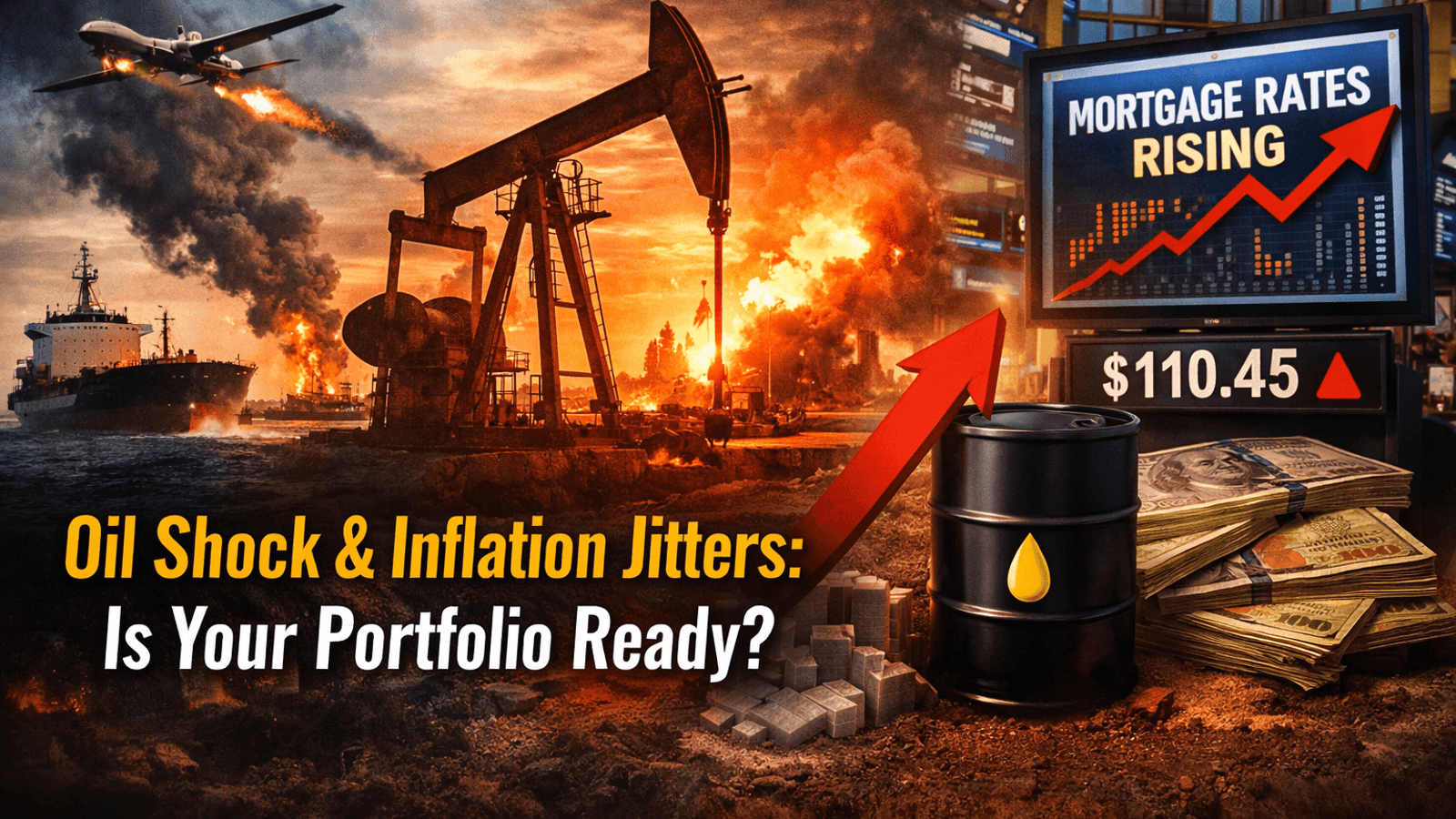
You were finally getting comfortable. Inflation looked like it was easing. Central banks were hinting—carefully—at possible rate cuts. Markets were starting to relax, even flirt with optimism. And then, almost overnight, everything changed. Missiles in the Middle East. Oil tankers stuck in limbo. Shipping routes are turning unpredictable. Suddenly, the Strait of Hormuz—a narrow waterway most investors rarely think about—became the most important choke point in the global economy. Now you’re watching oil surge past $100… $110… maybe higher. Bond yields are creeping up. Inflation whispers are getting louder again. So the real question is: Was the inflation cooldown just a pause… not the end?
🌍 When One Strait Controls the Global Economy
It sounds dramatic, but it’s not an exaggeration. Roughly 20% of the global oil supply flows through the Strait of Hormuz. When that artery tightens, the entire system feels it. Recent escalations have done exactly that:
- Tankers are delayed, rerouted, or outright avoiding the region
- Energy infrastructure under threat
- Millions of barrels per day were effectively disrupted
This isn’t just geopolitics—it’s supply shock economics in real time. And markets react fast when supply becomes uncertain. Smart Capital Signal: When energy supply risk spikes, everything downstream—inflation, growth, policy decisions—begins to reprice simultaneously. This is not a sector story. It’s a system-wide one.
🛢 Oil’s Run to $110+ Isn’t Just a Headline—It’s a Reset Button
Oil didn’t gradually climb. It jumped. Prices surged toward $110+, with some regional benchmarks spiking even higher due to localized shortages. Analysts are already floating scenarios where oil touches $120+ if disruptions persist. Here’s what matters more than the number itself:
- Oil is up ~50% in a short span
- Strategic reserves can only cushion temporarily
- Markets are still debating whether this is a temporary panic or a structural shift
That uncertainty is where volatility lives. And where mistakes happen. Tactical Insight: You’re not just looking at oil prices—you’re looking at inflation expectations being rewritten in real time. Markets that were pricing easing may now have to price restraint.
📊 Inflation Isn’t Dead—It Just Found a New Fuel Source
For months, the narrative was simple: inflation is cooling. Now it’s more complicated. Because this time, inflation isn’t coming from demand overheating—it’s coming from supply constraints, which are much harder to fix. Producer prices are already reacting. Energy costs are bleeding into everything:
- Manufacturing inputs
- Transportation costs
- Food supply chains
And central banks? They’re stuck. Cut rates too early, and inflation rebounds. Hold rates too high, and growth slows further. That’s not a comfortable position. Investor Radar: This is the classic “bad inflation” setup—driven by supply shocks rather than demand strength. Historically, this environment leads to policy hesitation and market volatility.
🏭 From Oil Fields to Your Daily Expenses: The Ripple Effect Is Real
It’s easy to think of oil as a market number. It’s not. It’s a cost multiplier. When oil rises:
- Shipping gets more expensive
- Airlines raise prices
- Food production costs increase
- Manufacturing margins shrink
In parts of Europe, energy costs are already squeezing industries. In emerging markets, currencies are weakening under the pressure of higher import bills. And globally, supply chains—already fragile—are taking another hit. This is where inflation stops being a chart… and starts becoming a lived experience. Ground-Level Take: You should watch for second-order effects—not just oil itself. The real impact shows up in earnings, margins, and consumer behavior.
🏦 Higher Oil, Higher Rates: Why Your Cost of Money Is Rising Again
Here’s where things tighten. Bond markets don’t wait. As oil pushes inflation expectations higher, yields move. And when yields rise:
- Mortgages get more expensive
- Corporate borrowing costs increase
- Equity valuations face pressure
We’re already seeing this play out globally—especially in oil-importing economies where currencies weaken and borrowing costs climb. In simple terms: Expensive energy → persistent inflation → delayed rate cuts → higher rates for longer Not exactly the soft landing investors were hoping for. Capital Flow Insight: Watch the bond market closely. It’s signaling a shift from “rate cuts coming” to “not so fast.” That changes how capital flows across every asset class.
🎯 The Bigger Picture: This Isn’t Just a Shock—It’s a Chain Reaction
Step back for a second. What you’re seeing isn’t one isolated event. It’s a macro domino effect:
- Geopolitical conflict disrupts energy
- Oil prices spike
- Inflation expectations rise
- Central banks hesitate
- Bond yields increase
- Financial conditions tighten
And suddenly, the market environment feels very different from just a few weeks ago. Even seasonal demand patterns—such as increased travel and consumption during global holidays—can amplify these pressures, pushing energy demand higher when supply is already strained. That’s how small sparks turn into bigger fires. Strategic Lens: Markets often underestimate how quickly geopolitics can override macro narratives. This is one of those moments.
🍽️ Final Thought: The Market Didn’t Change—The Assumptions Did
Here’s the quiet shift happening beneath the surface: You didn’t just get an oil spike. You got a reality check. The assumption was that inflation was fading, rate cuts were coming, and growth would stabilize. Now?
- Inflation might stick around longer.
- Rate cuts might be delayed.
- Growth could face new pressure.
And all of it started with a narrow waterway most investors barely think about.
That’s the game.
Closing Take — The Investor’s Edge:
The smartest move right now isn’t prediction—it’s adaptability. Because in markets like this, the winners aren’t the ones who guess right. They’re the ones who adjust faster when the story changes.
Sources
- Reuters – Oil surge and Middle East supply disruption
- Reuters – Middle East oil benchmarks and supply cuts
- Axios – Oil spike and Hormuz disruption impact
- The Guardian – Global economic impact of oil shock and inflation
- World Economic Forum – Trade disruption and shipping risks
- The Times of India – Supply chain and industrial disruption
- Business Insider – Inflation risks and market outlook
- IRU – Fuel price volatility and supply constraints
Market Munchies and Mode Mobile communications are for informational purposes only, and are not a recommendation, solicitation, or research report relating to any investment strategy, security, or digital asset. All investments involve risk including the loss of principal and past performance does not guarantee future results.
Any information contained in this commentary does not purport to be a complete description of the securities, markets, or developments referred to in this material. The information has been obtained from sources considered to be reliable, but we do not guarantee that the foregoing material is accurate or complete. There is no guarantee that any statements or opinions provided herein will prove to be correct.