OPEC Keeps Pumping, the IEA Sees a Glut—But Are Investors Missing the Real Hedge?
🌍 A Market Narrative Tilted by Supply, Policy, and Gold Whiplash Global energy surplus markets are juggling multiple storylines, and none are straightforward. The expectations have been reshaped by the International Energy Agency (IEA), OPEC, updates on U.S. crude oil…
🌍 A Market Narrative Tilted by Supply, Policy, and Gold Whiplash
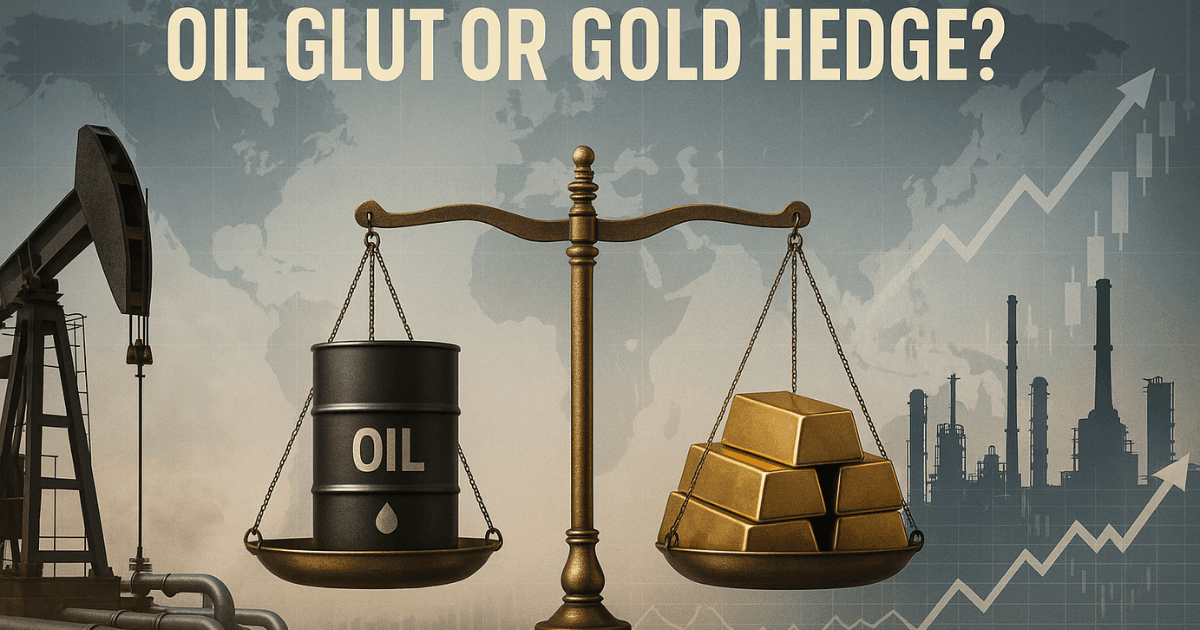
Global energy surplus markets are juggling multiple storylines, and none are straightforward. The expectations have been reshaped by the International Energy Agency (IEA), OPEC, updates on U.S. crude oil production records, and even the drama surrounding gold’s tariff clarification. The latest moves, from the risk of an oil glut to safe-haven swings, reveal a single remaining truth: while inflation may be easing, the insight into commodity volatility remains strong. For investors, the puzzle is clear—when fundamentals say “calm” but policy-driven gold volatility says “chaos,” what’s the smarter hedge?
🛢️ IEA Raises Supply Outlook, Cools Demand
The IEA's production boost oil supply report in August raised its 2025 global oil surplus outlook to 2.5 million barrels per day, citing the OPEC+ September production increase. At the same time, demand growth was reduced to just 680,000 barrels per day (bpd), with 2026 projected to reach around 700,000 bpd. Refinery activity is also surging, with runs projected to reach 85.6 mb/d—a record high. As Reuters noted, “Oil hit a two-month low as IEA’s projections and U.S. supply weighed on market sentiment.” Translation: The upside in crude prices has just found a ceiling. Smart Capital Signal: The oil surplus outlook may soften inflationary pressure—a relief for central banks and bond markets. However, for crude bulls, this serves as a harsh reminder that the pressure on oil prices will persist.
⛽ OPEC’s Balancing Act—Future Tightness vs Present Looseness
In its August Monthly Oil Market Report (MOMR), OPEC raised its 2026 demand growth forecast to 1.38 million barrels per day (mb/d) and trimmed expectations for rival supply growth, particularly from U.S. shale. On paper, that paints a tighter market ahead. However, in the short term, the OPEC+ September boost continues to drive market demand. The bloc approved an extra 547,000 bpd in September output, completing the reversal of voluntary cuts far earlier than expected. Tactical Insight: OPEC is playing a two-handed game—talking up long-term scarcity while feeding the near-term glut. For investors, it means that insight into the oil glut is critical: market share politics are trumping price defense.
🇺🇸 U.S. Crude Output Hits Records
The EIA 2025 output forecast confirms U.S. crude production will hit 13.41 mb/d in 2025—a record. Production may peak at 13.6 million barrels per day (mb/d) in December before easing in 2026. Adding to the oversupply theme, the API's crude inventory build reported an unexpected 1.52 million-barrel rise in mid-August, defying seasonal norms. Investor Radar: Persistent U.S. crude record production and swelling inventories reinforce the global energy surplus markets story. Unless geopolitics intervene, oil price pressure will remain a medium-term drag.
🥇 Gold’s Tariff Drama—From Panic to Calm
Gold had its headline moment. Traders panicked when chatter suggested bullion could face tariffs. Prices spiked to $3,500/oz before President Donald Trump offered a clarification on gold tariffs on August 11, stating, “There will be no tariffs on U.S. gold imports or bullion.” That relief caused prices to return to approximately $3,382/oz.; however, they ultimately closed down by about 1.8% after a hotter-than-expected PPI dampened expectations for Fed rate cuts. Breakingviews summed it up: “Policy noise, not fundamentals, drove the volatility.” Strategic Lens: Despite swings, the gold safe-haven strategy remains intact. Elevated policy-driven gold volatility ensures the relevance of gold for investors during periods of political upheaval.
🔑 Closing Reflection: Filtering Signal from Noise
The energy market is sending one message: oversupply and oil glut investor insight are capping crude upside and easing inflation risks. But OPEC’s forecast for long-term tightness and the U.S. EIA 2025 output forecast complicate the picture. On the other side, policy-driven gold volatility and tariff chatter reminded markets that politics can be as disruptive as fundamentals. For investors, the edge lies in positioning selectively. Energy equities may benefit from lower input costs, while a gold safe-haven strategy remains a sensible option for protection against uncertainty. The commodity volatility insight is clear—the glut may mute crude’s drama, but the real hedge is spotting when policy-driven gold volatility outshines fundamentals.
📚 Sources
- IEA raises 2025 oil supply forecast after OPEC+ output hike
- OPEC lifts 2026 demand view, trims rival supply
- Oil prices are little changed as US demand slows
- EIA Short-Term Energy Outlook
- Gold falls after Trump clarifies no tariffs on bullion
- Gold heads for weekly loss, spotlight on Trump-Putin talks
Market Munchies and Mode Mobile communications are for informational purposes only, and are not a recommendation, solicitation, or research report relating to any investment strategy, security, or digital asset. All investments involve risk including the loss of principal and past performance does not guarantee future results.
Any information contained in this commentary does not purport to be a complete description of the securities, markets, or developments referred to in this material. The information has been obtained from sources considered to be reliable, but we do not guarantee that the foregoing material is accurate or complete. There is no guarantee that any statements or opinions provided herein will prove to be correct.