Panic Buying Is Back, Supply Chains Are Cracking—Is a New Inflation Wave Already Brewing?
🧠 When Shelves Don’t Look Empty… But Behavior Says Otherwise Ever notice how markets don't wait for a crisis—they anticipate one? You're not seeing empty supermarket shelves (yet). No dramatic shortages. No headline panic. But behind the scenes, something quietly familiar is…
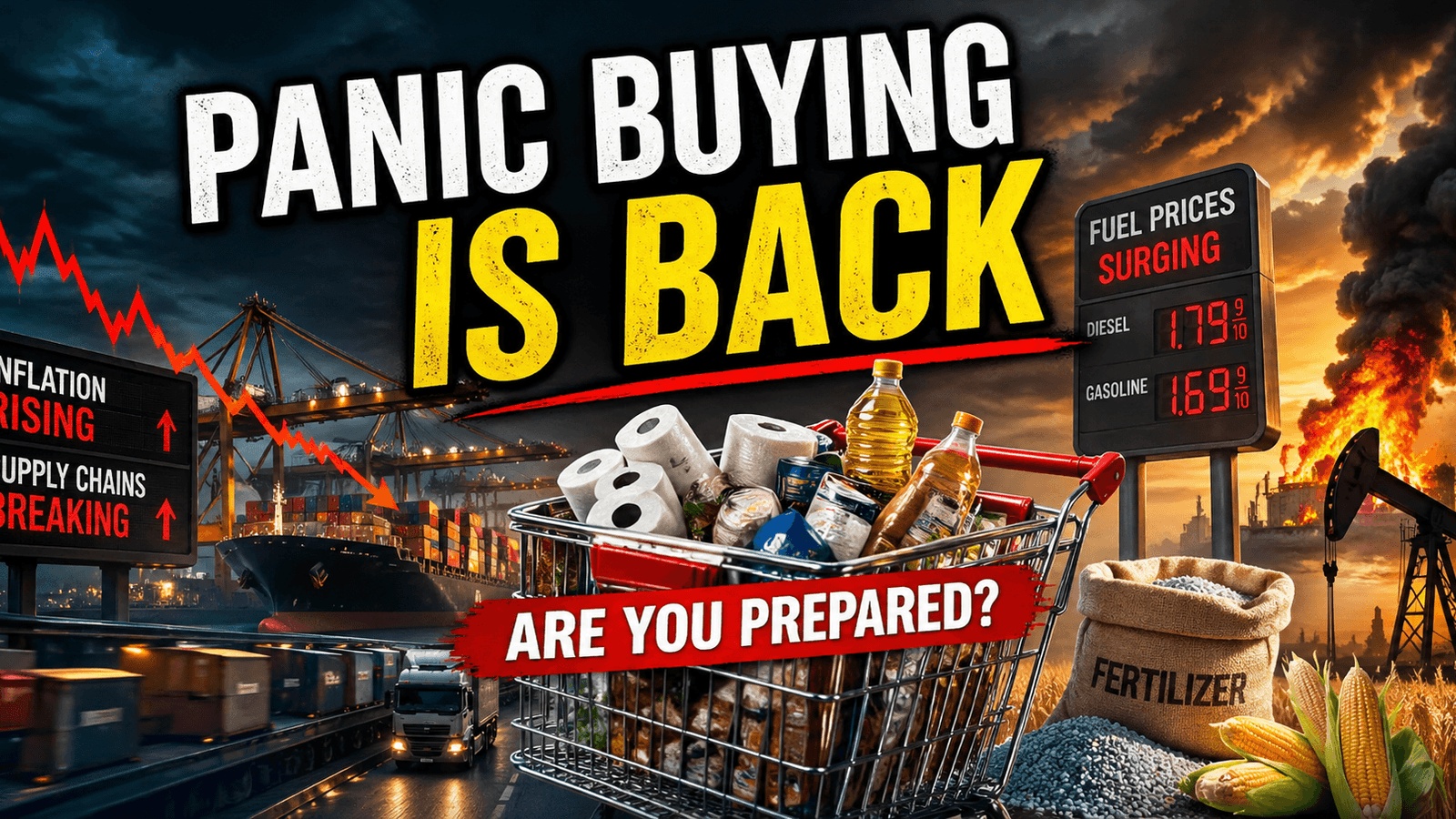
🧠 When Shelves Don’t Look Empty… But Behavior Says Otherwise
Ever notice how markets don't wait for a crisis—they anticipate one?
You're not seeing empty supermarket shelves (yet). No dramatic shortages. No headline panic. But behind the scenes, something quietly familiar is happening: companies are stockpiling again.
Manufacturers are placing bigger orders than usual. Retailers are building buffer inventory. Even governments are quietly preparing contingency plans.
It feels oddly similar to early 2020—but with one key difference. Back then, panic followed a visible shock. Now, the shock is very real—and corporate America is racing to get ahead of it.
And that's where things get interesting—for you as an investor.
📦 Panic Buying 2.0: Quiet, Corporate, and Early
Unlike the chaotic consumer rush during COVID, the current wave is more subtle. It's not shoppers hoarding toilet paper—it's corporations hoarding inputs.
And the data backs it up. S&P Global's latest manufacturing survey shows April output rose at its fastest rate in four years—driven by the biggest jump in new orders since May 2022. Sounds like a boom, right?
Look closer. "This is due to people building safety stocks, because they're fearing supply shortages or price hikes in the coming months," according to S&P Global's chief business economist.
The trigger is specific: the U.S.-Israel war on Iran, which began February 28, has thrown energy supply, shipping routes, and global trade into a state of acute uncertainty. Businesses aren't waiting to find out how it resolves.
Orders are being pulled forward. Inventories are rising. Supply buffers are getting thicker.
Why? Because uncertainty is expensive—and running out of materials is even worse.
💡 Smart Capital Signal: When businesses start stockpiling at this scale, it often signals inflation expectations rising beneath the surface. That's not noise—it's forward-looking behavior.
🚢 Supply Chains Are Fracturing Again (But This Time It’s Structural)
Shipping disruptions are back—but this isn't a replay of pandemic-era port backlogs.
The Strait of Hormuz—a narrow waterway that normally carries roughly 20% of the world's seaborne oil and LNG—has been effectively blocked since late February, when Iran closed it in retaliation for U.S.-Israeli strikes. Commercial traffic dropped more than 90% after the conflict erupted. Major container lines including Maersk, CMA CGM, and Hapag-Lloyd suspended transits entirely.
A fragile ceasefire, brokered by Pakistan in early April, has been extended—but the strait remains largely closed. Negotiations between the U.S. and Iran stalled again this week, with Iran's foreign minister now in Moscow for talks with Vladimir Putin, citing what Tehran describes as "excessive U.S. demands." The ceasefire's future is uncertain as of this writing.
The knock-on effects are already compounding:
- Shipping firms have rerouted around Africa's Cape of Good Hope, adding weeks to transit times and significant cost
- War-risk insurance premiums have spiked dramatically for Gulf routes
- Supply chains for energy-intensive industries are straining under higher input costs and delivery delays
📊 Tactical Insight: This isn't a temporary inconvenience. As long as the strait remains restricted, every week adds to cumulative supply losses that experts warn could take months to unwind—even after a deal is reached.
🌾 The Silent Setup: Fertilizer Shock → Food Inflation
Energy prices grab headlines. Fertilizer quietly moves markets.
Here's the chain reaction most people miss—and this time it's not hypothetical:
More than a third of globally traded fertilizer normally transits the Strait of Hormuz, including roughly 34% of seaborne urea and 23% of globally traded ammonia. With the strait effectively closed, that supply is stranded.
The numbers are striking. Urea prices in Egypt—a key global benchmark—jumped from $400-490 per metric ton before the war to around $700 within weeks. In the U.S., urea import prices spiked roughly 30% in a single week. Ammonia prices rose approximately 20% over the same period.
The timing couldn't be worse. This is hitting right in the middle of the Northern Hemisphere spring planting season—the window when farmers apply nitrogen fertilizers that determine crop yields later in the year. The USDA estimates corn and wheat acreage could fall roughly 3% in 2026 as a result.
Food inflation doesn't hit instantly—it builds slowly, then sticks around. One estimate suggests the disruption could add roughly 2 percentage points to food-at-home inflation if it persists.
🔎 Investor Radar: Fertilizer price spikes are a classic early warning sign of prolonged inflation cycles. Food inflation tends to be sticky—and politically sensitive. This one has a specific, traceable origin.
🌍 From Regional Conflict to Global Shock
What started as a military strike on February 28 is now rippling across the entire global economy.
Energy markets have already priced in significant disruption—Brent crude topped $106 per barrel last week, with prices reaching as high as $119 during the most intense phases of fighting. Even during the ceasefire, the strait has remained largely closed, with ongoing naval clashes keeping shipping firms away.
The chain reaction is playing out in real time:
- Conflict → Strait of Hormuz closure → Energy shock
- Energy shock → Manufacturing cost surge → Supply chain strain
- Fertilizer disruption → Agricultural pressure → Food inflation building
Meanwhile, the UN warns that up to 9.1 million additional people in Asia could face acute food insecurity if the crisis persists—particularly in import-dependent economies like Pakistan, Sri Lanka, Bangladesh, and Nepal that rely heavily on Gulf energy supplies.
⚡ Market Pulse: Energy disruptions are acting as a global macro amplifier. The Strait of Hormuz isn't just an oil story—it's a food story, a shipping story, and an inflation story, all at once.
🔗 The Bigger Picture: A Feedback Loop Is Forming
Here's where everything connects—and why it matters.
Businesses stockpile → artificial demand pulls orders forward Supply chains strain → logistics costs increase Fertilizer prices surge → food inflation builds through the year Consumers react → more defensive behavior and spending shifts
That's not a one-off event. That's a self-reinforcing loop.
The critical variable right now is the Strait of Hormuz. Experts warn that even if a deal is reached tomorrow, it could take months to claw back the supply lost during weeks of closures—and clearing sea mines laid in the strait adds another layer of complexity. The U.S. has very few minesweeping vessels in the region.
🧑🍳 The Final Take: Markets Aren’t Panicking… Yet
🍷 A Calm Surface, A Busy Kitchen Beneath
Markets still look relatively composed. Despite the severity of the disruption, U.S. equity markets have remained largely resilient—investors appear to be pricing in a relatively quick resolution.
But beneath that surface, the system is heating up.
Businesses are acting defensively. Supply chains are tightening. Inflation drivers are quietly stacking.
None of it screams "crisis." All of it whispers "pay attention."
For investors, the takeaway isn't to panic—it's to stay sharp.
Because the most profitable moves rarely come when the crisis is obvious. They come when the signals are subtle… and just starting to align.
🔎 Sources
- Reuters – US business activity, supply chain pressures
- Reuters – Energy shocks and global cost pressures
- Reuters – Tariffs and rising fuel costs impact
- IMF World Economic Outlook (April 2026)
- IEA Energy Crisis Policy Tracker
- Agriculture.com – Fertilizer price surge and supply disruption
- The Guardian – Oil prices, consumer confidence impact
- Wikipedia – 2026 Iran war fuel crisis (context aggregation)
Market Munchies and Mode Mobile communications are for informational purposes only, and are not a recommendation, solicitation, or research report relating to any investment strategy, security, or digital asset. All investments involve risk including the loss of principal and past performance does not guarantee future results.
Any information contained in this commentary does not purport to be a complete description of the securities, markets, or developments referred to in this material. The information has been obtained from sources considered to be reliable, but we do not guarantee that the foregoing material is accurate or complete. There is no guarantee that any statements or opinions provided herein will prove to be correct.