Stimulus, Oil, and Supply Chains—Why Your Portfolio Feels Like a Holiday Feast Gone Wrong
When Markets Feel Like a Dinner Party Imagine sitting at a holiday dinner where one guest plops down a giant turkey ($68.3 billion stimulus package in South Korea), another spikes the punch bowl (oil prices surging after Middle East tensions), and someone else jams the oven…
When Markets Feel Like a Dinner Party
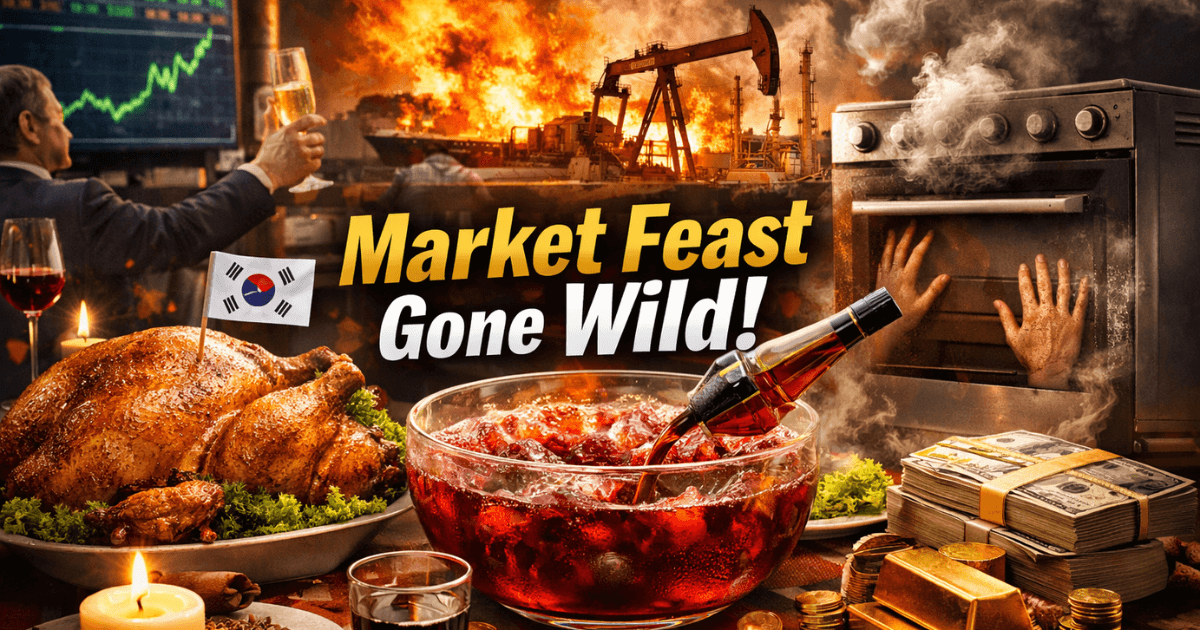
Imagine sitting at a holiday dinner where one guest plops down a giant turkey ($68.3 billion stimulus package in South Korea), another spikes the punch bowl (oil prices surging after Middle East tensions), and someone else jams the oven door shut (globalization stress test with supply chain disruptions). If your portfolio feels both stuffed and queasy, you’re not alone. Investors across Asia, Europe, and the U.S. are asking the same question: how do you digest this feast without indigestion?
🌏 South Korea’s Stimulus: The Big Turkey on the Table
South Korea’s government didn’t just hint at support—it rolled out a 100 trillion won emergency economic package to stabilize markets. President Lee Jae-myung ordered “immediate execution,” including measures such as a market stabilization fund and fuel price caps to shield households from the war's impact. The KOSPI index rallied sharply, with tech and financial stocks leading gains. Investors cheered, treating the package like a surprise dessert platter. Smart Capital Signal:
- Asian markets rally when governments inject liquidity.
- Short-term confidence is boosted, but long-term sustainability depends on how global oil prices surge and supply chain disruptions evolve, particularly in relation to their impact on inflation and economic growth in the region.
- If you’re trading in South Korea, watch for sectors tied to stimulus spending—banks, energy, and consumer goods—as these sectors are likely to benefit from increased government spending and may offer opportunities for investors looking to capitalize on the market rally.
📉 Oil Prices & Risk Appetite: The Spiked Punch
Following the U.S.-Israeli strikes on Iran, oil prices surged, causing a significant impact on global markets. Rising energy costs mean inflation risks, and the U.S. Federal Reserve inflation dilemma is real: cut rates to keep growth alive, or hold firm to avoid runaway prices. Global equities wobbled, bonds looked jittery, and the U.S. The dollar strengthened as investors scrambled for safety. Europe also faces a risk of recession amid rising oil prices, with manufacturing and shipping costs ballooning. Tactical Insight:
- Elevated oil prices ripple through industries such as airlines, retail, and logistics.
- Investors should closely monitor the impact of oil prices on inflation and Fed policy, as it is a significant factor that cannot be overlooked.
- Safe-haven assets like gold and the dollar are back in fashion.
🌍 Globalisation’s Stress Test: The Oven Door Jam
2026 presents the toughest stress test for globalization. Tariff volatility doubled supply-chain headaches, and the Middle East conflict clogged shipping lanes through the Strait of Hormuz. Freight costs surged, shipments stalled, and exporters, particularly in India, experienced significant challenges. KPMG’s biannual supply chain report summed it up: businesses now operate in a state of "continuous risk.” Translation? Supply chains are no longer background noise—they’re front-row drama. Investor Radar:
- Companies with diversified supply chains (multiple sourcing regions, flexible logistics) will weather shocks better.
- Watch Asian exporters—Indian exporters facing Strait of Hormuz shipping delays are particularly vulnerable.
- Firms that can pivot sourcing quickly are the ones who won’t burn the turkey.
🥂 The Reflection: Investing in a World That Won’t Sit Still
Markets right now are like a holiday spread where every dish has a surprise ingredient. Stimulus packages sweeten the mood, but oil shocks and supply-chain snarls remind you that dessert doesn’t erase indigestion. For investors, the takeaway is sharp:
- Don’t chase every rally.
- Don’t panic at every wobble.
- Treat your portfolio like a balanced plate—safe staples, bold flavors, and room for surprises.
Because governments are rewriting playbooks, oil is rewriting inflation, and global trade networks are rewriting themselves, investors must adapt their strategies to navigate these evolving economic landscapes effectively by diversifying their investments, staying informed about market trends, and being prepared to adjust their risk tolerance as conditions change. The only constant is change. And maybe indigestion. The best investors aren’t the ones who predict every twist—they’re the ones who stay seated, keep their plate balanced, and know when to pass on the spiked punch.
📚 Sources
- South Korea plans fuel price caps and expands the 100 trillion won market stabilization program.
- War angst and AI hype mar Seoul’s market ambitions
- Oil jumps as Iran conflict escalates and disrupts shipping in the Strait of Hormuz
- Crude oil prices surpass $100 a barrel as the Iran war disrupts production and shipping
- Barclays warns Brent crude could reach $120 if Middle East tensions persist
- Global oil shipping costs surge as Strait of Hormuz tensions intensify
- How the Iran war is disrupting global oil and gas supply
- War with Iran chokes flows of oil and gas and highlights Asia’s energy security risk
Market Munchies and Mode Mobile communications are for informational purposes only, and are not a recommendation, solicitation, or research report relating to any investment strategy, security, or digital asset. All investments involve risk including the loss of principal and past performance does not guarantee future results.
Any information contained in this commentary does not purport to be a complete description of the securities, markets, or developments referred to in this material. The information has been obtained from sources considered to be reliable, but we do not guarantee that the foregoing material is accurate or complete. There is no guarantee that any statements or opinions provided herein will prove to be correct.