Stocks Are Bouncing Into an Oil Minefield
Monday’s opening tone was better than Friday’s close, but not by enough to change the deeper story. Stocks began the session in the green after a bruising stretch, with buyers stepping back into the market after last week’s damage. Even so, the move felt more like an attempt to…
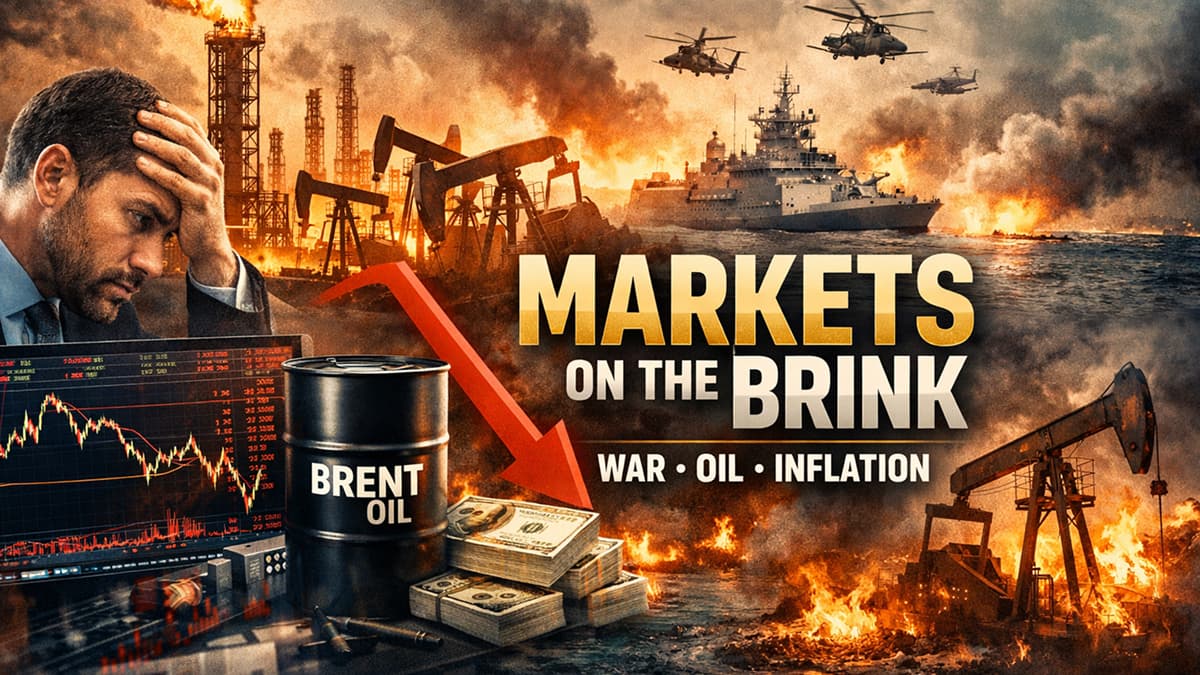
Monday’s opening tone was better than Friday’s close, but not by enough to change the deeper story. Stocks began the session in the green after a bruising stretch, with buyers stepping back into the market after last week’s damage. Even so, the move felt more like an attempt to regain balance than a clean return of confidence. Reuters described the open as a rebound after recent losses, with the Middle East still firmly in focus.
That caution makes sense. The market is no longer reacting to a single headline that can be waved away by a diplomatic rumor or a calmer sound bite. It is reacting to a conflict that keeps widening, an oil market that keeps reminding traders how exposed the global economy still is, and a policy backdrop that suddenly looks much less forgiving than it did earlier this quarter. Reuters reported that Brent remained elevated as the Iran war broadened and fears around the Strait of Hormuz continued to shape the tape.
That is what makes this moment feel so much more dangerous than a routine geopolitical wobble. A rebound in stocks is still possible, and Monday’s open showed there is appetite to try one. But Morgan Stanley’s downgrade of global equities and upgrade of Treasuries and cash underlined the real issue: investors are being forced to ask whether higher oil, firmer inflation expectations, and a more awkward Fed backdrop are starting to change the entire market regime.
Stock of Interest Today: PVH Corp. (PVH)
PVH stands out here because it is exactly the kind of stock that looks tempting when screens get cheap but harder to own when the macro backdrop gets uglier. The company reports after the close on Tuesday, and analysts are looking for about $3.30 in earnings per share. On paper, that creates a familiar setup: muted expectations, a stock that has already been knocked around, and a valuation that looks more interesting the lower the shares trade.
The complication is that PVH is not operating in a forgiving environment. Calvin Klein and Tommy Hilfiger sit inside a global apparel business that is exposed to freight, fuel, sourcing costs, and consumer mood all at once. Reuters has already reported that retailers are warning about higher costs and weaker demand if this Middle East conflict drags on. That makes guidance more important than the quarter itself. Investors are likely to care less about whether PVH clears the bar and more about whether management sounds confident about margins, demand, and the rest of the year.
There is also a company-specific geopolitical wrinkle here. Reuters reported that China placed PVH on its unreliable entity list, adding another layer of uncertainty to the company’s international story at a moment when investors are already less willing to give global consumer names the benefit of the doubt. In calmer conditions, that kind of baggage can be discounted. In a market like this one, it tends to stay on the front page of the bull case and the bear case at the same time.
Current price: $66.40Analyst expectation: $88.33
Five Market Themes to Watch
The market is no longer trading one problem at a time. It is trying to process a war that keeps spilling into new arenas, an energy shock that refuses to cool off, and a rates backdrop that now looks vulnerable to a fresh round of inflation anxiety. That is why Monday’s opening bounce mattered less than the forces leaning against it.
These are the five themes that matter most right now, and each one says the same thing in a different way: this is not a market starved for upside stories, it is a market struggling to trust them.
1) The war has entered a more dangerous stage, not a calmer one
The first thing investors have to reckon with is that this conflict has now moved into its second month without a convincing path to resolution. That alone would be enough to keep nerves elevated. But the situation has grown more serious than simple duration suggests. Reuters reported that Houthi attacks widened the war, pushing fresh pressure onto shipping routes and energy infrastructure and making the conflict look more regional, more durable, and more disruptive than the market had hoped.
That matters because markets can live with a contained crisis for longer than most people think. What they struggle with is a crisis that keeps expanding while officials keep insisting talks are progressing. Reuters also reported that Trump again warned Iran to reopen the Strait of Hormuz or face devastating retaliation, even as he spoke optimistically about negotiations. That kind of mixed messaging does not reduce uncertainty. It deepens it. Investors are left trying to price diplomacy and escalation at the same time, which is usually a recipe for thinner conviction and a higher risk premium.
2) Five straight weeks of damage changed the market’s burden of proof
The market’s technical backdrop is now part of the story, not just a consequence of it. After a punishing stretch, Monday’s higher open was not surprising. Reuters framed the move as a rebound after recent losses, and that is exactly how it looked: a market trying to recover some footing after sellers had done real damage. The Dow, Nasdaq, and other major benchmarks have already spent time in correction territory, which changes how every new rally is judged.
That is why the open mattered, but not in the way bulls might want. When a market has been falling for weeks, an early lift is easy to produce. Oversold conditions alone can do that. What is harder is converting that lift into something durable when the underlying pressure points are still active. Traders are no longer asking whether stocks can bounce. They are asking whether a bounce means anything if oil is still high, inflation fears are rebuilding, and every geopolitical headline still carries real downside. That is a much harder hurdle to clear.
3) The uranium story is the kind of headline that changes the math
One reason this market still feels uneasy is that the scope of possible U.S. action appears to be widening, not narrowing. The Wall Street Journal reported that Trump is weighing a military operation to extract roughly 1,000 pounds of enriched uranium from Iran. That is not the kind of headline markets can dismiss as rhetorical theater. It implies planning for a more operationally complex mission with real escalation risk, potentially involving troops on the ground for multiple days.
Even if such an operation never happens, the fact that it is being seriously discussed changes the psychological frame. A market that was once pricing airstrikes, sanctions, and energy disruption now has to consider scenarios that involve seizure, extraction, occupation risk, and retaliation on a different scale. Reuters also reported Trump renewing threats against Iran’s power plants, oil wells, and Kharg Island. Put together, those signals suggest the range of outcomes is getting wider, not narrower, and markets tend to punish that before they know which outcome is most likely.
4) The Marine deployment keeps ground-operation fears alive
The arrival of the 31st Marine Expeditionary Unit is another reason the market has not bought fully into the idea that this will remain a limited confrontation. The Wall Street Journal’s weekend coverage said the unit was deployed as the conflict entered its second month, and a separate WSJ update highlighted Iran’s threat to destroy U.S. forces if they invade. Those are not the signals of a region settling down. They are the signals of both sides preparing for scenarios that go beyond airstrikes and naval pressure.
Markets do not read deployments like this as symbolism. They read them as optionality. Marines, amphibious assets, and rapid-response units suggest contingency planning for seizures, raids, escort missions, or attempts to secure strategic locations if the conflict broadens further. In a region where around a fifth of global oil and LNG flows normally move through Hormuz, investors do not need a full-scale invasion to get nervous. They just need enough military positioning to believe that the next phase of the conflict could hit the global energy map even harder than the current one already has.
5) Oil is threatening to turn this into a full-blown stagflation trade
This remains the cleanest and most important signal in the market. Reuters reported that Brent was headed for a record monthly leap, with the conflict driving one of the sharpest oil spikes in modern history. Once crude behaves like that, the story stops belonging only to energy traders. It becomes a story about inflation expectations, rate expectations, transport costs, corporate margins, and consumer confidence all at once. That is why oil has become the market’s loudest asset.
The knock-on effects are already visible across other markets. Reuters reported that global bond prices were on track for their biggest monthly fall in years as investors repriced the odds of easier central-bank policy. Another Reuters analysis said Powell faces an inflation-growth dilemma as the Fed tries to decide whether this shock is temporary or the start of another ugly price spiral. That is the textbook definition of a stagflation scare, and it is exactly why international consumer names, travel stocks, retailers, and cyclical sectors suddenly look so much more fragile. When oil acts like a tax on the whole economy, almost everything downstream gets harder.
Bottom Line
The market got a better opening tone on Monday, but that does not look like the same thing as relief. What it looks like, at least for now, is a rebound trying to push uphill against a harsher set of macro realities. The war is broader, the military risk is more explicit, oil is still elevated, and the Fed is being dragged back into an inflation conversation it was hoping would cool.
That is why this still feels like a market in a trap. Stocks can rise for a session or two, and maybe more than that. But until investors get a real break in oil or a genuinely credible sign that escalation risk is shrinking rather than growing, every rally is likely to face the same skeptical question: is this the start of something stronger, or just another bounce inside a much more dangerous market?
Sources:
- https://www.reuters.com/markets/europe/us-stock-futures-edge-up-after-selloff-mideast-conflict-remains-focus-2026-03-30/
- https://www.reuters.com/business/energy/oil-prices-jump-after-yemeni-houthis-attack-israel-widening-iran-conflict-2026-03-29/
- https://www.reuters.com/business/morgan-stanley-downgrades-global-equities-sees-us-defensive-market-amid-mideast-2026-03-30/
- https://www.reuters.com/business/horns-an-inflation-growth-dilemma-fed-chair-powell-speak-harvard-2026-03-30/
- https://www.reuters.com/business/energy/feds-faith-anchored-inflation-expectations-may-be-coming-under-stress-2026-03-30/
- https://www.reuters.com/world/asia-pacific/global-bond-prices-set-biggest-monthly-fall-years-iran-war-stokes-stagflation-2026-03-30/
- https://www.reuters.com/world/europe/european-retailers-warn-price-shock-weaker-demand-prolonged-middle-east-conflict-2026-03-26/
- https://www.reuters.com/business/hms-q1-operating-profit-grows-more-than-expected-2026-03-26/
- https://www.reuters.com/business/retail-consumer/shares-calvin-klein-parent-pvh-illumina-fall-after-china-targets-companies-2025-02-04/
- https://www.reuters.com/world/middle-east/trump-again-warns-iran-open-strait-hormuz-2026-03-30/
- https://www.wsj.com/politics/national-security/trump-weighs-military-operation-to-extract-irans-uranium-37427c8b
- https://www.wsj.com/livecoverage/iran-war-news-updates/card/what-happened-in-the-middle-east-this-weekend-3M4s4HzRQktBQC3dk2Bb
- https://www.wsj.com/livecoverage/iran-war-news-updates/card/iran-says-it-will-destroy-u-s-forces-if-they-invade-Wtv9juDCppQgXkjUPrEB
- https://www.marketbeat.com/stocks/NYSE/PVH/forecast/
- https://www.marketbeat.com/stocks/NYSE/PVH/
- https://www.marketbeat.com/instant-alerts/pvh-pvh-expected-to-announce-earnings-on-tuesday-2026-03-24/
Market Munchies and Mode Mobile communications are for informational purposes only, and are not a recommendation, solicitation, or research report relating to any investment strategy, security, or digital asset. All investments involve risk including the loss of principal and past performance does not guarantee future results.
Any information contained in this commentary does not purport to be a complete description of the securities, markets, or developments referred to in this material. The information has been obtained from sources considered to be reliable, but we do not guarantee that the foregoing material is accurate or complete. There is no guarantee that any statements or opinions provided herein will prove to be correct.