Super Bowl LX, by the Numbers
Every year, the Super Bowl does something no algorithm can reliably pull off: it gets a giant chunk of the country to watch the same thing at the same time. Not “catch clips later.” Not “half-watch while scrolling.” Actually sit down and pay attention. That’s why the Super Bowl…
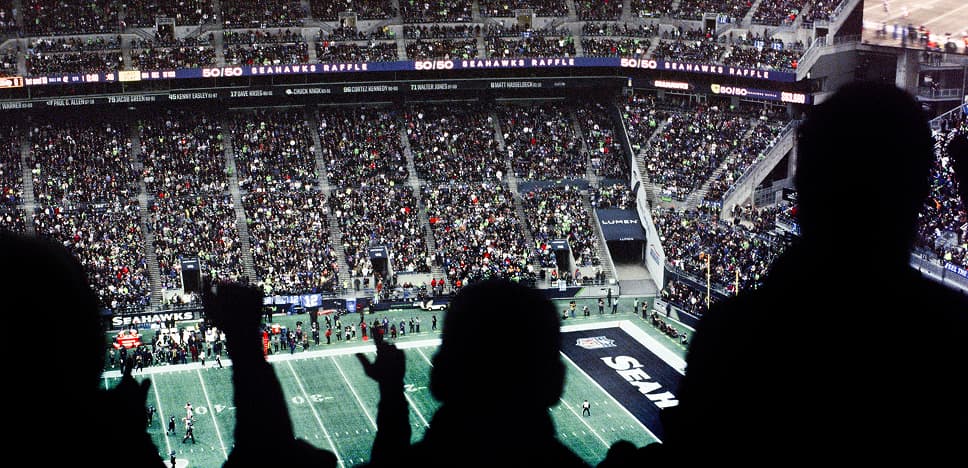
Every year, the Super Bowl does something no algorithm can reliably pull off: it gets a giant chunk of the country to watch the same thing at the same time. Not “catch clips later.” Not “half-watch while scrolling.” Actually sit down and pay attention.
That’s why the Super Bowl is less “sports event” and more “live stress test for the attention economy.” It’s where ad prices hit nosebleed levels, streaming gets put on the big-boy stage, snack supply chains get their annual workout, and your group chat suddenly turns into a real-time sports desk.
Super Bowl LX kicks off this Sunday, and the numbers below explain why the biggest of “big games“ keeps getting more valuable, even as everything else in media gets cheaper.
60 years: A legacy event that keeps raising its own profile
Super Bowl LX is the 60th edition, which is wild for an event that still manages to feel like “the biggest thing on TV” every single year. That longevity matters because it’s not just nostalgia, it’s reliability. In a world where platforms rise, fall, rebrand, and then apologize for the rebrand, the Super Bowl stays one of the few cultural appointments that brands and broadcasters can build an entire quarter around.
The business takeaway: the Super Bowl isn’t a “program.” It’s infrastructure — a recurring moment with enough gravity to move ad budgets, product launches, and streaming sign-ups. And infrastructure tends to keep its value even when everything else gets cheaper.
90+ hours: One game becomes a whole-week content flywheel
NBCUniversal says it will deliver 90+ hours of Super Bowl-related coverage across platforms this week.
That’s the modern media play: don’t just monetize the game, monetize the gravity around the game. Pregame shows, features, interviews, highlight factories, clips optimized for social, shoulder programming that turns “I’m only here for halftime” into “wait, what’s the storyline here?”
If you’re tracking where media is headed, this is it: one premium live moment becomes a multi-platform funnel. The broadcast is the headline. The ecosystem is the business model.
6:30 p.m. ET: A kickoff time that turns Sunday into a scheduled economy
Kickoff is 6:30 p.m. ET on NBC, Peacock, Telemundo, and Universo — which effectively means the U.S. runs two shifts that day: “before kickoff” and “after kickoff.”
This time slot is doing real work. It’s late enough to let the pregame become a full-day runway, but early enough to keep the game inside a national prime-time window (the sweet spot for both ad rates and mass reach). It’s also a reminder that “appointment viewing” still exists; it’s just been reduced to a handful of events that can make people plan their evening around a single broadcast.
$10M+: The new 30-second cover charge
NBCUniversal has sold 30-second in-game ads for more than $10 million a pop. That’s not “TV advertising” so much as “renting a piece of national attention.”
And here’s the sneaky part: the price isn’t only about eyeballs. It’s about certainty. Brands can buy cheaper reach elsewhere, but they can’t reliably buy “everyone’s watching right now” anywhere else. That’s the premium. The Super Bowl is one of the last places where scarcity is so strong the seller can still set the tone, and the buyers still line up.
300 minutes: Plenty of pregame (because hype is a product now)
NBC is running a five-hour Super Bowl LX Pregame Show starting at 1 p.m. ET, with coverage beginning at noon with Road to the Super Bowl.
The pregame isn’t just “warmup.” It’s packaging. It turns a single kickoff into an all-day event, which means more minutes to sell, more sponsorship integrations, more narrative oxygen for the league, and more chances to keep viewers from wandering off to do anything productive.
It’s also where the Super Bowl becomes a story engine: player arcs, coaching chessboards, legacy stakes — the stuff that makes even casual viewers feel like they’ve been following the season (without actually having to follow the season).
145 cameras: Because the Super Bowl is filmed like a blockbuster
NBC’s plan includes 145 cameras — plus enough microphones and crew to make it feel like Levi’s Stadium is a movie studio that just happens to be hosting a football game.
This matters because angles aren’t just “cool.” They’re value. More cameras means more replay value, more clips, more social distribution, and a smoother viewing experience across TV and streaming. It also means the broadcast can capture the micro-moments that become the macro-story: a sideline reaction, a coaching decision, a one-second shift in momentum that becomes the defining image of the night.
$1.76B: The legal betting handle (and why “record bets” can still be a trap)
Americans are projected to wager $1.76 billion legally on Super Bowl LX. But here’s the part that matters: handle isn’t profit. Sportsbooks can have a monster betting weekend and still walk away with a complicated hangover if they’ve been handing out promos, boosted odds, and “free bet” offers like party favors. The Super Bowl is customer-acquisition season in a jersey — operators want new users, new deposits, and repeat behavior afterward. The hard question is what happens when the Super Bowl ends and the app stops shouting at you in neon.
And 2026 adds a wrinkle: the betting conversation isn’t just sportsbooks anymore; you’ve also got the rise of prediction markets grabbing headlines and attention, which changes where “event speculation” lives and how regulators react. When the biggest betting weekend becomes a battleground for who gets to host the action, the real business story shifts from “how much was bet” to “who keeps the customer, and at what cost.”
$20.2B: The Super Bowl as a mini-holiday shopping surge
NRF/Prosper estimates $20.2 billion in Super Bowl spending this year (about $94.77 per person), spanning food, drinks, apparel, decorations, and other purchases.
This is the consumer economy in one very specific mirror: even when budgets feel tight, people still spend on shared experiences. The useful signal isn’t only the total — it’s what that total implies. Millions of small, impulsive purchases spread across groceries, delivery, snacks, TVs, party supplies, and “we need one more thing” runs.
If you want a quick read on consumer mood, the Super Bowl is oddly efficient: it shows where people are willing to splurge, where they trade down, and which categories can still charge a premium when the moment feels special.
13.8%: The share of party spending going to team gear
According to a January 2026 survey write-up from Northwestern’s Medill Spiegel Research Center, team apparel and accessories account for 13.8% of Super Bowl party spending — second only to food and beverages.
That’s important, because merch is where fandom turns into high-margin identity shopping. People don’t just buy a jersey; they buy a permission slip to be dramatic in public. And unlike a TV, merch has a short decision cycle (“Game’s Sunday, I need it now”), which is why the week leading into kickoff tends to be a deadline-driven rush for shipping, retail shelves, and last-minute “good enough” substitutions.
$500M: The host-region economic pop
California’s governor’s office projects Super Bowl LX will generate about $500 million in total economic impact, with an estimated 90,000 visitors from outside the Bay Area expected to attend.
That number isn’t magic, it’s a pile-up of very normal transactions happening at abnormal volume: hotel nights, restaurant checks, rideshare trips, staffing shifts, transit fares, vendor sales, and “we didn’t plan this but okay” spending. The Super Bowl turns a region into a temporary theme park, and the money tends to concentrate in the same places every time: hospitality, food, transportation, event staffing, and local vendors who can handle the surge without snapping.
After the Confetti
When you stack these numbers up, the Super Bowl starts to look less like a game and more like a national pop-up economy. For a few hours, attention stops being scattered and becomes concentrated, which is why everything around the event suddenly gets to charge a premium: ads, bets, merch, hotels, wings, you name it. It’s the rare moment where “reach” isn’t a marketing buzzword, it’s a measurable reality.
The thought-provoking part is what happens after. When the lights go out, the confetti gets swept up, and your group chat moves on to a new obsession, most businesses go right back to fighting for fragmented attention in an infinite-scroll world. That’s why the Super Bowl remains so valuable: it’s not just loud, it’s unmissable. And in modern media and markets, the rarest asset isn’t just attention — it’s attention you can count on.
Sources
- https://www.nbcsports.com/pressbox/press-releases/super-bowl-lx-on-nbc-peacock-telemundo-universo-by-the-numbers
- https://www.nbcsports.com/pressbox/press-releases/super-bowl-lx-on-nbc-peacock-telemundo-universo-by-the-numbers
- https://www.nbcsports.com/nfl/news/how-to-watch-2026-super-bowl-tv-info-schedule-kickoff-new-england-patriots-seattle-seahawks-nbc-peacock
- https://www.adweek.com/convergent-tv/nbcuniversal-first-10-million-super-bowl-ads/
- https://www.nbcsports.com/pressbox/press-releases/nbc-sports-blankets-the-bay-area-with-five-hour-super-bowl-lx-pregame-show-this-sunday-at-1-p-m-et-on-nbc-peacock-with-coverage-from-levis-stadium-team-hotels-alcatraz-island-a-boat-in-mccovey-cove-and-more
- https://www.nbcsports.com/pressbox/press-releases/super-bowl-lx-on-nbc-peacock-telemundo-universo-by-the-numbers
- https://www.americangaming.org/americans-to-legally-wager-estimated-1-76-billion-on-super-bowl-lx/
- https://spiegel.medill.northwestern.edu/super-bowl-viewing-consumer-behavior-2026/
- https://nrf.com/research-insights/holiday-data-and-trends/super-bowl
- https://www.gov.ca.gov/2026/02/05/governor-newsom-welcomes-the-world-to-super-bowl-lx/
Market Munchies and Mode Mobile communications are for informational purposes only, and are not a recommendation, solicitation, or research report relating to any investment strategy, security, or digital asset. All investments involve risk including the loss of principal and past performance does not guarantee future results.
Any information contained in this commentary does not purport to be a complete description of the securities, markets, or developments referred to in this material. The information has been obtained from sources considered to be reliable, but we do not guarantee that the foregoing material is accurate or complete. There is no guarantee that any statements or opinions provided herein will prove to be correct.