The 11 Biggest Stock Market Crashes in Modern History
A falling market creates a very specific kind of panic. Not the slow, rational kind where you read new information and adjust your portfolio. The fast kind where everyone reaches the same conclusion at the same time, tries to act on it immediately, and learns that liquidity is…
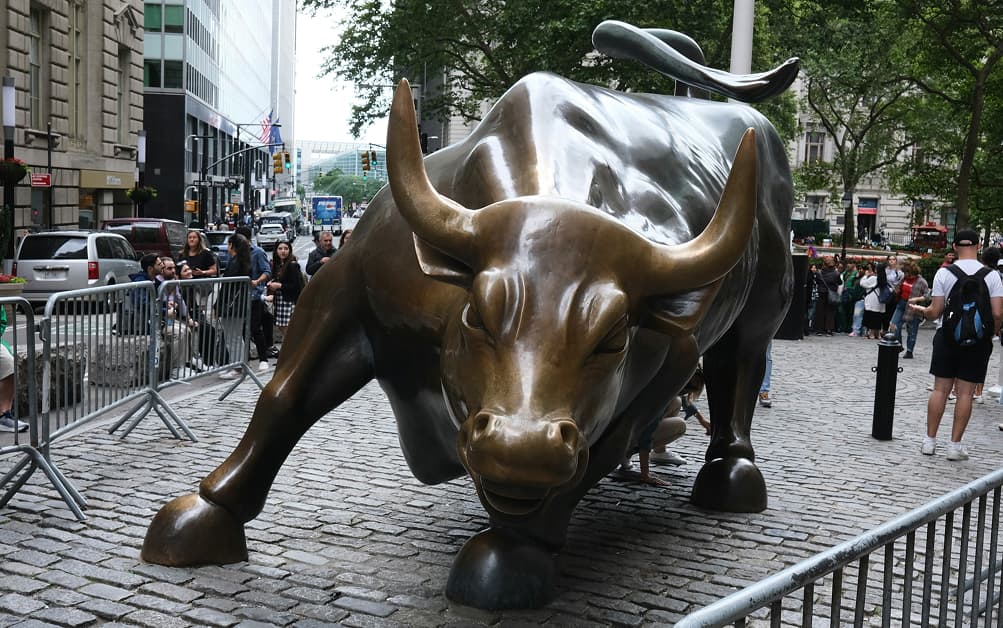
A falling market creates a very specific kind of panic. Not the slow, rational kind where you read new information and adjust your portfolio. The fast kind where everyone reaches the same conclusion at the same time, tries to act on it immediately, and learns that liquidity is not guaranteed when it’s needed most.
Every crash has its own triggers. Sometimes it’s widespread optimism and stretched valuations. Sometimes it’s inflation and rates forcing investors to reprice everything at once. Sometimes it’s a new technology wave that gets ahead of the profits, a housing market treated as risk-free, or a trading system built for speed that behaves badly under stress.
But the underlying pattern stays stubbornly familiar. Big gains get treated as evidence instead of luck. Borrowing turns “I’m right” into “I have to be right.” Risk gets brushed aside as manageable, right up until the catalyst hits and the market reprices that confidence in a hurry.
So here are 11 of the biggest stock market crashes in modern history, including major episodes outside the U.S. Each one has its own cause, its own catalyst, and its own set of “how did nobody see this coming?” quotes. The real value isn’t the trivia, though. It’s seeing the recurring pressure points that turn normal selling into a full-blown unwind, and realizing how often the market breaks in places most investors don’t bother to look.
1) 1929: The Wall Street Crash and the Great Depression-era drawdown
Peak-to-trough: The Dow peaked at 381.17 (Sep. 3, 1929) and fell to 41.22 (July 8, 1932), a decline of about 89%. It didn’t reclaim the 1929 high until Nov. 23, 1954.
Why it matters: This is the template for how a market decline can become an economy-wide crisis when leverage, confidence, and credit all fail in sequence.
The 1920s were a decade of swagger. Consumer culture exploded. Cars and radios made the future feel like it had finally arrived. Stocks became a national obsession and a status symbol. Investing felt like participating in progress.
One key accelerant was borrowing. Investors bought stocks on margin, putting down a small amount and borrowing the rest. It made gains feel turbocharged on the way up. On the way down, it turned a selloff into a forced-sale spiral because loans still needed to be covered. When prices slipped, margin calls pushed people to sell, selling pushed prices lower, and the loop fed itself.
And the quote that history refuses to let us forget: Yale economist Irving Fisher said, “Stock prices have reached what looks like a permanently high plateau.”
Crash takeaway: Big crashes often begin as a valuation problem and become a credit-and-confidence problem. When borrowing is widespread, the market doesn’t just fall because people change their minds. It falls because people are forced to sell.
2) 1973 to 1974: Oil shock, inflation, and the end of “easy stability”
Peak-to-trough: The S&P 500 fell about 48% from January 1973 through October 1974.UK context: The FT notes the FT30 dropped 73.1% from 1972 to 1975.
Why it matters: Inflation bear markets are brutal because they hit both sides of valuation at once: weaker growth and a lower multiple investors are willing to pay.
This crash didn’t arrive with one iconic day. It arrived as a long grind: oil prices surged, inflation jumped, growth slowed, and politics were turbulent. Markets hate uncertainty, but they really hate inflation that refuses to cooperate.
A subtle driver here was concentration in “can’t miss” stocks. Investors piled into the Nifty Fifty, big-name growth companies treated like forever holdings. When inflation and interest rates rose, valuations had to reset. Reuters has pointed to the Nifty Fifty era as a warning about large-cap booms built on narrative certainty.
Crash takeaway: Even great businesses can be bad investments at the wrong price, especially when that price assumes stable inflation and friendly rates forever.
3) 1987: Black Monday and the day fear moved faster than the system
One-day shock: On Oct. 19, 1987, the Dow fell 22.6% in a single session.
Why it matters: 1987 is the reminder that market structure can turn a selloff into a sudden air pocket, even without an obvious recession trigger.
By the mid-1980s, markets were bigger, faster, and increasingly interconnected. Trading strategies were becoming more complex, and one concept gained popularity: portfolio insurance. The idea was to reduce risk by selling stock index futures as prices fell. In a panic, it created a mechanical feedback loop where falling prices triggered selling, which pushed prices down further.
What helped keep 1987 from spiraling into a broader financial collapse was a rapid confidence signal from the central bank the next morning. Fed Chair Alan Greenspan said: “The Federal Reserve… affirmed today its readiness to serve as a source of liquidity to support the economic and financial system.”
Crash takeaway: The market can handle scary headlines better than broken plumbing. Liquidity is a confidence game, and confidence can vanish fast.
4) Japan 1989 and after: The crash that took a generation to unwind
Peak-to-trough (early phase): The Nikkei peaked in late 1989 around 38,915.87 and was down more than 60% by August 1992 (around 14,338)
Why it matters: Japan is the best rebuttal to the lazy cliché that “markets always come back quickly.” They often do, but not always on your schedule.
Late-1980s Japan looked unstoppable. Stocks and real estate soared, and the boom became intertwined with national confidence. The aftermath became the textbook example of how balance sheet damage can linger for decades.
Crash takeaway: “Markets recover” is not the same as “markets recover on your schedule.” Time horizon risk is real.
5) 1997 to 1998: The Asian Financial Crisis and Hong Kong’s 280% overnight moment
System stress point: The crisis began in Thailand in July 1997 and spread across East Asia.The famous datapoint: Hong Kong’s HKMA reported overnight HIBOR briefly touching 280% on Oct. 23, 1997.
Why it matters: This is the clearest illustration that many “market crashes” are really funding crises wearing a market costume.
In the early-to-mid 1990s, parts of East and Southeast Asia were growing fast and attracting enormous capital inflows. Several countries kept fixed or tightly managed exchange rates to project stability. The catch: stability can be fragile when it depends on short-term foreign money continuing to cooperate.
Crash takeaway: Watch how booms are financed. Fast growth funded by stable long-term capital is one thing. Fast growth funded by short-term borrowed money plus currency promises is another.
6) 1998: Russia, default panic, and the leverage lesson regulators still quote
Peak-to-trough: The S&P 500 fell more than 18% over roughly three months from a mid-July 1998 peak to an Oct. 8, 1998 trough.Policy punchline: The President’s Working Group later wrote: “The principal policy issue… is how to constrain excessive leverage.”
Why it matters: This is a classic “contagion” episode: something breaks overseas, and the real damage shows up through leverage and forced de-risking everywhere else.
Russia’s 1998 crisis combined sovereign stress, a currency collapse, and investor panic that didn’t stay local. It fed into the near-collapse of Long-Term Capital Management (LTCM), which spooked markets because of how interconnected and leveraged the positions were.
Crash takeaway: Leverage doesn’t just amplify gains. It accelerates unwinds and increases the odds that one player’s problem becomes everyone’s problem.
7) 2000 to 2002: The dot-com bust and the moment hype met gravity
Peak-to-trough: The Nasdaq Composite peaked at 5,132.52 (March 10, 2000) and fell about 78% by October 2002.
Why it matters: This is the cleanest example of a true idea being priced too early and too perfectly.
The late 1990s were electric. The internet was clearly transformative, and that truth made it easy to confuse “world-changing technology” with “every company near it deserves an elite valuation today.” The lesson is not that tech was fake. It’s that the timeline was.
A quote that became legendary came earlier. In 1996, Greenspan asked: “But how do we know when irrational exuberance has unduly escalated asset values…?”
Crash takeaway: Bubbles love a true idea because truth makes overpricing feel responsible. The crash arrives when expectations outrun reality.
8) 2007 to 2009: The Global Financial Crisis and the crash that broke trust
Peak-to-trough: The S&P 500 fell 57% from its October 2007 peak to its March 2009 trough.Official verdict: The Financial Crisis Inquiry Commission’s Conclusions begin: “We conclude this financial crisis was avoidable.”
Why it matters: This is what happens when “safe” is built on misunderstood risk, leverage, and faith in labels (ratings) instead of reality (collateral quality).
The housing boom became a belief system: home prices don’t fall nationally, credit is abundant, and risk has been “managed” through sophisticated finance. When housing cracked, trust cracked with it, and the market didn’t just fall. Parts of it froze.
Crash takeaway: The most dangerous crises are the ones where “safe” turns out to be misunderstood, and liquidity disappears right when everyone needs it.
9) 2010: The Flash Crash and the day prices briefly became nonsense
Speed + severity: Major equity indices suddenly dropped an additional 5–6% in minutes before rebounding.The absurd prints: The SEC/CFTC report notes many trades executed at prices “of a penny or less, or as high as $100,000.”
Why it matters: This is a reminder that modern markets are engineered systems. In stress, the rules and participants matter as much as fundamentals.
This wasn’t a bubble popping. It was a market-structure stress test that nobody asked for. Liquidity vanished, automated strategies interacted in destabilizing ways, and for a short window, prices stopped behaving like prices.
Crash takeaway: Under stress, “the market” is not a calm, single brain. It’s a network of incentives, and sometimes it behaves like a machine looking for a floor.
10) 2015 to 2016: China’s turbulence and the circuit breaker that added fuel
Peak-to-trough (2015 leg): The Shanghai Composite fell from 5,166 (June 12, 2015) to 2,927 (Aug. 26, 2015), about 43%.2016 shock: A U.S. government commission brief notes the Jan. 4 and Jan. 7, 2016 rout erased more than $1 trillion in value, and the circuit breaker halted trading both times.
Why it matters: Rules change behavior. If investors think the market will halt and trap them, they don’t wait around politely.
China’s boom and bust had unique ingredients: heavy retail participation, intense public attention, and strong policy signaling. When interventions arrived, they carried extra weight because investors were trading confidence in governance as much as earnings.
Crash takeaway: Policy tools must anticipate incentives, not just intentions. In markets, fear of illiquidity can be more powerful than fear of losses.
11) 2020: The COVID crash and one of the fastest bear markets on record
Peak-to-trough: After peaking on Feb. 19, 2020, the S&P 500 fell to 66% of its peak by March 23 (about a 34% drop).
Why it matters: This is what a true exogenous shock looks like: not a valuation debate, but an urgent scramble to reduce uncertainty and raise cash.
COVID wasn’t a financial bubble popping. It was the real world slamming the brakes on daily life, forcing markets to price an enormous uncertainty shock in real time. When the range of outcomes is unknown, many investors do the same thing: reach for cash.
Crash takeaway: You can’t predict shocks, but you can plan for them. Control what you can: diversification, cash needs, time horizon, and avoiding structures that force you to sell at the worst moment.
The Real Lesson Hidden in Every Crash
Crashes stop looking like freak accidents once you’ve seen enough of them. The causes change, but the failure modes rhyme: confidence hardens into certainty, leverage turns that certainty fragile, and crowded positioning makes losses spread faster than people expect. When the catalyst arrives, the market doesn’t just reconsider prices. It stress-tests funding, liquidity, and the willingness of participants to keep making markets.
That’s why the damage is bigger than portfolios. Big crashes reshape hiring, housing, politics, and regulation. They change who gets to be patient and who gets forced to sell. They also rewrite what society decides is “safe,” usually after it fails in public.
The practical lesson is simple: you can’t control whether markets crash, but you can control whether you’re forced into your worst decisions during one. Keep your time horizon honest, avoid structures that require you to sell at the wrong moment, and treat every “can’t miss” story as something that still needs a margin of safety. Markets don’t punish optimism. They punish certainty.
Sources
- https://www.federalreservehistory.org/essays/stock-market-crash-of-1929
- https://time.com/3207128/stock-market-high-1929/
- https://www.history.com/news/1929-stock-market-crash-warning-signs
- https://www.federalreservehistory.org/essays/stock-market-crash-of-1987
- https://www.federalreserve.gov/pubs/feds/2007/200713/200713pap.pdf
- https://www.reuters.com/breakingviews/warning-history-about-large-cap-stock-booms-2024-06-21/
- https://www.ft.com/content/16c14aa9-63ad-4b86-b236-b964b4f30919
- https://apnews.com/article/93003abeedbc99cf8f3dab78de78c298
- https://www.nippon.com/en/japan-data/h01927/
- https://www.federalreservehistory.org/essays/asian-financial-crisis
- https://www.hkma.gov.hk/eng/publications-and-research/annual-report/1997/ch05.shtml
- https://home.treasury.gov/system/files/236/hedgfund.pdf
- https://www.britannica.com/event/dot-com-bubble
- https://www.federalreserve.gov/boarddocs/speeches/1996/19961205.htm
- https://www.federalreservehistory.org/essays/great-recession-of-200709
- https://www.congress.gov/event/112th-congress/house-event/LC1214/text
- https://www.sec.gov/news/studies/2010/marketevents-report.pdf
- https://www.uscc.gov/sites/default/files/Research/Issue%20brief%20-%20China%27s%20Stocks%20Fall%20Again.pdf
- https://www.cnbc.com/2016/01/07/chinese-securities-regulator-suspends-market-circuit-breakers.html
- https://www.stlouisfed.org/on-the-economy/2021/march/covid19-impacted-stock-performance-industry
- https://www.sec.gov/files/rules/sro/nyse/2021/34-92428-ex3.pdf
Market Munchies and Mode Mobile communications are for informational purposes only, and are not a recommendation, solicitation, or research report relating to any investment strategy, security, or digital asset. All investments involve risk including the loss of principal and past performance does not guarantee future results.
Any information contained in this commentary does not purport to be a complete description of the securities, markets, or developments referred to in this material. The information has been obtained from sources considered to be reliable, but we do not guarantee that the foregoing material is accurate or complete. There is no guarantee that any statements or opinions provided herein will prove to be correct.