The $110 Oil Problem: Why Central Banks Are Frozen and Markets Feel Uncertain
🧠 Market Feels Calm… But Why Does It Taste Off? You glance at the charts. Nothing is crashing. Nothing is ripping either. Rate cuts? Still on hold. Inflation? Fully refusing to cool. So you ask yourself— If things look stable, why does the market feel… uneasy? Because under…
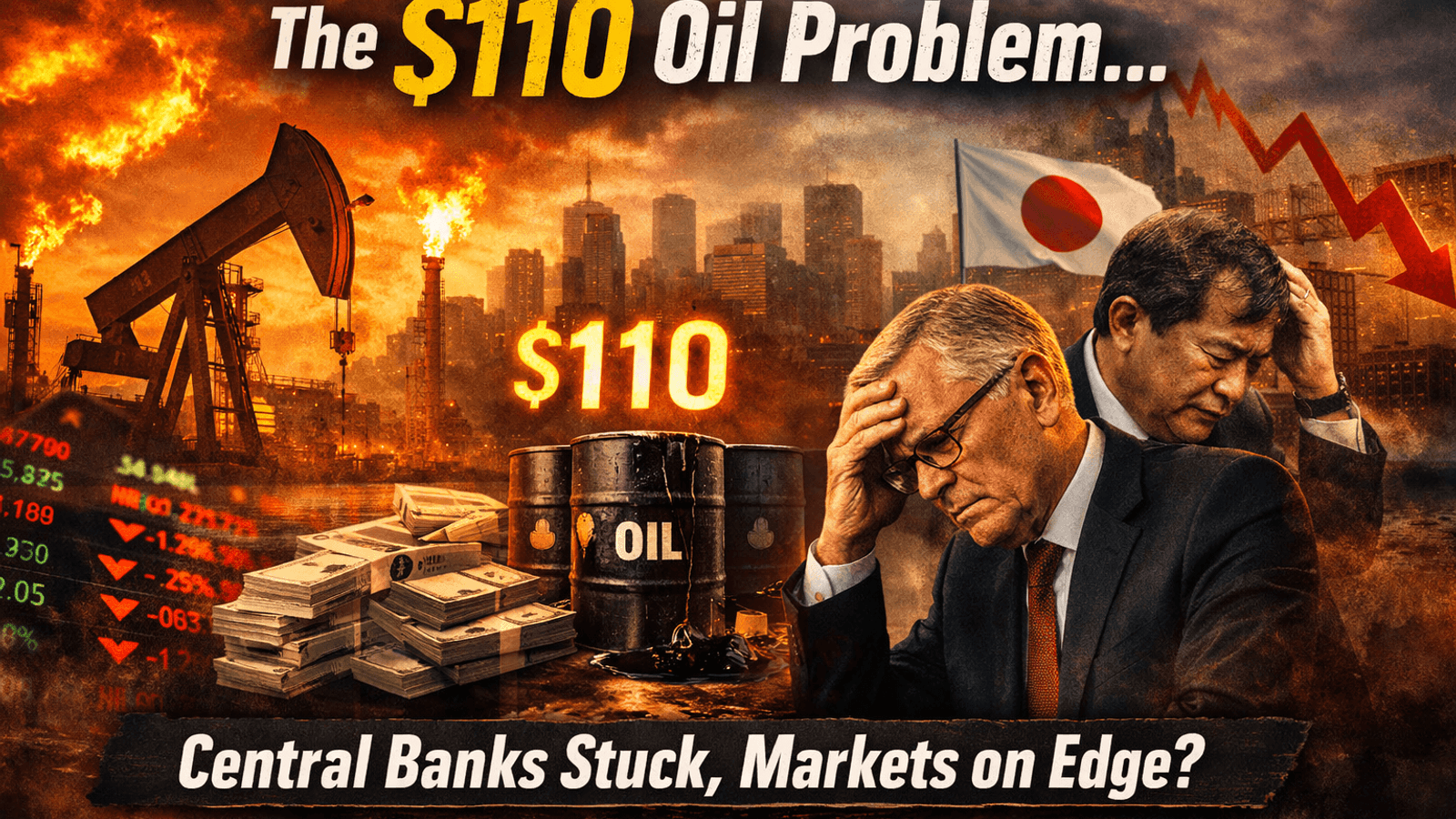
🧠 Market Feels Calm… But Why Does It Taste Off?
You glance at the charts. Nothing is crashing. Nothing is ripping either. Rate cuts? Still on hold. Inflation? Fully refusing to cool. So you ask yourself— If things look stable, why does the market feel… uneasy? Because under the surface, something changed. Oil climbed past $110 per barrel, and suddenly, the entire central bank policy narrative for 2026 shifted. What looked like a clean path to rate cuts turned into a messy kitchen—too much heat, not enough control. And now? You’re watching policymakers hesitate, markets second-guess, and risk quietly build.
🛢️ The $110 Oil Problem: How Oil Price Inflation's Impact Is Rewriting the Script
Oil isn’t just another commodity. It’s the base ingredient in almost everything. When crude surged above $110, it wasn’t just a headline—it was a macro reset. Here’s what that spike triggered:
- Shipping costs jumped → hitting global trade margins
- Manufacturing inputs rose → squeezing corporate earnings
- Food and energy bills increased → pushing consumer inflation higher
Suddenly, the economic impact of the oil shock became unavoidable. And here’s the part that matters for you: Central banks can control demand. They can’t control the oil supply. That’s why the interest rate cut delay isn’t just caution—it’s a necessity. Smart Capital Signal: When evaluating how oil prices affect inflation, focus on second-order effects—transport, food, and wages. That’s where inflation sticks.
⚖️ Central Bank Policy Trap: Inflation vs Growth Is Getting Uncomfortable
Now imagine you’re setting policy.
- Inflation is rising again (thanks to energy)
- Growth is slowing across major economies
- Debt levels? Already stretched to the edge
Welcome to the central bank policy trap. As Kristalina Georgieva recently noted: “Balancing inflation risks with weakening demand is becoming increasingly difficult.” That’s the polite version. Here’s the real version:
- Tighten policy → risk a sharper slowdown
- Ease policy → fuel inflation again
- Wait → lose credibility
That’s your inflation vs. growth dilemma—and it’s why markets feel stuck. Investor Radar: Periods like this often produce
- Range-bound equities
- Unpredictable bond yields
- Sharp, headline-driven volatility
In short, classic global economic slowdown signals—without the dramatic headlines.
🇯🇵 Bank of Japan Rate Hike Outlook: The Quiet Shift Nobody Expected
While most central banks are frozen, one is quietly moving. The Bank of Japan is leaning toward tightening. Yes, tightening—in this environment. Japan’s inflation has climbed toward 2–3%, a level it struggled to hit for decades. Add a weaker yen and rising import costs, and policymakers suddenly have a reason to act. Here’s what markets are pricing:
- Around 60–70% probability of a rate hike
- Policy aimed at stabilizing currency and inflation
- A cautious exit from ultra-loose policy
But here’s where it gets interesting. Japan is tightening while the rest of the world hesitates. Tactical Insight: The evolving Bank of Japan rate hike outlook could:
- Strengthen the yen
- Tighten global liquidity
- Pressure-risk assets indirectly
When the most dovish central bank turns even slightly hawkish, it’s rarely random.
💣 Private Credit Market Risk: The $2 Trillion Quiet Concern
Now let’s talk about what isn’t making loud headlines yet. The private credit market risk story. This market has grown to over $2 trillion, fueled by years of low interest rates and easy liquidity. Companies borrowed heavily. Lenders were happy to oblige. Now conditions are shifting:
- Borrowing costs remain elevated
- Refinancing windows are narrowing
- Default risks are creeping higher
And unlike public markets, this space lacks transparency. Some analysts are starting to draw structural comparisons to the early stages of the 2008 financial crisis. Not the same scale—but similar vulnerabilities. Investor Watchlist: Keep an eye on:
- Rising default rates
- Widening credit spreads
- Liquidity stress in private funds
Private credit doesn’t move loudly. It builds pressure quietly—and then releases it quickly.
🎄 Holiday Calm Meets Macro Heat: A Risky Combo
Here’s where things get a little tricky for you. Holiday periods usually bring lighter trading, thinner liquidity, and a softer tone. Feels nice. Looks stable. But combine that with:
- Oil price inflation impact
- Interest rate cuts delay
- Stagflation risk 2026 is creeping higher
…and you get a setup where markets can move faster than expected. Lower liquidity means smaller triggers can create bigger swings. Portfolio Cue: In this environment:
- Stay disciplined with position sizing
- Avoid overreacting to short-term moves
- Focus on macro signals, not noise
Calm markets don’t always mean safe markets.
🧭 Macro Snapshot: What You Should Actually Watch
Let’s simplify your dashboard. Right now, the key drivers are the following:
- Central bank policy 2026 → cautious, reactive, constrained
- Global inflation outlook 2026 → more uncertain due to energy
- Oil shock economic impact → feeding into core inflation
- Private credit market risk → quietly building
- Stagflation risk 2026 → no longer theoretical
Everything else? Secondary.
🍽️ Final Bite: The Recipe Changed—And So Should Your Thinking
Markets aren’t broken. They’re just cooking with different ingredients now.
- Inflation isn’t fully under control
- Growth isn’t collapsing—but it’s fragile
- Policy tools aren’t as effective as before
So instead of chasing the next rally, ask a sharper question: Where is the pressure building—and who’s ignoring it? Because in markets like this, opportunity doesn’t scream. It simmers. And if you’re paying attention, you’ll catch the signal before it becomes obvious.
📚 Sources
Market Munchies and Mode Mobile communications are for informational purposes only, and are not a recommendation, solicitation, or research report relating to any investment strategy, security, or digital asset. All investments involve risk including the loss of principal and past performance does not guarantee future results.
Any information contained in this commentary does not purport to be a complete description of the securities, markets, or developments referred to in this material. The information has been obtained from sources considered to be reliable, but we do not guarantee that the foregoing material is accurate or complete. There is no guarantee that any statements or opinions provided herein will prove to be correct.