The Big Money Behind Greeting Card Holidays
Today is St. Patrick’s Day, which means it is also one of the biggest sales days of the year for bars and restaurants. NielsenIQ has called it the top-grossing day on the calendar for on-premise food and drink, and the more recent brand-level data makes the same point in bright…
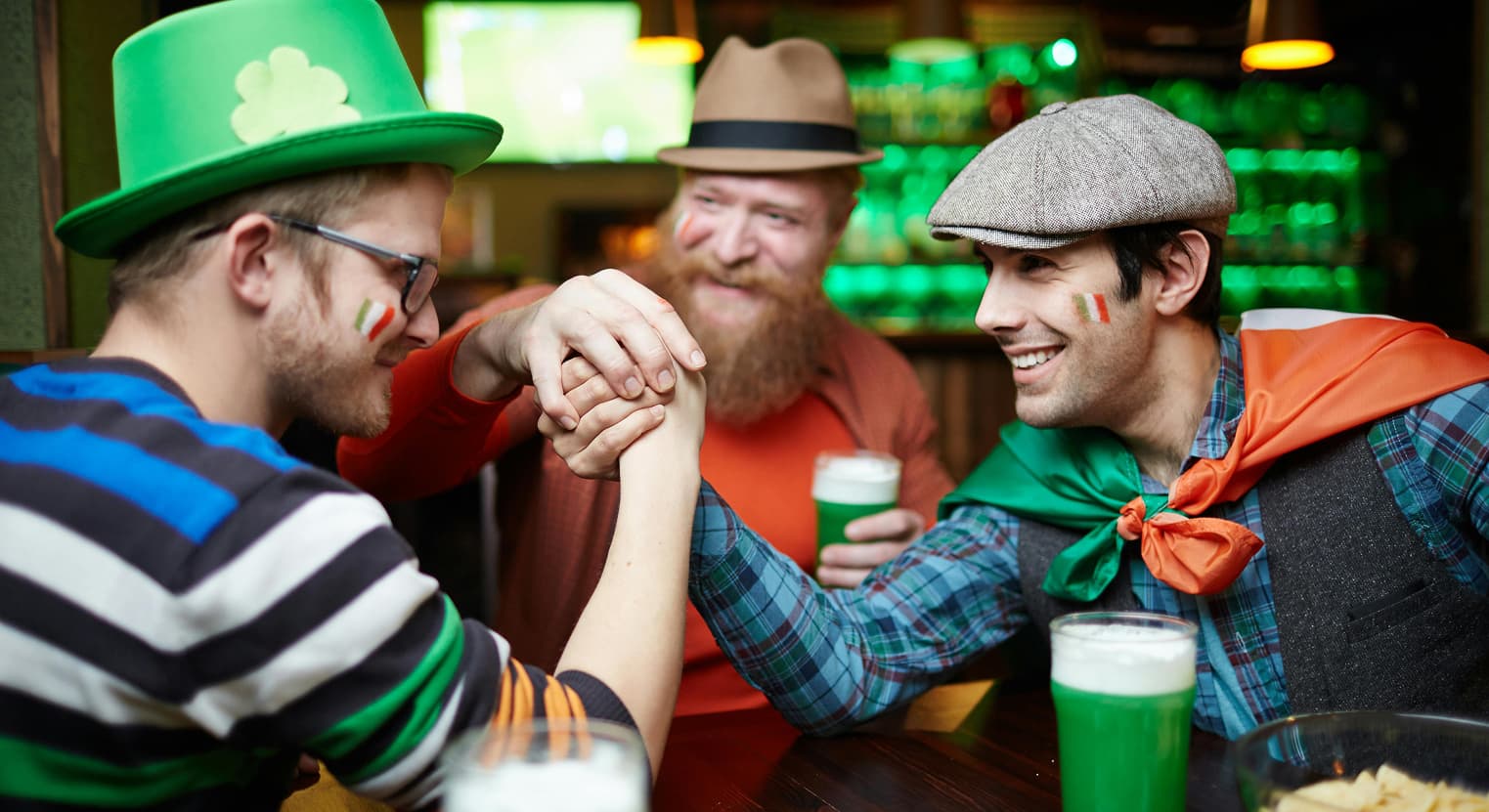
Today is St. Patrick’s Day, which means it is also one of the biggest sales days of the year for bars and restaurants. NielsenIQ has called it the top-grossing day on the calendar for on-premise food and drink, and the more recent brand-level data makes the same point in bright green ink: BeerBoard found that over St. Patrick’s Day weekend in 2025, bars poured an average of 122% more Guinness pints than their daily average over the previous 30 days, while Guinness Draught’s on-premise volume share jumped 117% from its year-to-date baseline. The parades are real. The heritage is real. So is the till ringing nonstop behind the bar.
That does not make St. Patrick’s Day fake. It makes it legible to business. Like a lot of modern holidays, it started as something sincere: a feast day, a remembrance, a ritual. Over time, those rituals got translated into products and categories. A saint’s day becomes a beer holiday. A day for honoring mothers becomes a flower-and-brunch machine. A feast associated with romance becomes a jewelry, candy, and dinner-reservation economy. These are not invented emotions. They are real emotions with extremely monetizable habits attached.
That is the broader story here. America did not just commercialize a few holidays. It built a whole operating system around them. Alcohol brands, florists, jewelers, restaurants, apparel companies, grocers, candy makers, gift-card sellers, and delivery platforms have all learned the same lesson: if a date carries enough emotional charge, consumers will tolerate spending that might feel ridiculous on an ordinary Tuesday. The holiday does not have to be hollow. It just has to be recognizable, repeatable, and easy to shop.
St. Patrick’s Day: From feast day to bar tab
St. Patrick’s Day began as a Christian feast day honoring St. Patrick, the fifth-century bishop traditionally credited with spreading Christianity in Ireland. For centuries, it was primarily a religious observance. Irish law actually mandated that pubs remain closed on March 17 for much of the 20th century, treating the date with the dry solemnity of a religious fast rather than a festival. The louder, greener, more public version Americans know now took shape much later, especially in the United States, where Irish immigrants and Irish-American communities turned the day into a visible statement of identity, pride, and belonging. The Smithsonian’s National Portrait Gallery traces that public American version back to early parades and civic display, including Irish soldiers marching in New York in the eighteenth century.
Commerce did not invent that transformation, but it recognized a very good setup when it saw one. St. Patrick’s Day comes with colors, costumes, public participation, food, alcohol, and a built-in expectation that people should go out and do something. That makes it unusually easy to monetize. Data from the National Retail Federation shows 60% of Americans planned to celebrate in 2026, with total spending projected at a record $7.7 billion—a steady climb from the $7.2 billion seen just two years prior. Food and beverages were expected to lead the holiday, followed by apparel and decorations. NRF’s Katherine Cullen said the holiday’s appeal lies in the fact that it is “a fun tradition” and a chance to gather after a long winter.
If you want to see where the money lands, start at the bar. Beer brands, especially Guinness, do not need to create St. Patrick’s Day to profit from it. They just need to feel inseparable from the ritual. That is the deeper pattern with holiday commerce. The strongest companies do not sell the event itself. They become part of how the event is performed. On St. Patrick’s Day, that means beer, bar tabs, restaurant traffic, novelty apparel, and all the smaller themed purchases that feel harmless in isolation and massive in aggregate.
Valentine’s Day: Romance, industrialized
Valentine’s Day has one of the cleanest commercial glow-ups on the American calendar. The day began as a Christian feast associated with St. Valentine, but its connection to romantic love strengthened much later, especially in medieval Europe after writers like Geoffrey Chaucer linked the date to courtly love. What started as a saint’s day became, over centuries, a modern proof-of-affection economy.
By the time Valentine’s Day arrived this year, the National Retail Federation had projected record spending of $29.1 billion, with consumers budgeting a record $199.78 on average. Candy was expected to be the most popular gift, with 56% of celebrants planning to buy it, while flowers and greeting cards were each at 41% and an evening out at 39%. But the biggest dollars were expected elsewhere: $7 billion on jewelry, $6.3 billion on an evening out, $3.5 billion on clothing, and $3.1 billion on flowers. Katherine Cullen of NRF said the growth was being driven in part by middle- and high-income shoppers expanding their gift lists, while Prosper’s Phil Rist noted that consumers were increasingly buying for friends, co-workers, and pets in addition to romantic partners.
That widening is what makes Valentine’s Day such a perfect business story. The easiest way to grow a holiday is not always to make people care more. It is to expand who counts. Romance becomes romance plus friends plus teachers plus pets plus anyone else who can plausibly be looped into the ritual. A date that once mostly belonged to jewelers, chocolatiers, florists, and restaurants now spills across a much wider social map. That is how a sentimental holiday starts behaving like a small economy.
Mother’s Day: Flowers, brunch, and a founder who hated all of it
Mother’s Day may be the clearest example of how a sincere observance can turn into a polished sales event. The modern holiday grew out of Anna Jarvis’s effort to honor her mother, Ann Jarvis, whose Mothers’ Day Work Clubs had focused on public health and care work in Civil War-era West Virginia. The first formal Mother’s Day service was held in 1908, and President Woodrow Wilson made it a national holiday in 1914. Jarvis imagined it as a day of gratitude, reflection, and personal devotion.
What followed was exactly what she feared. The National Park Service says Jarvis was furious at florists for driving up carnation prices and deeply resentful of the greeting-card industry’s prefabricated sentiment. In one press release, she asked what people would do to “rout charlatans, bandits, pirates, racketeers, kidnappers and other termites” profiting from the holiday she created. The Smithsonian likewise notes that she wanted a sincere “holy day,” not a commercial bonanza.
The 'charlatans' won the long game. By Mother’s Day 2025, that resisted commercialism had blossomed into a $34.1 billion industry, where high-ticket jewelry and upscale outings now dwarf the simple cards Jarvis once defended. Flowers, greeting cards, and special outings like dinner or brunch remained among the most popular purchases, but the biggest categories were larger-ticket ones: $6.8 billion on jewelry, $6.3 billion on outings, and $3.2 billion on flowers. The floral industry alone has a serious stake in the holiday. The Society of American Florists reported that 38% of Americans bought flowers or plants for Mother’s Day in 2025, tying the highest level in the poll’s 13-year history, while average floral spending reached a record $71. SAF chief economist Charlie Hall said, “It seems like the consumer was willing to spend. No one really blinked at the higher prices on the items that had to go up.”
What Mother’s Day has become, then, is not just a sentimental observance but a highly coordinated economic event touching florists, restaurants, jewelers, grocers, gift-card sellers, booking platforms, and delivery apps. Jarvis wanted reverence. What she got was a recurring sales season built on affection, guilt, flowers, and brunch.
Father’s Day: The quieter holiday that got monetized anyway
Father’s Day took a different route to the same destination. History says Sonora Smart Dodd, one of six children raised by a widower in Spokane, Washington, began pushing for a holiday honoring fathers after hearing a Mother’s Day sermon in 1909. Washington State held the first statewide Father’s Day celebration in 1910. Britannica notes that the holiday initially faced some cultural resistance, in part because many men saw it as too closely modeled on Mother’s Day. But once it entered the calendar, it followed the same path as everything else: ritual first, monetization right behind it.
Now it prints money too. NRF says Father’s Day spending hit a record $24 billion in 2025, with average spending reaching $199.38. The most common purchases were greeting cards, clothing, special outings, and gift cards, while subscription boxes and experience-based gifts have become more common. Phil Rist of Prosper said categories like outings and personal care have grown because they create memories while also letting dad feel “pampered,” which is not the most traditional Father’s Day pitch, but apparently it works.
What matters here is not that Father’s Day has suddenly become as emotionally charged as Mother’s Day. It hasn’t. It is that retailers found a way to scale the occasion anyway. Clothing brands, restaurants, golf-related businesses, liquor stores, subscription companies, and gift-card sellers all have an angle. Once a holiday becomes familiar enough, the system does not need the same emotional voltage to monetize it. It just needs enough social recognition that buying something feels like the normal thing to do.
What these holidays really sell
The obvious answer is that these holidays sell products: beer, flowers, candy, jewelry, brunch, gift cards. But the more interesting answer is that they sell a way to make emotion visible. The purchase is often less about the object itself than the proof that you remembered, showed up, and understood what the moment required.
That is why these holidays hold up even when people say they are pulling back. Consumers may cut spending elsewhere, but they are often reluctant to do nothing on a date that has been coded as a test of affection, gratitude, or belonging. What retailers and brands have figured out is that they are not just selling goods tied to a date. They are selling participation in a ritual, and protection against the social risk of seeming indifferent.
Maybe that is the real business model behind these holidays. They do not just monetize the calendar. They monetize the human need to mark time, signal care, and make relationships visible. What looks like seasonal spending is often something deeper: a culture paying, again and again, to keep the emotional operating system of the modern calendar running.
Sources
- https://nielseniq.com/global/en/insights/analysis/2019/st-patricks-day-is-the-highest-grossing-day-of-the-year-for-bars-restaurants/
- https://www.beerboard.com/blog/2025-st-patricks-report/
- https://www.history.com/articles/st-patricks-day-spiritual-meaning
- https://www.history.com/articles/history-of-st-patricks-day
- https://www.history.com/topics/st-patricks-day
- https://npg.si.edu/blog/st-patricks-day-america
- https://nrf.com/research-insights/holiday-data-and-trends/st-patricks-day
- https://nrf.com/blog/consumers-leaning-into-st-patricks-day-in-2026-as-holiday-spending-climbs
- https://www.history.com/articles/valentines-day-origin
- https://nrf.com/media-center/press-releases/valentine-s-day-spending-expected-to-reach-new-records
- https://nrf.com/research-insights/holiday-data-and-trends/valentines-day
- https://rapaport.com/news/valentines-day-jewelry-spending-to-reach-record-highs-nrf/
- https://www.nps.gov/people/anna-maria-jarvis.htm
- https://www.britannica.com/biography/Anna-Jarvis
- https://nrf.com/media-center/press-releases/mother-s-day-spending-expected-to-reach-34-1-billion
- https://nrf.com/research-insights/holiday-data-and-trends/mothers-day
- https://safnow.org/2025/05/27/mothers-day-purchases-and-sales-climb/
- https://www.history.com/articles/fathers-day
- https://nrf.com/media-center/press-releases/father-s-day-spending-to-reach-record-24-billion
Market Munchies and Mode Mobile communications are for informational purposes only, and are not a recommendation, solicitation, or research report relating to any investment strategy, security, or digital asset. All investments involve risk including the loss of principal and past performance does not guarantee future results.
Any information contained in this commentary does not purport to be a complete description of the securities, markets, or developments referred to in this material. The information has been obtained from sources considered to be reliable, but we do not guarantee that the foregoing material is accurate or complete. There is no guarantee that any statements or opinions provided herein will prove to be correct.