The Fed Finally Blinked—But the Real Interest Rate Story Is Still Playing Out
The Fed rate cut grabbed headlines, but borrowing costs and policy signals tell the real story The Federal Reserve finally did it. Rates came down. Markets nodded in approval. And for a moment, it felt like everyone collectively exhaled. But if you expected a victory speech or…
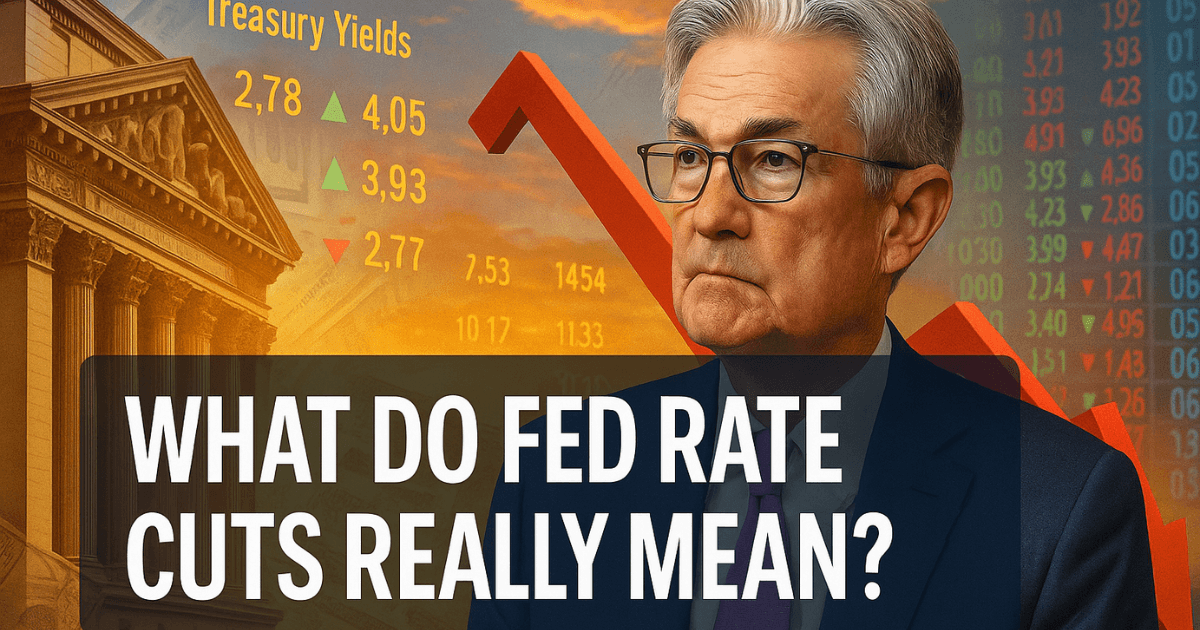
The Fed rate cut grabbed headlines, but borrowing costs and policy signals tell the real story
The Federal Reserve finally did it. Rates came down. Markets nodded in approval. And for a moment, it felt like everyone collectively exhaled. But if you expected a victory speech or a clean pivot to easy money, that wasn’t what you got. The rate cut didn’t feel like a celebration. It felt more like a cautious step back—measured, slightly tense, and wrapped in language that quietly said, “Don’t get carried away.” And that’s where the real story begins.
Yes, the Fed Cut Rates—No, This Wasn’t a Green Light
On paper, it was straightforward—a 25-basis-point cut. Federal Reserve rates eased to their lowest level in several years. Markets had seen it coming from a mile away, and market positioning reflected that well before the decision landed. Stocks edged higher. Short-term Treasury yields dipped. The dollar softened a touch. So far, so normal. But the mood inside the decision was different. Several Fed officials dissented. Forward guidance stayed tight. And the message—subtle but unmistakable—was that this wasn’t the start of a generous easing cycle. The Fed eased pressure. It didn’t remove it. Smart Capital Signal: A rate cut can soothe markets. Policy tone is what shapes outcomes.
Why the Interest Rate Outlook Still Feels Murky
If investors were hoping the Fed would neatly sketch out the interest rate outlook for the next year or two, they left disappointed. Inflation has cooled, but not convincingly enough to declare the job done. The labor market continues to hold its ground. And global macroeconomic trends—especially across Europe and parts of emerging markets—remain fragile. Inside the Fed, views are split. Some policymakers see room for more easing. Others clearly don’t. That division matters more than any dot on a projection chart. Markets, meanwhile, are still betting on more cuts ahead—creating a familiar gap between what traders expect and what policymakers are willing to promise. Investor Radar: When expectations sprint ahead of conviction, volatility usually follows.
The Awkward Reality of Hawkish Easing
Here’s the uncomfortable truth investors need to sit with. Rates were cut. But the stance remained hawkish. The Fed keeps repeating the phrase "data-dependent" because it gives them flexibility. If inflation stalls or reaccelerates, policy can pause without warning. That uncertainty is deliberate. Longer-dated yields remain elevated. Credit spreads haven’t collapsed. Borrowing costs after Fed rate cuts are easing slowly, unevenly, and selectively. That is easing with guardrails. Tactical Insight: Lower rates don’t guarantee easier money—especially when inflation is still in the room.
Credit Conditions: Relief, but Only for the Right Borrowers
In theory, lower policy rates should loosen credit conditions across the board. In reality, it’s more of a two-speed system. Short-term corporate borrowing has seen some relief. But lenders remain picky. Riskier borrowers—especially in property-linked or leveraged sectors—are still paying up. Banks, after tightening standards earlier, aren’t rushing to undo that caution. Strong balance sheets benefit first. Everyone else waits. It’s not accidental. It’s discipline. Risk Lens: In uncertain cycles, credit quality beats optimism every time.
How Investors Are Quietly Repositioning
If you ignore the noise and watch behavior instead, something interesting emerges. Investors aren’t chasing leverage. They’re leaning into diversification. Stable dividend payers are back in favor. Duration is being added carefully, not aggressively. Cash is no longer treated like a failure of imagination. This doesn’t look like fear. It seems like experience. The current investment strategy is less about bold calls and more about staying flexible. Portfolio Compass: Uncertainty rewards balance, not bravado.
What Fed Rate Cuts Actually Mean for Investors
It’s tempting to treat this moment as a turning point. It isn’t. This is a transition phase—defined by mixed policy signals, unresolved inflation questions, and a Fed that wants optionality more than applause. The central bank has stepped off the brake. It hasn’t hit the accelerator. For investors, that means fewer shortcuts, more selectivity, and a renewed focus on resilience.
The Calm After the Cut—And Before the Next Test
Rate cuts grab attention. Guidance shapes reality. The latest move didn’t end uncertainty—it reframed it. Borrowing conditions may gradually improve, but they won’t loosen uniformly. Markets may remain supported, but not unchallenged. In this environment, the smartest investors aren’t asking how fast rates fall. They’re asking how uneven the path will be. And that’s usually the right question.
Sources
- Federal Reserve rate decision and guidance — Reuters
- Fed divisions and future rate expectations — Reuters
- Monetary policy tone and inflation outlook — Financial Times
- Treasury yields and credit market conditions — Trepp
- Global central bank policy outlook — Reuters
Market Munchies and Mode Mobile communications are for informational purposes only, and are not a recommendation, solicitation, or research report relating to any investment strategy, security, or digital asset. All investments involve risk including the loss of principal and past performance does not guarantee future results.
Any information contained in this commentary does not purport to be a complete description of the securities, markets, or developments referred to in this material. The information has been obtained from sources considered to be reliable, but we do not guarantee that the foregoing material is accurate or complete. There is no guarantee that any statements or opinions provided herein will prove to be correct.