The Fed Just Changed the Game—And Markets Are Finally Paying Attention
Wait… Weren’t Rate Cuts Supposed to Be Coming? A few months ago, the script felt simple. You were told to expect rate cuts , softer inflation, and maybe—just maybe—a smooth economic landing. Markets were already celebrating the idea. Stocks rallied. Bonds stabilized. Optimism…
Wait… Weren’t Rate Cuts Supposed to Be Coming?
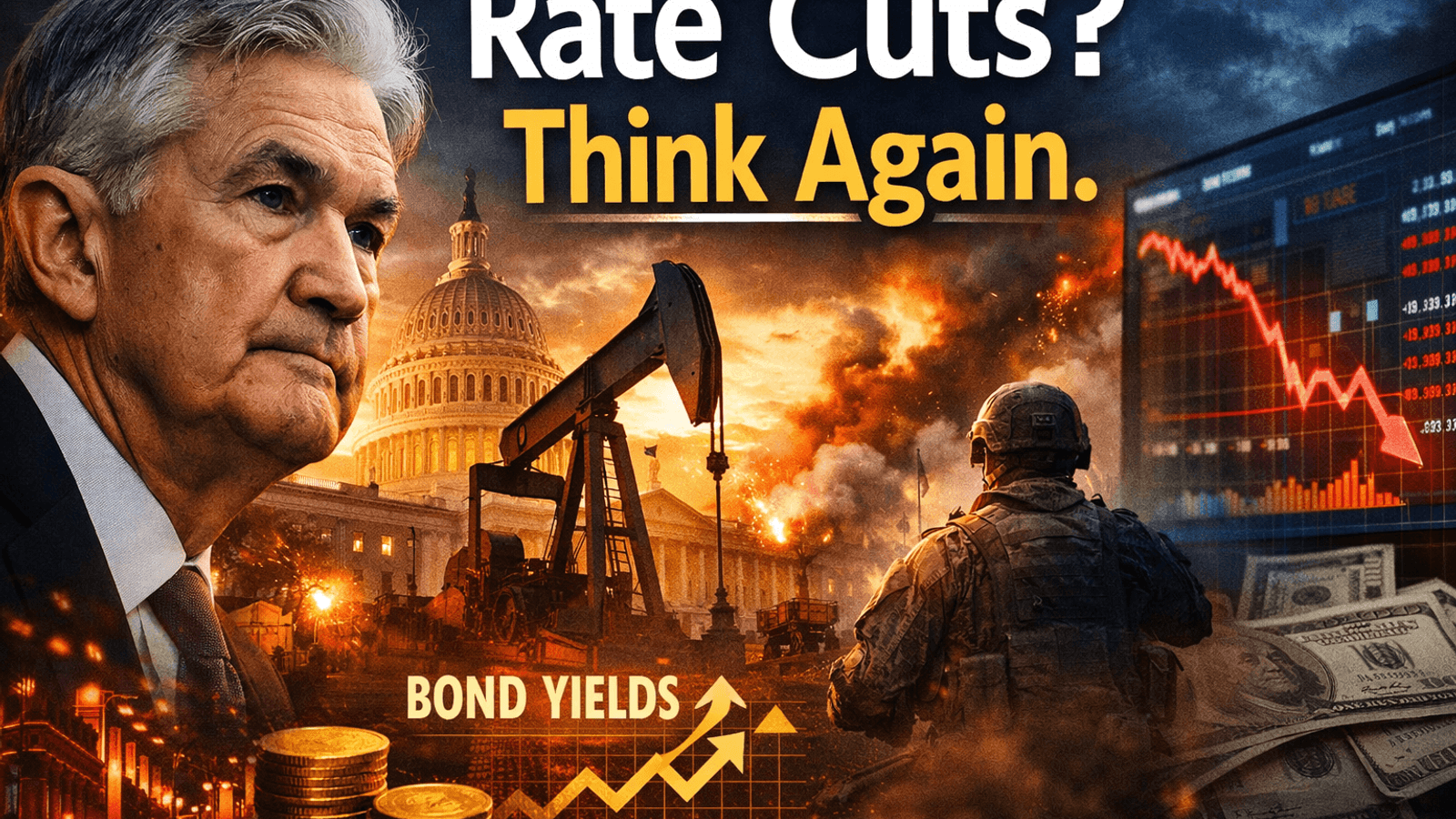
A few months ago, the script felt simple. You were told to expect rate cuts, softer inflation, and maybe—just maybe—a smooth economic landing. Markets were already celebrating the idea. Stocks rallied. Bonds stabilized. Optimism was quietly back on the table. Then the narrative flipped. Not gradually. Not politely. More like someone yanked the tablecloth mid-dinner. Now you’re staring at a very different setup: rate cuts delayed, yields rising, and the dollar flexing again. And suddenly, everything—from equities to crypto—feels a little less predictable. So what actually changed? Let’s break it down like a calm, slightly caffeinated analyst would.
The Great Rate Cut Reality Check
At the center of the shift is one uncomfortable truth: The Fed is in no rush to cut rates anymore. Economists and markets alike have quietly moved expectations further out—some now pointing to late 2026, while others aren’t even ruling out another hike. Yes, a hike. That wasn’t in the script. Why the hesitation? Because inflation isn’t behaving, and more importantly, it’s not just economic anymore—it’s geopolitical. Energy prices, driven by global tensions, are creeping back into the inflation story. And when oil rises, everything else tends to follow. Smart Capital Signal: When central banks hesitate, it’s usually not confusion—it’s caution. And caution rarely supports aggressive risk-taking.
“No Clear Path Forward”—The Fed’s New Favorite Line
If you’re looking for certainty from policymakers, you might want to sit down. The Fed’s messaging has shifted from confident guidance to something closer to “We’ll see what happens.” That’s not laziness—it’s reality. Policy decisions are now tied to variables that don’t sit neatly inside economic models:
- Oil prices
- Global conflicts
- Supply disruptions
In other words, monetary policy is no longer just about inflation and jobs—it’s about geopolitics. Investor Radar: When the Fed stops projecting confidence, markets lose their anchor. Expect more volatility, not less.
Global Central Banks Are Rethinking Everything
This isn’t just a U.S. story. Across Europe and the UK, central banks that were once leaning toward easing are now reconsidering. Some are even flirting with additional rate hikes. Why? Because inflation—especially energy-driven inflation—isn’t contained, it’s spreading. And, historically, central banks would rather risk slowing growth than let inflation spiral. Tactical Insight: We’re no longer in a synchronized global easing cycle. Different regions will move differently—and that creates both risk and opportunity.
Bond Yields Are Rising… Again
Here’s where things get a bit uncomfortable. Traditionally, when uncertainty rises, investors run to bonds. Prices go up. Yields go down. That’s not what’s happening. Instead, yields are climbing—pushing toward multi-month highs. Which means:
- Borrowing costs are rising
- Mortgage rates are ticking up
- Financial conditions are tightening
Even more interesting? Investors aren’t treating bonds like a haven right now. They’re treating them like a risk. Market Pulse Check: When both stocks and bonds feel shaky, portfolios lose their usual balance. That’s when strategy matters more than allocation.
The Dollar Is Quietly Taking Control
While everything else debates direction, the U.S. dollar is doing something very simple: It’s getting stronger. Higher yields + global uncertainty = capital flowing into the dollar. For you, that has ripple effects:
- Emerging markets feel pressure
- Commodities react differently
- Global liquidity tightens
It’s not flashy. But it’s powerful. Capital Flow Signal: A strong dollar doesn’t just reflect strength—it reshapes where money can and can’t go.
The Real Trigger: It All Comes Back to Oil
If you zoom out, most of these trace back to one core driver: Energy prices. When oil spikes, it doesn’t just impact fuel—it feeds into the following:
- Transport costs
- Manufacturing
- Consumer prices
And suddenly, inflation isn’t cooling anymore. It’s reheating. That’s what forced markets to rethink everything. Macro Lens: Sometimes the biggest market shifts don’t come from spreadsheets—they come from supply shocks.
So… Where Does That Leave You?
You’re now operating in a different environment. Not better. Not worse. Just different.
- Rate cuts are no longer guaranteed.
- Inflation isn’t fully under control.
- Policy depends on unpredictable global events.
- Traditional safe havens aren’t behaving traditionally
It’s less about predicting the next move and more about staying adaptable when the script keeps changing.
The Investor’s Closing Thought: This Isn’t a Crisis—It’s a Reset
If this all feels messy, that’s because it is. But here’s the part worth remembering: Markets aren’t breaking—they’re repricing reality. The easy narrative—soft landing, smooth cuts, predictable policy—has been replaced with something more honest:
- Uncertainty
- Complexity
- Trade-offs
And while that may not sound comforting, it’s actually where disciplined investors tend to thrive. Because when the story gets complicated, edge comes from clarity—not certainty. So no, the game isn’t over. It’s just… a lot more interesting now.
Sources
- Reuters – Fed outlook & inflation expectations
- Yahoo Finance – Market pricing Fed hikes
- Wall Street Journal – Fed policy signals
- Saxo Bank – Bond yields and macro outlook
- Wall Street Journal – Bonds & portfolio impact
- Economic impact of the Iran war (macro context)
Market Munchies and Mode Mobile communications are for informational purposes only, and are not a recommendation, solicitation, or research report relating to any investment strategy, security, or digital asset. All investments involve risk including the loss of principal and past performance does not guarantee future results.
Any information contained in this commentary does not purport to be a complete description of the securities, markets, or developments referred to in this material. The information has been obtained from sources considered to be reliable, but we do not guarantee that the foregoing material is accurate or complete. There is no guarantee that any statements or opinions provided herein will prove to be correct.