The Fragile Boom: Why the Global Economy Outlook Looks Strong but Stands on Shaky Ground
🌏 A Calm Surface, Cracking Undercurrent The global economy outlook has never looked shinier—stock charts are glowing, analysts are optimistic, and everyone’s pretending the music will never stop. Yet if you lean in close enough, you can almost hear the crackle beneath the…
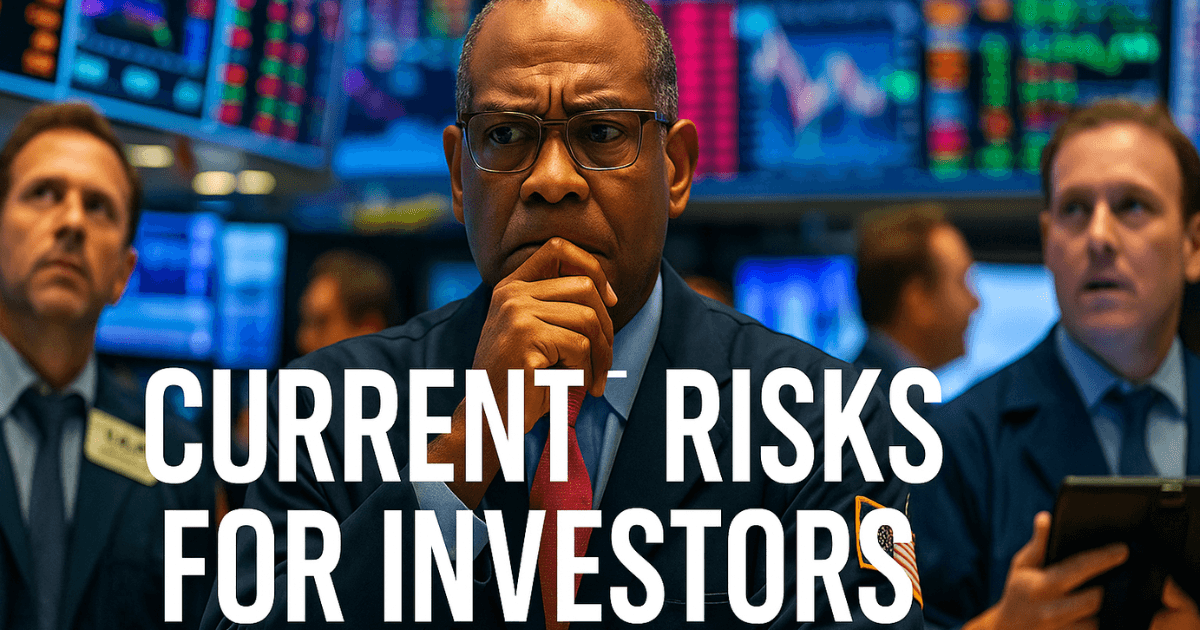
🌏 A Calm Surface, Cracking Undercurrent
The global economy outlook has never looked shinier—stock charts are glowing, analysts are optimistic, and everyone’s pretending the music will never stop. Yet if you lean in close enough, you can almost hear the crackle beneath the applause. Growth looks good on paper, but the paper’s starting to tear. Market fragility is quietly seeping through—from structural growth headwinds and trade tariff impacts to central banks tiptoeing between inflation and instability. It’s the kind of moment where every “rally” hides a reason to worry, and every headline victory feels a little too easy. Bloomberg Economics estimates that global GDP will slide toward 2.4%, one of the weakest post-recovery expansions in recent history. China’s exports are cooling, Europe’s factories are fatigued, and the U.S. might be holding the torch—but the flame flickers. The world’s not collapsing. It’s just… wobbling—quietly, elegantly, and dangerously. Don’t mistake motion for momentum. The global equity rally may appear to be a sign of confidence, but underneath, it’s caution dressed in designer optimism.
📊 The Data Drought Dilemma
In a world addicted to numbers, a data vacuum in economics can feel like flying blind. The U.S. government shutdown has frozen vital reports, including GDP, CPI, and jobs data, forcing traders to rely on private sector PMI surveys and ADP reports instead. The S&P Global Composite PMI barely scraped above expansion at 50.3, while ADP employment added just 152,000 jobs—soft, uneven signals that add to investor uncertainty. Economists called it a “fog of fundamentals,” where speculation thrives in the absence of facts. Markets, deprived of official releases, have become hypersensitive—a single PMI surprise can swing bond yields, currencies, or interest rates. For now, data scarcity has turned the investing landscape into a high-volatility playground. 📈 Tactical Insight: In the absence of clear data, perception often takes precedence over precision. That’s when defensive investment strategies and balanced allocations shine. If fundamentals go quiet, patience becomes the most profitable position.
🏭 Factories Flicker, Not Flourish
The manufacturing output recovery story in the U.K. shows faint signs of life. Factory production rose 0.4% month-on-month, the first uptick in a year—mostly powered by Jaguar Land Rover’s post-cyber-attack rebound. As The Guardian reported, the automaker’s Solihull and Halewood plants are back to full throttle, easing supply backlogs and lifting industrial sentiment. Across the Atlantic, though, U.S. manufacturing exports tell a grimmer story. The export downturn in U.S. manufacturing persists as tariffs affect trade flows, input costs rise, and inventories accumulate. Despite the booming tech sector, the real economy looks fatigued. 🏗️ Investor Radar: Don’t let headline rebounds blur the big picture. Export-oriented companies face shrinking margins due to rising trade costs, while domestically oriented firms may find better shelter. The new winners could emerge in near-shoring supply chain hubs, such as Mexico and Vietnam—economies that are adapting to the latest global playbook.
⚖️ Tariffs: The Ghosts That Still Haunt Trade
The latest trade reports confirm that U.S. exports fell 2.1%, a reminder that the impact of trade tariffs is far from over. The machinery, semiconductor, and automotive sectors are all struggling under higher logistics and customs friction. The once-promising tariff truce between the U.S., China, and the EU remains more a matter of diplomatic theater than economic relief. The near-shoring supply chain story continues to dominate strategic conversations, as corporations move production closer to home to hedge geopolitical risk. Meanwhile, Europe’s manufacturing still lags, weighed down by structural growth headwinds and weak demand. 📊 Macro Menu Tip: Follow the production trail. Companies investing in domestic-oriented operations or regional supply chains are building resilience, not just efficiency. Long-term investors should watch for new selective investment plays emerging from this global shift.
💬 The Silent Fragility Beneath the Noise
Markets love a clean narrative—and right now, that narrative is “AI-fueled growth.” However, even as global equity markets continue to rally, cracks in manufacturing, trade, and data flow tell a different story. Analysts from Bloomberg and Reuters describe today’s environment as “an illusion of stability.” Everything feels normal until it suddenly doesn’t. The global economy outlook is less about crisis and more about quiet constraint—where progress exists, but at the cost of growing imbalances. For investors, the goal isn’t panic; it’s precision. The smart money isn’t chasing headlines—it’s calibrating exposure, protecting margins, and reading between the lines of the macro narrative. 🍽️ Final Serving—The Analyst’s Digest: Balance AI enthusiasm with fundamental realism. Defensive investment strategies and selective plays aren’t dull—they’re disciplined. In markets built on momentum, knowing when not to move can be your sharpest move.
🔍 Sources
- Investing.com – November 2025 Monthly Outlook: Global Economy Limps with Headwinds Building
- Reuters – U.S. Government Shutdown: How It Affects Key Economic Data Publishing
- Reuters – Big Manufacturing Economies Struggle as U.S. Tariffs Hit Order Books
- Reuters – U.S. Manufacturing Mired in Weakness as Tariff Gloom Spreads
Market Munchies and Mode Mobile communications are for informational purposes only, and are not a recommendation, solicitation, or research report relating to any investment strategy, security, or digital asset. All investments involve risk including the loss of principal and past performance does not guarantee future results.
Any information contained in this commentary does not purport to be a complete description of the securities, markets, or developments referred to in this material. The information has been obtained from sources considered to be reliable, but we do not guarantee that the foregoing material is accurate or complete. There is no guarantee that any statements or opinions provided herein will prove to be correct.