The Hidden Oil Tax on Everyday Life
For most Americans, oil is easy to ignore until it starts making ordinary life more expensive. It tends to live in the background as financial noise until it suddenly becomes part of the weekly budget. That shift is happening now. Brent crude was around $101.47 a barrel on…
For most Americans, oil is easy to ignore until it starts making ordinary life more expensive. It tends to live in the background as financial noise until it suddenly becomes part of the weekly budget. That shift is happening now. Brent crude was around $101.47 a barrel on Friday and U.S. crude around $96.77, after Brent briefly hit $119.50 earlier this week, its highest level since mid-2022. Goldman Sachs has raised its average March Brent forecast to above $100, arguing that disruption around the Strait of Hormuz could keep prices elevated longer than markets had been assuming.
That matters because oil does not stay in the oil market. It shows up first at the gas station, where the price is large, public, and impossible to miss. Then it spreads outward: into airfare, freight, food, packaging, plastics, and the general sense that everyday life is getting a little tighter around the edges. What begins as a geopolitical story or a commodities chart has a way of ending as a household story.
And this is not just about drivers paying more to fill up. It is about how a spike in energy costs can change mood, spending, inflation, and even the odds of cheaper borrowing later this year. The real story here is not what oil is doing on a screen. It is how quickly that move starts showing up in the price of ordinary American life.
The first hit lands at the pump
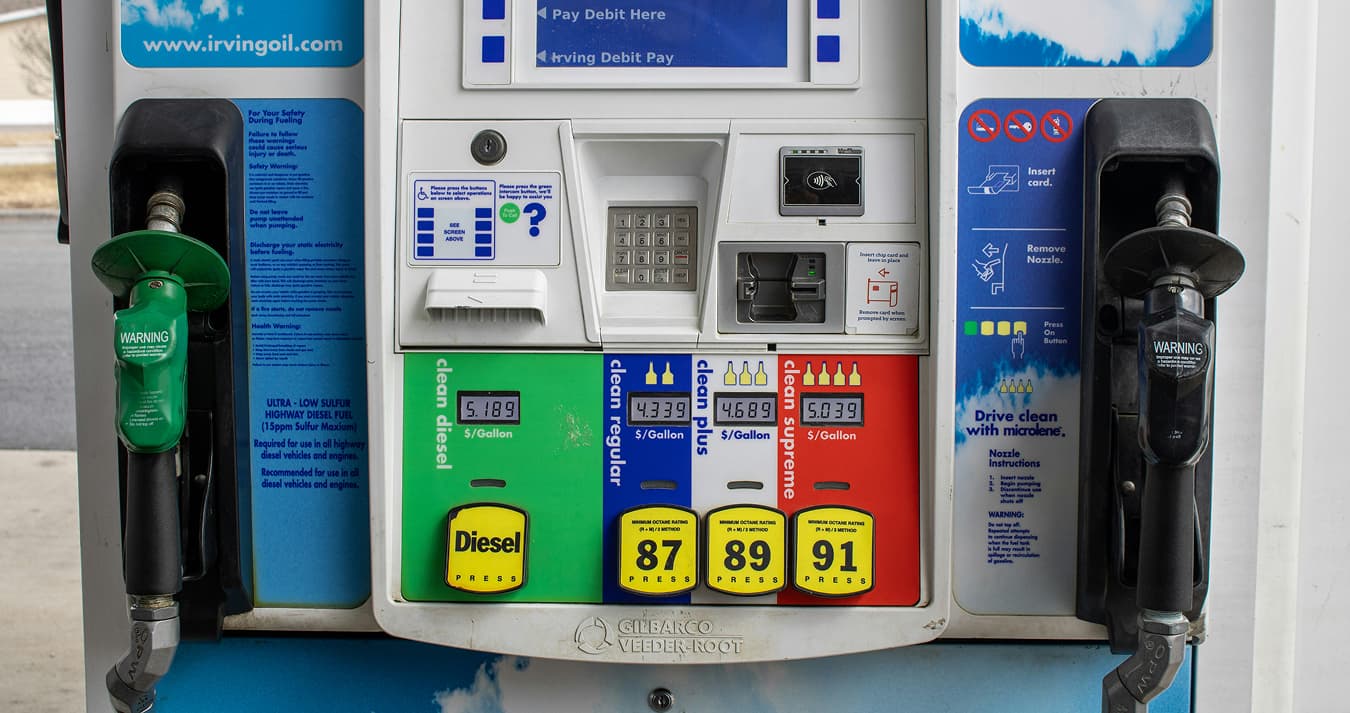
The most obvious place this shows up is still the gas station. AAA said the national average for regular gasoline was $3.63 a gallon on March 13, up from $3.25 a week earlier and $2.94 a month earlier. It also said the average had jumped nearly 35 cents in a week as spring demand picked up and crude moved above $100 several times. Gasoline demand climbed to 9.24 million barrels a day from 8.29 million the week before, while total gasoline supply fell to 249.5 million barrels from 253.1 million.
That price matters out of proportion to its size because Americans see it constantly. Rent is painful, but it usually arrives once a month and disappears into autopay. Gas prices sit on giant roadside signs and update in public. The University of Michigan’s consumer sentiment index slipped to 55.5 in early March from 56.6 in February, and survey director Joanne Hsu said that any early improvement in sentiment was “completely erased” after the conflict began. She added that gasoline prices had exerted “the most immediate impact felt by consumers,” even if the full pass-through to other prices remained uncertain.
That gets at something economists sometimes phrase too politely. Gasoline is not just a cost. It is a mood. When the price at the pump starts moving fast, people tend to assume the rest of the economy is about to become less forgiving too. They delay a trip, think twice about a weekend drive, or simply feel less financially loose than they did a few weeks earlier. That is how an oil shock starts becoming cultural before it becomes fully statistical.
The second bill arrives more quietly
The hidden tax gets harder to track once it moves beyond the pump, but that is where it becomes more important. The widening conflict in the Middle East has disrupted flights, lifted jet-fuel costs, strained cargo capacity, and pushed fares higher on some routes. Air New Zealand said jet fuel had jumped to roughly $150 to $200 a barrel from around $85 to $90 before the strikes on Iran, while SAS said it had temporarily raised prices because of higher fuel costs.
That may sound like an airline problem until you remember how much of modern life depends on expensive things moving quickly. Shipments ranging from fresh produce to airplane parts have already been stranded or delayed as the regional conflict squeezes air-cargo capacity and raises freight costs. The goods do not need to be glamorous for the effect to be real. If moving them gets more expensive, they eventually arrive with a higher price attached.
Then there is the broader seepage into the stuff Americans buy all the time. Higher oil assumptions for 2026 imply higher costs for gasoline, jet fuel, fertilizer, petrochemicals, and plastics, with pressure likely to spread into transportation, manufacturing, retail, and food. Joe Brusuelas of RSM put it simply: “As prices rise, consumption is affected, and, ultimately, corporate earnings erode.” Strip away the market language and his point is even simpler: it costs more to move things, make things, wrap things, and grow things, so people wind up paying more for things.
Groceries are where abstract costs become personal
Most Americans do not think about crude benchmarks when they are standing in a supermarket. They think about whether the total at checkout feels absurd. But energy is one of the costs hiding behind that number. More expensive diesel and freight raise the price of transporting food. More expensive fertilizer raises costs upstream. More expensive plastics and packaging add pressure further down the chain. Higher oil assumptions now point to pressure not just on fuel, but on fertilizer, plastics, and food costs more broadly.
That matters because inflation had only just started to look somewhat less menacing before oil barged back in. The Bureau of Labor Statistics said the consumer price index rose 0.3% in February and 2.4% from a year earlier, with shelter, food, and energy all contributing to the monthly increase. It was not a catastrophic report, but it was also not the kind of report that leaves much room for a fresh energy shock to roll through without making households feel pinched again.
For regular Americans, this is where the story becomes less dramatic and more familiar. It is not one giant collapse. It is a series of smaller compromises. A pricier grocery bill. A flight that suddenly costs more than expected. A fill-up that eats into the money set aside for something else. That is what makes oil feel like a tax on flexibility. It does not just raise costs. It shrinks the amount of room people have to improvise.
The Fed angle is really a borrowing-cost angle
If this were simply a story about expensive gasoline, it would already matter. The bigger problem is that higher energy costs can also keep borrowing costs elevated. Barclays now expects the Federal Reserve’s first rate cut to come in September instead of June, citing oil-driven inflation risks and firmer core inflation. Barclays now expects only one quarter-point cut this year.
That may sound like a Wall Street concern, but it quickly becomes an everyday one. Rate-cut hopes affect mortgage expectations, car loans, credit-card balances, and small-business borrowing. Markets have also scaled back how much easing they expect this year as the conflict keeps oil high and inflation worries alive. In plain English: if energy stays expensive, relief on rates may arrive later than people had hoped.
This is the sneaky cruelty of an oil shock. It can make life more expensive immediately and make monetary relief more distant at the same time. Households pay more in the present and get less help in the future. That is why oil spikes tend to make the economy feel harsher before the numbers fully catch up.
A global problem with a local address
One reason Americans sometimes underestimate oil risk is that the United States produces a lot of energy. That creates a comforting illusion that foreign turmoil is mostly a foreign problem. But oil is priced in a global market, and the current shock is tied to one of the most important chokepoints in that market. The U.S. Energy Information Administration says the Strait of Hormuz carries nearly 20% of global oil supply, making any prolonged disruption there a genuine nightmare scenario for global energy.
The consequences are already spreading well beyond the Middle East. Higher oil prices have weakened global stocks, strengthened the dollar, and forced central banks in several countries to rethink rate-cut plans. Saudi Arabia has also cut output sharply amid the conflict, adding to supply anxiety at exactly the wrong moment. None of that stays politely inside the international section. It comes back through prices, corporate decisions, and consumer confidence.
So while this story begins with geopolitics, it ends in a very domestic place: the household budget. People do not need to know tanker routes, oil futures, or the internal politics of OPEC to understand what happens when a tank of gas costs more, grocery prices stay sticky, and hoped-for rate cuts keep sliding down the calendar. The hidden oil tax is not hidden because it is invisible. It is hidden because it arrives in pieces.
What oil really measures
The easiest way to think about oil is as a commodity. The more useful way to think about it, especially right now, is as the price of motion. It helps determine what it costs to drive to work, ship groceries, fly home for a funeral, move airplane parts, deliver online orders, and keep the physical economy functioning with something close to speed. When oil rises sharply, the country is not just paying more for energy. It is paying more for movement itself.
That is why this story matters even to people who never glance at a commodities chart. Oil is one of the few market variables that can travel all the way from a geopolitical flashpoint to a family budget without losing much force along the way. It can drag sentiment lower, keep inflation sticky, delay rate cuts, raise the price of a trip, and make a weekly grocery run feel slightly more hostile. None of those changes on its own sounds historic. Together, they can make the economy feel narrower, harsher, and less forgiving.
And that may be the most useful way to read an oil shock. Not as a distant crisis that occasionally annoys drivers, but as a reminder of how exposed everyday American life is to systems most people never see. The pump is only the first clue. The deeper lesson is that oil does not just power cars. It helps set the cost of moving through everyday life. When its price jumps, the result is not only higher fuel bills, but less breathing room and less confidence that ordinary expenses will stay under control.
Sources
- https://www.sca.isr.umich.edu/
- https://www.bls.gov/news.release/archives/cpi_03112026.htm
- https://www.eia.gov/outlooks/steo/report/global_oil.php
- https://www.reuters.com/world/china/global-markets-wrapup-1-2026-03-13/
- https://www.reuters.com/business/energy/goldman-hikes-average-brent-oil-forecast-over-100-barrel-march-2026-03-13/
- https://newsroom.aaa.com/2026/03/rising-pump-prices-higher-gas-demand-as-spring-break-begins/
- https://www.reuters.com/business/us-consumer-sentiment-falls-early-march-middle-east-war-weighs-2026-03-13/
- https://www.reuters.com/world/asia-pacific/price-hikes-outlook-cuts-what-airlines-are-doing-fuel-costs-surge-2026-03-10/
- https://www.reuters.com/business/aerospace-defense/perishables-plane-parts-stranded-middle-east-conflict-hits-air-cargo-2026-03-05/
- https://www.reuters.com/business/us-consumer-prices-increase-expected-february-2026-03-11/
- https://www.reuters.com/markets/us/barclays-expects-fed-push-back-rate-cuts-inflation-worries-2026-03-13/
- https://www.reuters.com/graphics/IRAN-CRISIS/OIL-LNG/mopaokxlypa/
- https://www.reuters.com/business/energy/saudi-arabia-cuts-oil-output-20-8-million-bpd-amid-iran-war-sources-say-2026-03-13/
Market Munchies and Mode Mobile communications are for informational purposes only, and are not a recommendation, solicitation, or research report relating to any investment strategy, security, or digital asset. All investments involve risk including the loss of principal and past performance does not guarantee future results.
Any information contained in this commentary does not purport to be a complete description of the securities, markets, or developments referred to in this material. The information has been obtained from sources considered to be reliable, but we do not guarantee that the foregoing material is accurate or complete. There is no guarantee that any statements or opinions provided herein will prove to be correct.