The Kentucky Derby Starts at 6:57 p.m. ET Tonight. Here's How the Business of Owning These Horses Actually Works.
Twenty thoroughbreds will break from the starting gate at Churchill Downs tonight in the 152nd running of the Kentucky Derby. The winner gets a Garland of Roses, a place in history alongside Secretariat and Seattle Slew, and a check for $3.1 million from the $5 million total…
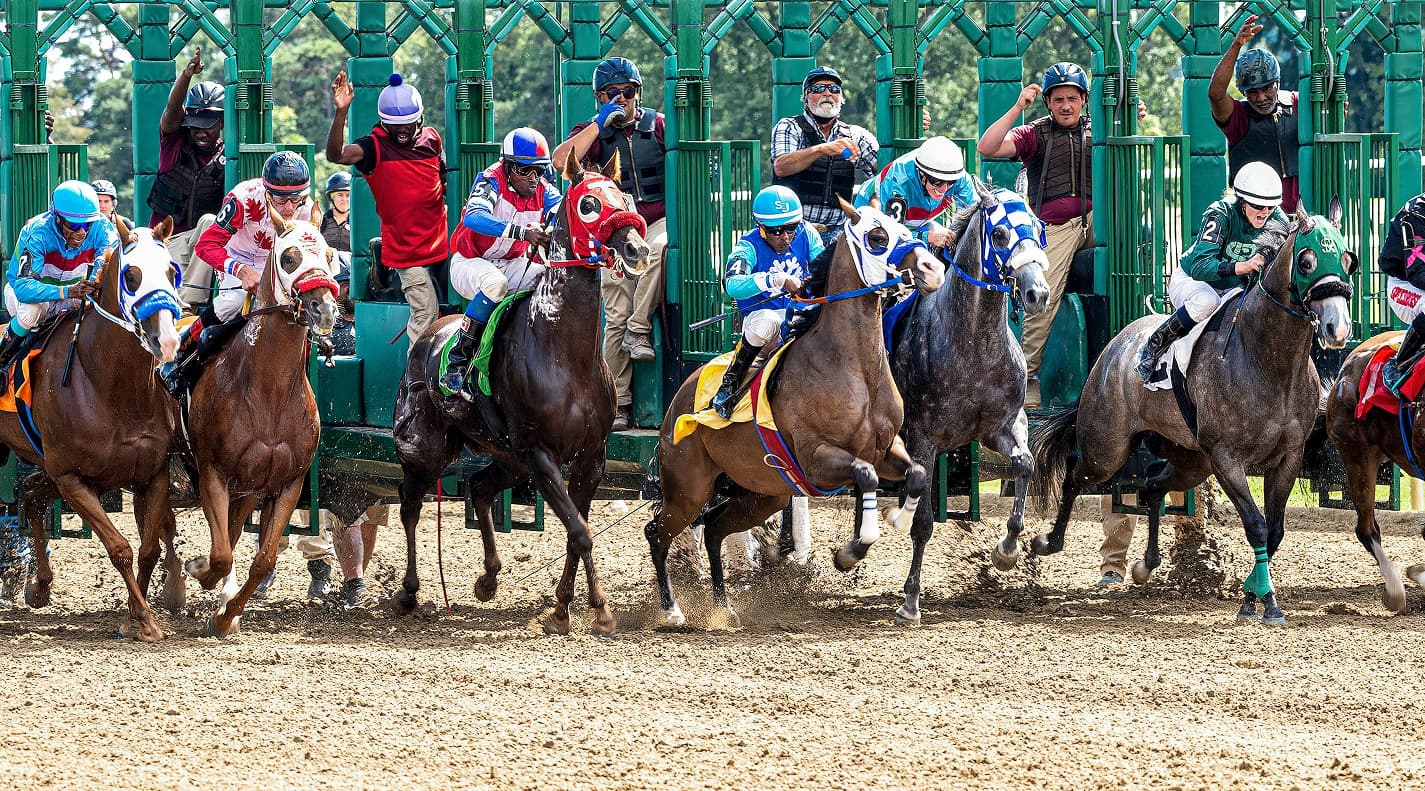
Twenty thoroughbreds will break from the starting gate at Churchill Downs tonight in the 152nd running of the Kentucky Derby. The winner gets a Garland of Roses, a place in history alongside Secretariat and Seattle Slew, and a check for $3.1 million from the $5 million total purse.
The horse that gets that check belongs, almost certainly, to a group of investors and not a single wealthy eccentric with a soft spot for horses. That is the part of the Kentucky Derby that most coverage never explains. The "Sport of Kings" became, over the past two decades, the sport of syndicates. And the economics of how that works are considerably more interesting than they might appear.
The Cost of Being in the Room
Start with the basics. A horse competing in the Kentucky Derby did not get there cheaply.
The most expensive horse in this year's field sold at auction for just over $975,000. Several others changed hands in the $400,000 to $600,000 range. At the low end, So Happy, trained by the quietly formidable Mark Glatt, was purchased for $75,000 and has since earned nearly $500,000 in career winnings, a return that any venture investor would recognize. But $75,000 is the exception. The average purchase price for a horse with a realistic shot at a Derby field is somewhere between $250,000 and $750,000.
And the purchase price is just the beginning. Annual maintenance for a Derby-caliber horse runs considerably higher than the industry average. A combination of training fees at elite facilities ($150 to $250 per day), veterinary care, farrier costs, transport, insurance, and entry fees along the prep race circuit can push annual costs toward $100,000 for the top-tier operations in tonight's field. A horse that runs twelve prep races across two years before earning a Derby start might accumulate that bill twice over before ever seeing Churchill Downs.
The winner tonight takes home $3.1 million. Second place gets $1 million. Third receives $500,000. But the math only works if you finish in the top three, and twenty horses enter. The expected value of a Derby start is around $250,000 per horse, roughly covering operational costs but rarely covering the full purchase price. The Derby is not where horse owners get rich. It is where they get famous.
How Syndicates Changed Everything
The economics of individual ownership, absorbing $600,000 in purchase cost and $100,000 in annual expenses for a 5% chance at a $3.1 million prize, are not compelling for most investors. The syndicate model exists precisely to make them more rational.
Thoroughbred syndicates go out of their way to make sure their 10% partners are treated virtually the same way as sole owners, including access to the paddock, winner's circle, and their name on the race program. In practice, a typical syndicate for a Derby-caliber horse might have between 8 and 20 members, each owning a defined percentage of the horse. A 10% stake in a horse purchased for $500,000 costs $50,000, before operational costs, which are shared proportionally.
The structure is typically an LLC created for a specific horse, with members buying units that cover the purchase price and a budgeted period of expenses. A managing partner runs operations, covering trainer selection, entries, shipping, and accounting, and reports to members. In other words, it is structured like a small private equity fund, with a general partner managing operations and limited partners providing capital and collecting their proportional share of prize money.
The numbers rarely pencil out on a pure return-on-investment basis. Industry data consistently shows that fewer than 10% of racehorses ever earn enough in prize money to cover their full cost of ownership. The syndicate members who come out ahead financially are typically those whose horse either wins at the elite level repeatedly, generating six-figure prize checks across a full campaign, or transitions to a lucrative stud career. A successful Derby winner can command stud fees of $50,000 to $150,000 per breeding, with books of 150 to 200 mares per season. At those numbers, the financial math finally starts to make sense.
For most syndicate members, the return is not primarily financial. It is access to the paddock, to the winner's circle, to the kind of experiences that cannot be purchased off a standard brokerage platform.
The Bloodstock Market as an Asset Class
For ultra-high-net-worth investors who treat thoroughbred ownership as a genuine portfolio allocation rather than a hobby, the asset class has some unusual characteristics worth understanding.
Thoroughbreds are depreciating biological assets with a racing career that typically spans two to four years. They cannot be held indefinitely. They carry health and injury risk that is difficult to insure against fully. And their value is determined by a combination of bloodline, performance record, and subjective market assessment that makes equity securities look transparent by comparison.
When the upside materializes, the multiples are staggering. Justify, who won the 2018 Triple Crown, was purchased for $500,000 as a yearling and was subsequently syndicated as a stallion for a reported total valuation of $75 million, a 150x return on the original purchase price, paid out through stud fees over his breeding career. American Pharoah's 2015 Triple Crown similarly transformed his owners' investment from a mid-seven-figure purchase into a stud valuation estimated above $100 million.
These are outliers, not expectations. The more realistic comparison is to early-stage venture investing: a portfolio of five to ten horses, most of which earn modest returns or none at all, balanced against one or two that generate returns sufficient to make the whole exercise profitable. The top bloodstock investors, including the Sheikh Mohammed Al Maktoum family of Dubai, the Coolmore partnership in Ireland, and Godolphin, operate on this portfolio logic explicitly, maintaining strings of hundreds of horses globally and accepting that the majority subsidize the search for the rare champion. It was Godolphin, notably, that won last year's Derby with Sovereignty, the same trainer and jockey combination of Bill Mott and Junior Alvarado that Chief Wallabee brings to tonight's race.
For most investors, entry into this world happens through syndicates and platforms like MyRacehorse, which allows fractional ownership starting from a few hundred dollars. Micro-ownership platforms have democratized the paddock experience considerably, though at these fractions, the financial return is negligible and the experience itself is the product being sold.
Tonight's Field: The Business Stories Behind the Horses
The 2026 Kentucky Derby field tells several distinct ownership stories that illustrate the breadth of the asset class.
Renegade, the 4-1 favorite drawing from Post 1, is backed by co-owners Mike Repole and Robert Low. Low is a prototypical self-made entrepreneur who founded Prime Inc. trucking as a 19-year-old engineering student at the University of Missouri. Their horse has the best odds in the field and will try to become the first winner from Post 1 since Ferdinand in 1986.
Chief Wallabee, at 8-1, is trained by Bill Mott and ridden by Junior Alvarado, the same combination that won the 2025 Derby with Sovereignty. That trainer-jockey pairing commands a meaningful premium in the betting pools, because the human capital in the paddock is often as important as the horse's raw ability.
So Happy, at 15-1, was purchased for $75,000 and has since earned nearly $500,000, a return profile that any seed-stage investor would find recognizable. His trainer, Mark Glatt, lost his wife Dena to heart failure in February. The horse is racing for more than prize money tonight.
Japanese import Danon Bourbon enters at 20-1. International entrants in the Kentucky Derby represent the global bloodstock market at its most visible: horses bred, purchased, and trained in one country, entered in a race on the other side of the world, with ownership syndicates that may span multiple continents.
What to Watch For Tonight
The race goes off at 6:57 p.m. ET. Coverage begins at 2:30 p.m. ET on NBC and Peacock.
For investors watching with a business lens: the parimutuel odds board is one of the most efficient real-time prediction markets in existence. The crowd, aggregating hundreds of millions of dollars in wagers, consistently outperforms individual expert handicappers over large samples. When Renegade is at 4-1 and So Happy is at 15-1, that gap reflects not just the horses' ability but the market's aggregated assessment of trainer skill, post position disadvantage, distance preference, and dozens of other variables that individual bettors are pricing simultaneously.
In that sense, the Kentucky Derby is not just the most exciting two minutes in sports. It is a 20-horse, $5 million prediction market settling in real time and, tonight at least, one of the most elegant expressions of how distributed human judgment prices uncertainty.
Sources
- NBC Chicago — "Kentucky Derby 2026: Watch on TV, streaming, horses, posts, draws": https://www.nbcchicago.com/news/sports/triple-crown/kentucky-derby-date-time-horses-watch-stream-posts-odds-payout-2026/3928432/
- NBC Sports — "2026 Kentucky Derby: Full field, updated odds, analysis and predictions": https://www.nbcsports.com/2026-kentucky-derby-full-field-odds-analysis-of-each-horse-and-predictions
- NBC.com — "All 20 Horses Competing in the 2026 Kentucky Derby": https://www.nbc.com/nbc-insider/all-20-horses-competing-in-the-2026-kentucky-derby-what-to-know
- Covers.com — "2026 Kentucky Derby Cheat Sheet": https://www.covers.com/horse-racing/kentucky-derby/cheat-sheet-2026
- Kentucky Derby Updates — "Complete List of Kentucky Derby Winners (2025 UPDATE)": https://kentuckyderbyupdates.com/winners/
- NPR — "Sovereignty wins 2025 Kentucky Derby": https://www.npr.org/2025/05/03/nx-s1-5385847/sovereignty-winner-kentucky-derby-journalism
- Little Red Feather Racing — "Should You Buy a Race Horse on Your Own or in a Racing Syndicate?": https://www.littleredfeather.com/should-you-buy-a-race-horse-on-your-own-or-in-a-racing-syndicate/
- EquinEdge — "What is a Bloodstock Syndicate vs. Partnership?": https://equinedge.com/glossary/trainers-jockeys-and-owners/bloodstock-syndicate-vs-partnership
- Boomer Bloodstock — "Cost of Shares in a Racehorse": https://boomerbloodstock.com.au/learning/racing/horse-shares/
- MyRacehorse — "How Fractional Racehorse Ownership Works": https://www.myracehorse.com/how-it-works
Market Munchies and Mode Mobile communications are for informational purposes only, and are not a recommendation, solicitation, or research report relating to any investment strategy, security, or digital asset. All investments involve risk including the loss of principal and past performance does not guarantee future results.
Any information contained in this commentary does not purport to be a complete description of the securities, markets, or developments referred to in this material. The information has been obtained from sources considered to be reliable, but we do not guarantee that the foregoing material is accurate or complete. There is no guarantee that any statements or opinions provided herein will prove to be correct.