The Market’s AI Confidence Test Just Got Real
Markets ended Monday with enough strength to keep the rally alive, but Tuesday’s early trading has made the tone more complicated. Investors are no longer just asking whether big companies can beat earnings expectations. They are asking whether the AI spending boom can keep…
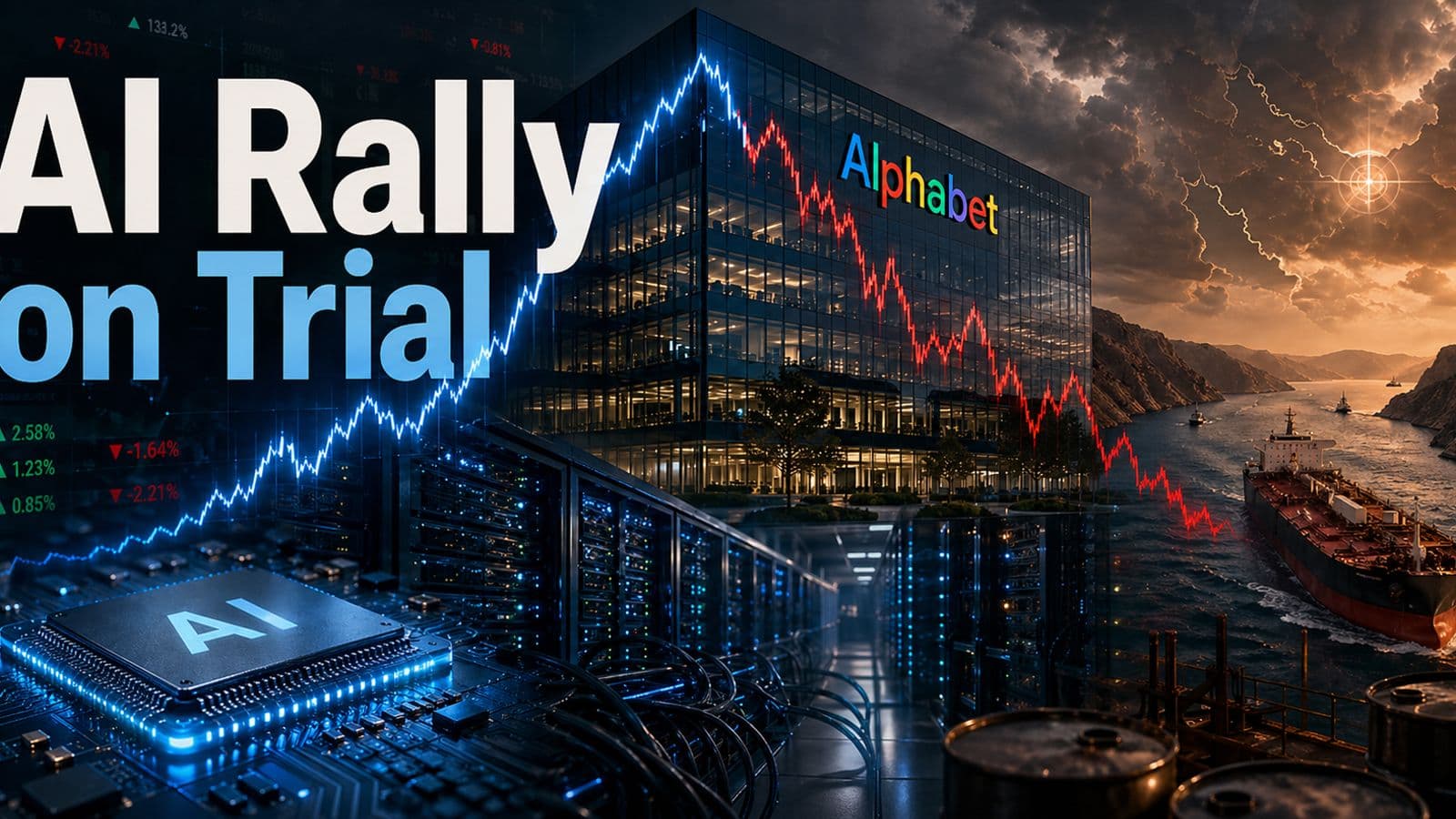
Markets ended Monday with enough strength to keep the rally alive, but Tuesday’s early trading has made the tone more complicated. Investors are no longer just asking whether big companies can beat earnings expectations. They are asking whether the AI spending boom can keep justifying the valuations now attached to cloud, chip, and mega-cap tech stocks.
That question became harder to ignore after reports that OpenAI missed internal targets for new users and revenue, putting pressure on AI infrastructure names tied to the company’s growth. At the same time, oil remains elevated as U.S.-Iran talks over the Strait of Hormuz remain unresolved, keeping geopolitical risk firmly in the market’s line of sight.
So the setup is not simply “tech weak” or “energy strong.” It is a market being tested on two fronts: whether AI demand is still accelerating fast enough to support massive spending, and whether higher oil prices could become a broader drag on margins, inflation, and consumers.
Stock of Interest Today: Alphabet (GOOGL)
Alphabet heads into Wednesday’s earnings report as one of the clearest tests of this market. The company sits at the center of nearly every major debate investors care about right now: digital advertising, cloud growth, AI spending, Gemini adoption, YouTube momentum, and whether mega-cap tech can keep leading at elevated valuations.
Analysts are expecting another strong revenue quarter, with sales growth projected near the high teens. But the real focus will be on quality, not just size. Investors want to see whether Alphabet’s AI investments are improving Search, YouTube, and Google Cloud without putting too much pressure on margins or free cash flow.
Google Cloud may be the key swing factor. If growth remains strong and margins continue improving, Alphabet can argue that its AI spending is building a larger and more profitable platform. If cloud growth disappoints, the market may become less forgiving of the company’s heavy investment cycle.
The risk is that expectations are already high. Alphabet has beaten revenue consensus in most recent quarters and earnings estimates even more consistently, so a normal beat may not be enough. Investors will be looking for proof that AI is not just a cost center, but a visible driver of revenue and competitive advantage.
Current price: $350 Analyst expectation: $370
Five Market Signals To Watch
The five biggest signals today all point back to the same issue: investors are shifting from AI excitement to AI verification. The market is no longer rewarding every company with an AI connection equally. It is starting to separate businesses with durable demand, strong balance sheets, and clear monetization from companies more dependent on future promises.
That does not mean the rally is broken. It means the next phase may be more selective. The companies that can show real growth from AI spending may keep leading. The ones that rely on investor patience could face a tougher market.
1) OpenAI concerns are now a public-market problem
Reports that OpenAI missed internal targets for new users and revenue hit more than just sentiment around one private company. They pressured public names tied to the AI infrastructure buildout, including Oracle and CoreWeave, because investors are questioning whether the demand behind massive cloud and compute commitments is as smooth as previously assumed.
The key issue is not whether AI demand exists. It clearly does. The issue is whether the market has priced that demand as too automatic. If one of the most important AI companies is running behind its own growth goals, investors may start demanding a bigger margin of safety from companies whose valuations depend on long-term AI infrastructure spending.
2) Chip stocks are selling off because investors are questioning the demand curve
The weakness in AMD, Broadcom, Intel, Qualcomm, and other semiconductor names reflects a broader shift in how the market is thinking about AI. Chip stocks have been treated as some of the cleanest winners from the AI boom because they sell the hardware needed to build the future. But when investors worry that AI demand may be less predictable, chips often react first.
That does not mean the semiconductor story is broken. It does mean the bar is higher. Investors will want confirmation from upcoming earnings and guidance that cloud customers are still capacity-constrained, not demand-constrained. Until then, the chip trade may stay more volatile, especially after such a strong run.
3) Iran and the Strait of Hormuz are keeping the oil risk premium alive
Iran’s offer to reopen the Strait of Hormuz if the U.S. lifts its blockade has not removed the market’s geopolitical anxiety. The sticking point is that Iran reportedly wants to defer nuclear talks, while the U.S. appears unlikely to accept a deal that leaves that issue unresolved. That keeps oil prices supported by uncertainty rather than clean demand strength.
That matters because higher oil can quickly spread beyond the energy sector. It can raise costs for airlines, shipping firms, retailers, chemical producers, and consumers. If the standoff drags on, the market may have to worry less about whether energy stocks can benefit and more about whether higher crude starts acting like a tax on the broader economy.
4) BP’s profit surge shows how energy volatility creates winners and losers
BP’s stronger-than-expected quarter shows how oil volatility can benefit large integrated energy companies, especially when trading results are strong. That may bode well for U.S. energy majors like Exxon Mobil and Chevron, which are set to report later this week. Elevated crude prices can provide a powerful earnings tailwind.
But the bigger market message is more complicated. Energy companies can win from higher prices, while the rest of the economy absorbs the cost. If oil stays elevated because of geopolitical disruption rather than strong demand, investors may eventually focus more on the inflation and margin pressure than on the earnings boost for producers.
5) Big Tech earnings will decide whether AI spending still looks credible
Alphabet, Microsoft, Amazon, and Meta are all in focus this week because they are spending enormous sums on AI. Investors have tolerated that spending because the growth story has been powerful. Now they want proof that the money is turning into cloud revenue, better ad performance, stronger engagement, and durable earnings power.
The most important number may not be earnings per share. It may be capital expenditure guidance. If management teams say they are spending more because demand is exceeding capacity, the market may accept it. If they sound like they are spending because they fear falling behind, investors may start questioning whether the AI arms race is becoming too expensive.
Bottom Line
This market still has momentum, but it has less room for vague promises.
The OpenAI report has reminded investors that even the strongest AI stories need to meet real revenue expectations. The chip selloff shows how quickly that concern can spread. The Iran standoff keeps oil risk alive. BP’s results show that energy volatility can create winners, but not without consequences for the broader economy.
Now the pressure shifts to Big Tech. If Alphabet, Microsoft, Amazon, and Meta can show that AI spending is turning into real growth, the rally can keep its footing. If they cannot, the market may not give up on AI, but it may start demanding a lower price for uncertainty.
Sources:
- https://www.reuters.com/business/us-stock-index-futures-muted-stalled-us-iran-peace-talks-2026-04-27
- https://www.investopedia.com/stock-market-today-dow-jones-s-and-p-500-04282026-11959883
- https://www.reuters.com/business/media-telecom/oracle-coreweave-shares-drop-after-report-flags-openai-growth-worries-2026-04-28/
- https://www.barrons.com/articles/nvidia-stock-price-amd-broadcom-60e71726
- https://apnews.com/article/us-iran-war-hormuz-april-27-2026-374d81d1aac6d8f19c21e1d1e10ab103
- https://www.reuters.com/business/energy/bp-profit-beats-expectations-32-billion-2026-04-28/
- https://www.reuters.com/business/retail-consumer/big-tech-investors-gauge-payoff-ai-spending-set-hit-600-billion-2026-04-28/
- https://www.investopedia.com/here-is-how-much-google-parent-alphabet-stock-is-expected-to-move-after-earnings-googl-q1-fy2026-update-11958197
- https://www.marketbeat.com/stocks/NASDAQ/GOOGL/forecast/
Market Munchies and Mode Mobile communications are for informational purposes only, and are not a recommendation, solicitation, or research report relating to any investment strategy, security, or digital asset. All investments involve risk including the loss of principal and past performance does not guarantee future results.
Any information contained in this commentary does not purport to be a complete description of the securities, markets, or developments referred to in this material. The information has been obtained from sources considered to be reliable, but we do not guarantee that the foregoing material is accurate or complete. There is no guarantee that any statements or opinions provided herein will prove to be correct.