The Silent Price Tag of Power: Geopolitics as the New Market Driver For Investors
⚖️ Power Has a Price Tag Markets don’t move in a vacuum. They bend to the will of policymakers, regulators, and leaders, who play a game of chess with tariff policy , sanctions, and alliances. What appears to be routine bureaucracy—export controls, chip restrictions, and…
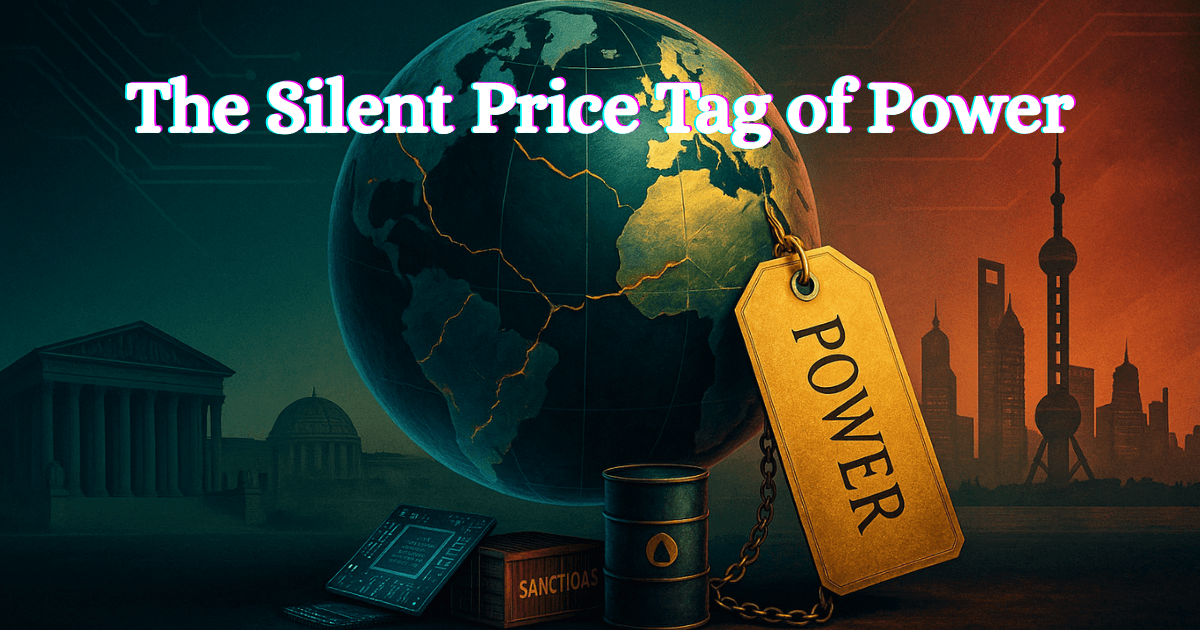
⚖️ Power Has a Price Tag
Markets don’t move in a vacuum. They bend to the will of policymakers, regulators, and leaders, who play a game of chess with tariff policy, sanctions, and alliances. What appears to be routine bureaucracy—export controls, chip restrictions, and investigations—carries an invisible bill that investors eventually pay. Recent developments from Beijing, Brussels, London, and Moscow highlight how geopolitical risk investing is becoming the most expensive line item on global balance sheets. For smart capital, understanding geopolitical trends is no longer optional—it’s a matter of survival. Let’s break down the most consequential updates shaping portfolios worldwide.
⚖️ U.S. Supreme Court Weighs Tariff Powers
In Washington, the U.S. Supreme Court is preparing to decide how far the president can go in imposing tariffs under the International Emergency Economic Powers Act (IEEPA). The ruling will clarify whether presidents can unilaterally set tariffs without Congressional approval—essentially defining the speed and scope of America’s trade arsenal.
Atlantic Council analysts warn that “the outcome could reset the balance between executive power and trade law.”
Investor Signal: A ruling in favor of broad presidential powers could lead to faster and more frequent tariff swings, injecting volatility into global markets. For companies exposed to the impact of export controls or reliant on predictable U.S. tariff schedules, this could shift risk models overnight.
🇮🇳 U.S. Tariffs Push India Toward China
Washington’s reciprocal tariff measures are making trade with the U.S. more costly for Indian firms, nudging New Delhi to lean closer to Beijing. Yahoo Finance notes that Indian exporters are increasingly turning to Chinese supply chains and buyers as a hedge against the unpredictable nature of American policy. For a country often courted as a counterweight to China, this drift complicates strategic calculations. Investor Radar: If India continues to align more closely with China economically, global trade realignment is likely to accelerate. For investors, this could mean bigger opportunities in ASEAN and Indian equities—but also less clarity on U.S.-India partnerships that many had banked on as a growth engine.
⚡ Beijing Launches Probes Into U.S. Chipmakers
China’s Ministry of Commerce has launched two major investigations—one into U.S. chip firms allegedly dumping analog components, and another into alleged discrimination against Chinese players in the global semiconductor trade. Automakers have been asked for input by October, a reminder that chips aren’t just tech—they’re the wiring of the modern economy.
A Chinese official insisted the probes are “about fair competition,” but the timing—just before trade talks with Washington—makes the political intent crystal clear.
Capital Cue: Investors should watch closely as the China chip trade disputes escalate. Policy noise could disrupt supply chains, with ripple effects in diversifying supply chains for the automotive and industrial sectors.
🇪🇺 Brussels Targets Israel’s Trade Perks
The European Commission has proposed suspending €5.8 billion worth of Israeli exports from free-trade arrangements, while also sanctioning far-right ministers, violent settlers, and Hamas leaders. Not all EU members are on board—Germany and Hungary are particularly wary—but the move marks a significant shift: the EU is increasingly using trade sanctions as a political tool.
One diplomat put it bluntly: “Trade benefits can’t be divorced from humanitarian obligations.”
Tactical Signal: The EU-Israel trade suspension could impact exporters in the agricultural, technology, and pharmaceutical sectors. For investors, the impact of trade wars on European importers and Israeli equities is a risk worth tracking.
🇬🇧 London Strikes at Russia’s Oil Lifeline
The UK has tightened measures with nearly 100 new sanctions targeting Russia’s oil revenues, its so-called shadow fleet shipping risk, and dozens of suppliers in China and Turkey. Seventy vessels have been blocked, forcing insurers and shippers to raise premiums.
UK officials stated the package was designed “to cut off the Kremlin’s war chest and make evasion harder.”
Investor Radar: The London sanctions package on Russia could drive up maritime insurance and lead to fuel supply chain disruptions in 2025, impacting energy markets. Volatility in crude oil may hit energy traders and shipping stocks.
🤝 Moscow and Beijing Build a Parallel Economy
Sanctions may isolate Russia from the West, but they’re also pushing it closer to China. Bilateral trade in local currencies is climbing, infrastructure projects are expanding, and whispers of alternative payment systems are growing louder. This deepening Russia-China economic cooperation reflects how power finds new channels when old ones are blocked. Strategic Watch: For investors, this signals a global realignment of trade. It weakens the dollar’s dominance and increases demand for commodities flowing outside Western financial systems. Exposure to oil, gas, and rare earths may prove valuable.
📝 Closing Reflection: Power Costs What It Costs
Geopolitics has always influenced markets, but now it’s priced in more directly than ever. Trade sanctions, their effects, shadow fleets, and tariff battles aren’t distant risks anymore—they’re front-row fundamentals. The silent price tag of power isn’t paid only by governments. Investors absorb it through higher insurance premiums, re-routed supply chains, and volatile commodity prices. The new reality? Politics isn’t just noise. It’s the cost of capital.
📚 Sources
- Reuters – China launches discrimination and dumping probes into U.S. chip firms
- Reuters – EU proposes suspending free-trade arrangements with Israel
- The Guardian – UK imposes sanctions on Russia targeting oil revenues and military supply chains
- Reuters – UK launches new Russia-related sanctions targeting shadow fleet
- arXiv – Global Supply Chain Reallocation and Shift under Triple Crises: A U.S.-China Perspective
Market Munchies and Mode Mobile communications are for informational purposes only, and are not a recommendation, solicitation, or research report relating to any investment strategy, security, or digital asset. All investments involve risk including the loss of principal and past performance does not guarantee future results.
Any information contained in this commentary does not purport to be a complete description of the securities, markets, or developments referred to in this material. The information has been obtained from sources considered to be reliable, but we do not guarantee that the foregoing material is accurate or complete. There is no guarantee that any statements or opinions provided herein will prove to be correct.