Three People Died of Hantavirus on a Cruise Ship. The Industry Has a Serious Problem.
A Rare Disease, a Stranded Ship, and 149 People Waiting for Help Off the Coast of West Africa. The MV Hondius has been anchored off the coast of Praia, the capital of Cape Verde, since Sunday. Cape Verde has refused entry to the port. The 149 people on board — including 17…
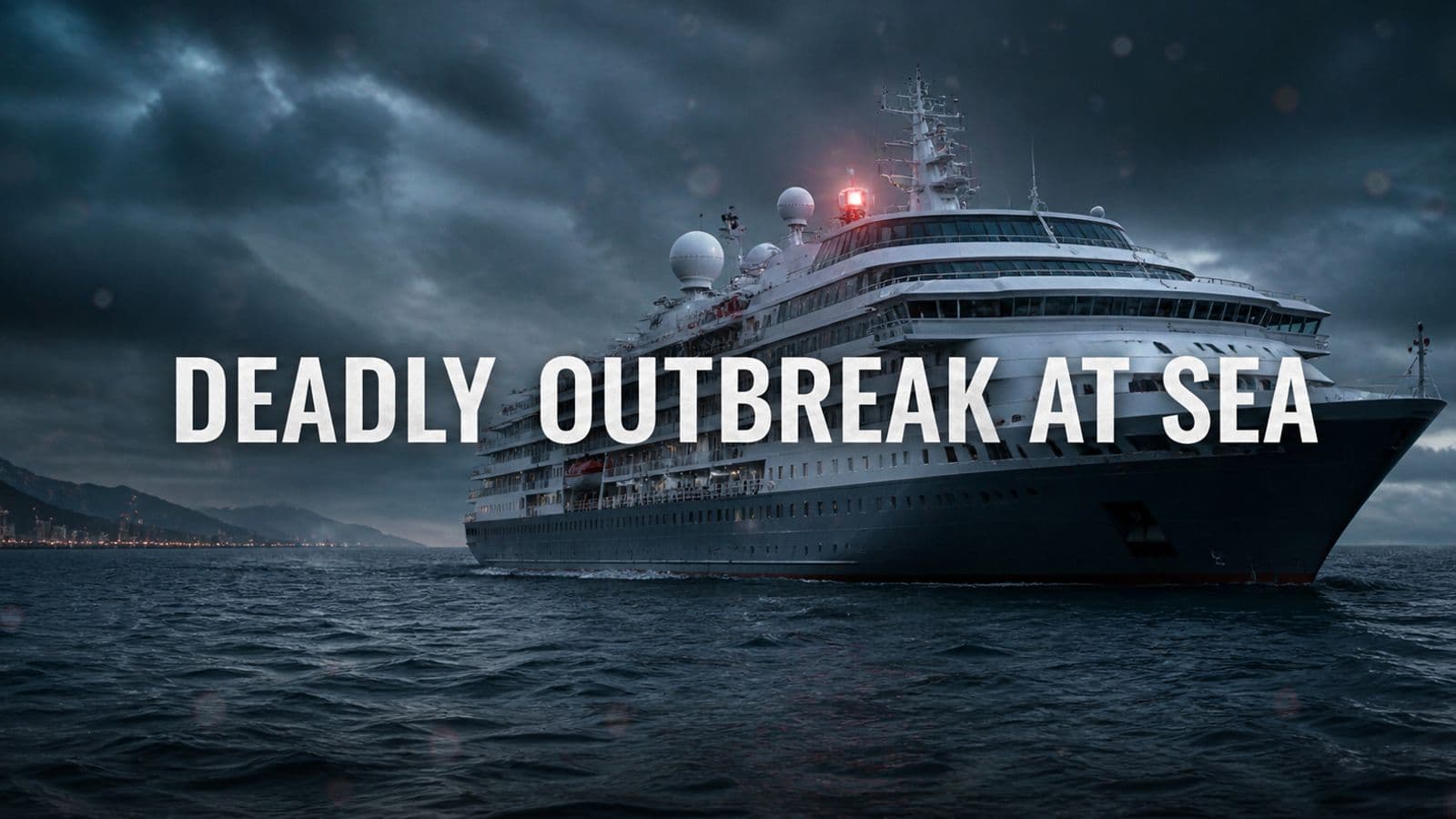
A Rare Disease, a Stranded Ship, and 149 People Waiting for Help Off the Coast of West Africa.
The MV Hondius has been anchored off the coast of Praia, the capital of Cape Verde, since Sunday. Cape Verde has refused entry to the port. The 149 people on board — including 17 Americans — are waiting. Three passengers are already dead. Seven cases of hantavirus have been identified. Two crew members are experiencing acute respiratory symptoms. One passenger is in intensive care in Johannesburg.
This is not a story about one unlucky ship. It is a story about what happens when a rare and poorly understood disease meets an industry that has never had to plan for it.
🦠 What Hantavirus Actually Is
Most people have never heard of hantavirus. Here is what you need to know.
Hantavirus is a rare rodent-borne illness spread primarily through contact with infected rodents' urine, feces, or saliva — or by breathing in dust contaminated with those particles. It is not a typical respiratory virus. It does not spread like COVID-19. Human-to-human transmission is rare, with only one known strain — the Andes virus, primarily found in Chile and Argentina — documented to pass between people.
Yesterday, the WHO confirmed what investigators had feared: human-to-human transmission of the Andes strain likely occurred on board the MV Hondius. The most probable transmission event involved a Dutch couple sharing a cabin — the husband died on April 11, the first death of the outbreak, and his wife became ill shortly afterward, collapsing at Johannesburg's OR Tambo International Airport and dying at a hospital there. The Andes virus is the only hantavirus strain known to transmit person-to-person, and it is endemic to precisely the region where this voyage began. The WHO's confirmation transforms this from a shared-exposure outbreak into something considerably more serious: documented human-to-human transmission of a hemorrhagic fever virus aboard a commercial vessel.
Symptoms include fever, gastrointestinal distress, and a rapid progression to pneumonia and acute respiratory distress syndrome. There is no specific treatment or cure. Early medical care improves survival odds. Untreated or delayed cases can be fatal within days.
The MV Hondius departed Ushuaia in southern Argentina on April 1, sailed through Antarctica, and stopped at several remote South Atlantic islands before the first passengers became ill between April 6 and 28. The Andes virus is primarily found in precisely the region where this voyage began — a fact that investigators are treating as the most likely source of exposure, though no confirmed origin has been established.
📍 Where Things Stand Right Now
The situation on board is evolving and, as of this morning, unresolved.
Three passengers have died. The first death occurred on April 11 — a Dutch male passenger, whose cabin-mate wife became ill shortly afterward in what the WHO now believes was a human-to-human transmission event. His wife left the ship, collapsed at Johannesburg's OR Tambo International Airport, and died at a hospital there, testing posthumously positive for hantavirus. A third death — a German female passenger — occurred on board on May 2.
Seven cases have been identified by the WHO — two confirmed, five suspected. Two crew members are currently showing acute respiratory symptoms and require urgent care. One passenger is in ICU in Johannesburg.
Cape Verde has not authorized disembarkation. Local health officials have boarded the vessel but have not cleared the transfer of symptomatic individuals to land facilities. Dutch authorities are working to coordinate medical evacuation to the Netherlands, pending Cape Verde's approval. The company is considering sailing to Spain's Canary Islands if Cape Verde does not authorize entry.
Seventeen Americans are on board. The U.S. State Department has not issued a public statement as of this writing.
🚢 Why This Is a Problem for the Cruise Industry
Hantavirus has never previously been documented in an outbreak aboard a commercial cruise ship. That sentence is the problem.
The cruise industry's biosecurity protocols — built and significantly upgraded in the wake of COVID-19 — are designed around respiratory viruses that spread person-to-person, norovirus outbreaks driven by contaminated food or surfaces, and Legionnaires' disease linked to water systems. They are not designed around a rodent-borne pathogen that the vessel almost certainly did not introduce but that passengers may have been exposed to during shore excursions on remote South Atlantic islands.
That distinction matters for liability. The first death occurred on April 11 — three weeks before the ship anchored off Cape Verde and the world learned there was a crisis. Passengers were becoming ill from April 6 onward. A Dutch passenger died April 11. A British passenger was evacuated from a remote island on April 27 after falling critically ill. The ship continued sailing. The public announcement did not come until the vessel reached Cape Verde in early May. That three-week gap between the first death and the first public disclosure will be the central pillar of the inevitable lawsuits against Oceanwide Expeditions.
💼 What Investors in Cruise Stocks Should Watch
The MV Hondius is not a Carnival ship, a Royal Caribbean ship, or a Norwegian ship. It is a small expedition vessel operated by Oceanwide Expeditions, a specialist polar cruise company with a very different risk profile from the mass-market cruise giants.
That distinction matters — but only partially.
The mass-market cruise lines do not operate the same kind of remote wildlife expeditions that put passengers in potential contact with rodent habitats. Their biosecurity exposure to hantavirus is genuinely lower. But what this case introduces into the industry is a new category of regulatory and reputational risk that the large operators cannot fully quarantine from.
Three specific questions are now on the table for every major cruise company:
What happens to shore excursion protocols? If this outbreak is confirmed to have originated during a shore excursion in a hantavirus-endemic region, every cruise operator that runs excursions in South America, rural Asia, or other hantavirus-present regions will face pressure to implement enhanced screening. That means cost and complexity.
What happens to port access? Cape Verde's refusal to allow the MV Hondius to dock is a preview of how ports respond to outbreak vessels. During COVID-19, cruise ships were turned away from ports globally — devastating the industry's operating economics. A hantavirus outbreak aboard a vessel is a different magnitude of risk than COVID-19, but the precedent of port refusal does not distinguish between pathogens.
What happens to the regulatory environment? The U.S. Centers for Disease Control's Vessel Sanitation Program inspects cruise ships for a defined set of pathogens. Hantavirus is not currently in its inspection framework, because hantavirus on a cruise ship was not a contemplated scenario. Regulatory expansion to cover novel outbreak scenarios is now on the table, and expanded compliance requirements add cost to an industry already navigating high fuel prices and softening World Cup demand.
Carnival, Royal Caribbean, and Norwegian all rose modestly this morning — the market's early read that this is an expedition cruise problem, not a mass-market problem. That read is probably correct in the short term. The longer-term regulatory and reputational risk is harder to price.
🔬 The Scientific Question Nobody Can Answer Yet
The most pressing unanswered question is also the most consequential: how did 149 people end up in a potential hantavirus exposure event in the middle of the Atlantic Ocean?
Hantavirus does not live in open water. It lives in rodents. The most plausible exposure pathway is through contact with infected rodents or their droppings during shore excursions on the remote islands the MV Hondius visited — islands in the South Atlantic where wildlife encounters are the primary draw and where biosafety protocols for visitors are, to put it generously, minimal.
Argentina's Tierra del Fuego province has noted that it has not historically recorded hantavirus cases — but that neighboring Argentine provinces have seen outbreaks, including one in 2019 that killed at least nine people and prompted a judicial lockdown of an entire town. The WHO is conducting contact tracing. South Africa's National Institute for Communicable Diseases is involved. No confirmed source has been established.
Until a source is identified, the industry cannot meaningfully update its protocols to prevent a recurrence. And until the remaining passengers can be safely evacuated — which requires a port to cooperate — 149 people remain anchored in the Atlantic, waiting.
Sources
- CNN — "More than 100 people stranded on cruise ship after deadly hantavirus outbreak": https://www.cnn.com/2026/05/03/africa/atlantic-hantavirus-cruise-ship-dead-latam-intl
- NPR — "Cruise ship waiting for help after 3 people died in a suspected hantavirus outbreak": https://www.npr.org/2026/05/05/g-s1-120130/cruise-ship-hantavirus-outbreak
- Fox News — "Cruise ship outbreak leaves 3 dead as officials delay medical evacuations and probe hantavirus threat": https://www.foxnews.com/world/cruise-ship-outbreak-leaves-3-dead-officials-delay-medical-evacuations-probe-hantavirus-threat
- WHO — Statement on MV Hondius hantavirus situation (cited via CNN and NPR): https://www.who.int/
- France 24 / AFP — "Hantavirus: Three cruise ship passengers die in suspected outbreak": https://www.france24.com/en/
- U.S. News / Reuters — "Authorities said search and rescue at a fireworks plant in a central Chinese province": https://www.usnews.com/news/world
- NPR World News — MV Hondius Cape Verde update: https://www.npr.org/sections/world/
Market Munchies and Mode Mobile communications are for informational purposes only, and are not a recommendation, solicitation, or research report relating to any investment strategy, security, or digital asset. All investments involve risk including the loss of principal and past performance does not guarantee future results.
Any information contained in this commentary does not purport to be a complete description of the securities, markets, or developments referred to in this material. The information has been obtained from sources considered to be reliable, but we do not guarantee that the foregoing material is accurate or complete. There is no guarantee that any statements or opinions provided herein will prove to be correct.