Trump Administration Nears $500 Million Bailout Deal for Spirit Airlines — With Up to 90% Equity Stake
Spirit Airlines has filed for bankruptcy twice in less than 18 months, watched a lifeline merger get blocked in federal court, and seen its fuel costs nearly double overnight due to a war in the Middle East. Now, in what would be the first government rescue of a single U.S.…
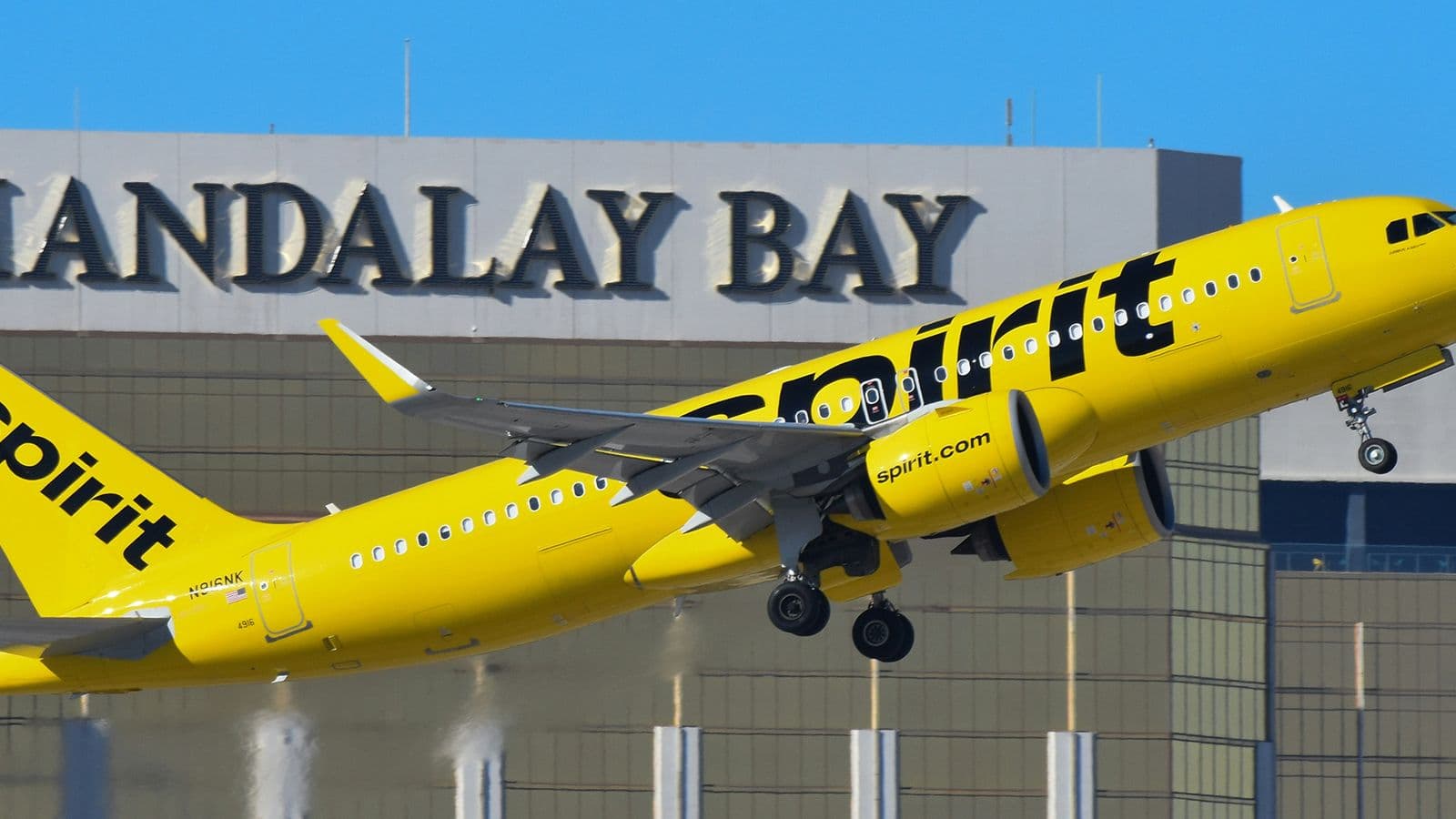
Spirit Airlines has filed for bankruptcy twice in less than 18 months, watched a lifeline merger get blocked in federal court, and seen its fuel costs nearly double overnight due to a war in the Middle East. Now, in what would be the first government rescue of a single U.S. airline carrier in the country's history, the Trump administration is close to handing it a $500 million lifeline — and taking up to 90% of the equity in return.
According to sources familiar with the negotiations cited by CNN, NBC News, and the Wall Street Journal, a deal could be announced as soon as Thursday. The terms as reported: roughly $500 million in government financing, structured as loans with warrants that would give the federal government a controlling stake in Spirit once it emerges from its current Chapter 11 bankruptcy.
Spirit declined to confirm the talks, telling outlets the company is "operating our business as normal." The White House did not officially confirm the deal but did not deny it either.
How Spirit Got Here
To understand why the government is considering bailing out one of America's smallest major carriers, it helps to understand just how many things have gone wrong for Spirit in a short period of time.
The airline spent the better part of a decade as one of the most profitable ultra-low-cost carriers in the country, built on a model of bare-bones fares and a la carte fees for everything from carry-on bags to seat selection. That model worked well enough until the pandemic hit in 2020, after which Spirit never fully recovered its footing.
In 2022, Spirit agreed to merge with Frontier, a deal that would have created a formidable budget carrier. JetBlue intervened with a higher $3.8 billion all-cash offer, and Spirit accepted. The problem: the Biden administration's Department of Justice challenged the JetBlue deal on antitrust grounds, and in January 2024 a federal court blocked it. JetBlue and Spirit abandoned the merger that March.
With no merger partner and a business model that had grown increasingly uncompetitive, Spirit filed for Chapter 11 bankruptcy in November 2024. It emerged the following March — and filed again in August 2025. The airline entered 2026 hoping to complete its second reorganization by early summer, with a restructuring plan built around a projected fuel cost of $2.24 per gallon.
Then the Iran war started.
The Math Doesn't Work Anymore
When the U.S.-Iran conflict broke out on February 28 and the Strait of Hormuz effectively closed to shipping, jet fuel prices spiked sharply. As of mid-April, jet fuel was running at $4.32 per gallon, nearly double Spirit's projection for the year.
JPMorgan analysts calculated that if fuel remains around $4.60 per gallon for the rest of the year, Spirit would face an additional $360 million in costs, exceeding the $337 million cash balance it held at the end of 2025. The airline's restructuring plan, which had assumed a thin operating margin at pre-war fuel prices, was rendered effectively unworkable overnight.
The administration acknowledges the fuel shock but has also pointed fingers elsewhere. "Spirit Airlines would be on a much firmer financial footing had the Biden administration not recklessly blocked the airline's merger with JetBlue," White House spokesman Kush Desai said in a statement to CNBC. The airline's own lawyers and labor unions have largely echoed that framing.
A Deal With No Obvious Precedent
If finalized, the rescue would be genuinely unusual by any historical standard.
Spirit would avoid becoming the first significant U.S. airline in 25 years forced to completely halt operations because of financial problems. Past government interventions in the airline industry — after the September 11 attacks and during the COVID-19 pandemic — were broad industry-wide packages, not targeted rescues of a single struggling carrier still working through its second bankruptcy in under a year.
President Trump appeared to personally set the deal in motion. "You know, Spirit's in trouble, and I'd love somebody to buy Spirit," he told CNBC on Tuesday. "It's 14,000 jobs, and maybe the federal government should help that one out."
His own cabinet is not unanimously on board. Transportation Secretary Sean Duffy expressed skepticism publicly: "What we don't want to do is put good money after bad, and there's been a lot of money thrown at Spirit, and they haven't found their way into profitability." FAA Administrator Bryan Bedford, appearing alongside Duffy at a press event, was even more blunt, reportedly interjecting that Spirit "can't have any of our money." United Airlines CEO Scott Kirby also publicly denounced the bailout idea on an analyst call Wednesday.
What "90% Government Equity" Actually Means — and What It Doesn't
Before jumping to conclusions about Washington picking flight routes, it is worth being precise about how this kind of deal works.
The reported structure involves warrants, not direct share purchases. Warrants give the government the right to acquire equity at a set price once Spirit exits bankruptcy, allowing the Treasury to capture financial upside for taxpayers if the restructuring succeeds. This is the same basic mechanism the government used in the 2008 bank bailouts, the GM rescue, and the 2020 COVID airline relief packages. In each case, the Treasury acted as a passive financial stakeholder, not an operational manager. There is no indication this deal would be structured any differently.
The 90% figure represents a potential equity position in the reorganized company, not a mandate to run the airline. Spirit would continue to be managed by its existing executive team, subject to normal bankruptcy court oversight. What changes is who owns the upside — and who absorbs the loss if the turnaround fails.
The Fight You Haven't Heard About Yet: The Bondholders
Here is the part of this story that most coverage has skipped over, and the part that matters most to anyone thinking about this deal from an investor's perspective.
Spirit is in Chapter 11 bankruptcy. That means it has a capital structure full of secured creditors — bondholders and lenders who hold claims on the company's assets that, under bankruptcy law, take priority over equity. These are typically institutional investors: private credit firms, distressed debt funds, and in Spirit's case reportedly including firms like Citadel and Ares Management.
For the government to take 90% of the equity in a reorganized Spirit, those creditors would need to either be paid in full, agree to take less than they are owed, or have their claims restructured as part of the bankruptcy plan. If the proposed rescue does not make them whole, they will fight it in court. Bankruptcy creditors have broad legal standing to challenge reorganization plans they find inadequate, and distressed debt investors are not known for quiet acquiescence.
None of the public reporting on the Spirit deal has addressed how the government's rescue package proposes to handle the existing creditor stack. That gap is significant. The $500 million figure may look very different once the full waterfall of claims ahead of any new equity is accounted for. Investors and observers following this story should watch for creditor filings and objections in the bankruptcy court docket, because that is where the real negotiation will play out.
The Warning Every Retail Investor Needs to Hear
If you are holding shares of Spirit Airlines in anticipation that a government bailout means the stock recovers, stop and read this carefully.
A government rescue that takes up to 90% of the equity in a reorganized Spirit through a bankruptcy restructuring plan almost certainly wipes out existing common shareholders entirely. This is standard bankruptcy practice. In Chapter 11 reorganizations, existing equity holders are at the bottom of the capital structure. Creditors get paid first. If there is anything left after satisfying those claims, shareholders may receive some residual value — but in distressed situations of this magnitude, that residual is typically zero.
The bailout saves the airline and the jobs. It does not save the current stock ticker. Retail investors who have bought Spirit shares on the hope that the company's survival translates into stock recovery are exposed to a near-total loss of their position regardless of whether the government deal closes.
Why This Matters Beyond Spirit
For investors in the broader airline sector, the Spirit situation raises questions that extend well past one struggling discount carrier.
The most immediate concern is competitive distortion. JPMorgan analysts warned that the bailout would be a precedent that could "prove difficult to contain," noting that Spirit's recent bankruptcies "were not driven by higher oil, nor has the company claimed as much," and that other carriers would be inclined to seek similar treatment. A government-backed Spirit operating with a fresh balance sheet would be competing directly against JetBlue and Frontier, which are absorbing the same fuel costs without a Treasury backstop. That is a meaningful structural disadvantage for rivals who played by the rules.
Aviation analyst Helane Becker, cited in Fortune, argued that a bailout would "make the futures of JetBlue and Frontier more precarious" by creating subsidized competition at a time when both carriers are already under significant pressure. For investors in JetBlue (JBLU) or Frontier (ULCC), that is worth monitoring closely.
There is also the broader question of whether the bailout actually works. Spirit's structural problems predated the Iran war by years. Aviation analyst Mike Boyd of Boyd Group International put it plainly: "They've just declined to the point now where they'll have to shrink to survive. And no airline can shrink to survive." The $500 million buys time. It does not obviously fix the underlying business.
Sources
- CNN — "Spirit Airlines close to a $500 million bailout from Trump administration": https://www.cnn.com/2026/04/22/business/spirit-airlines-federal-bailout
- NBC News — "Spirit Airlines nears deal with Trump administration for $500 million rescue package": https://www.nbcnews.com/business/travel/spirit-airlines-trump-administration-bailout-rcna341430
- CNBC — "Trump administration in advanced talks for Spirit Airlines rescue package": https://www.cnbc.com/2026/04/22/spirit-airlines-rescue-trump-administration.html
- Fortune — "Spirit Airlines looked like it was in the clear of reemerging from bankruptcy, but rising fuel costs threaten its exit": https://fortune.com/2026/04/20/spirit-airlines-bankruptcy-exit-jet-fuel-liquidation/
- Fortune — "How Spirit Airlines' business model collapsed — and why a Trump bailout could make things worse": https://fortune.com/2026/04/23/spirit-airlines-stock-bailout-risks/
- NPR — "If Spirit Airlines is liquidated, here's what might happen to the industry": https://www.npr.org/2026/04/22/nx-s1-5789050/spirit-airlines-liquidation-bankruptcy-impact
- CNBC — "Spirit Airlines could liquidate as early as this week, sources say": https://www.cnbc.com/2026/04/15/spirit-airlines-could-liquidate-as-early-as-this-week-sources-say.html
- The Hill — "Spirit Airlines reportedly negotiating rescue deal with Trump administration": https://thehill.com/homenews/administration/5843523-spirit-airlines-potential-trump-bailout/
- Skift — "How Spirit Airlines Fell Apart: A Complete Timeline": https://skift.com/2026/04/22/how-spirit-airlines-fell-apart-a-complete-timeline/
- Reuters / Investing.com — "Trump administration nears $500 million Spirit rescue as Iran fuel shock hits airlines": https://www.investing.com/news/stock-market-news/trump-administration-nears-deal-to-rescue-spirit-airlines-wsj-reports-4629909
Market Munchies and Mode Mobile communications are for informational purposes only, and are not a recommendation, solicitation, or research report relating to any investment strategy, security, or digital asset. All investments involve risk including the loss of principal and past performance does not guarantee future results.
Any information contained in this commentary does not purport to be a complete description of the securities, markets, or developments referred to in this material. The information has been obtained from sources considered to be reliable, but we do not guarantee that the foregoing material is accurate or complete. There is no guarantee that any statements or opinions provided herein will prove to be correct.