Trump Rejected Iran's Hormuz Proposal. The U.S. Military Is Briefing Him on "Action Against Iran." Brent Hit $126.
The sequence of events over the past 18 hours has been consequential enough that it is worth laying out in precise order. On Wednesday afternoon, Trump told Axios in a phone interview that he had rejected Iran's proposal to reopen the Strait of Hormuz. The proposal — conveyed…
The sequence of events over the past 18 hours has been consequential enough that it is worth laying out in precise order.
On Wednesday afternoon, Trump told Axios in a phone interview that he had rejected Iran's proposal to reopen the Strait of Hormuz. The proposal — conveyed to Washington through Pakistani mediators — would have lifted the naval blockade and reopened the strait to all traffic, with nuclear talks deferred to a later stage. Trump rejected it on those exact terms. "The blockade is somewhat more effective than the bombing," he said. "They are choking like a stuffed pig. And it is going to be worse for them. They can't have a nuclear weapon."
On Wednesday night, the Wall Street Journal reported that Trump had told aides to prepare for an extended blockade of Iranian ports. By Thursday morning, ABC News and multiple other outlets reported that U.S. military officials were preparing to brief Trump on potential "action against Iran" — a phrase that, in the current context, covers a spectrum from tightened naval interdiction to resumed airstrikes on Iranian infrastructure.
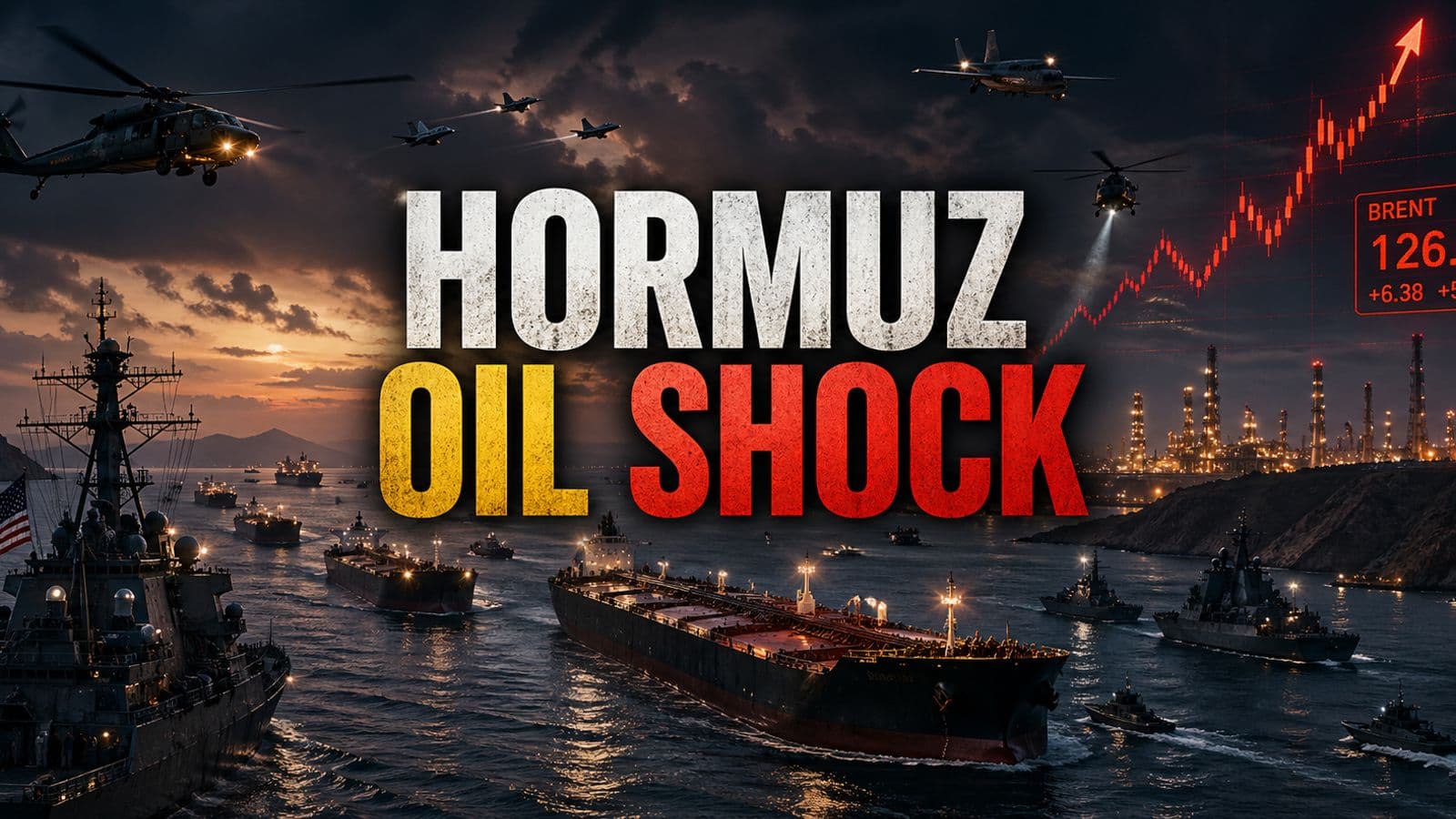
Brent crude hit $126 per barrel before paring some gains. WTI briefly topped $110. The global energy crisis that began on February 28 just entered a new phase.
What Trump Actually Said
The Axios interview is worth reading closely, because the language Trump used signals something specific about his negotiating posture.
When asked how long he was prepared to maintain the naval blockade, Trump said: "Now they have to cry uncle. That's all they have to do. Just say, 'We give up. We give up.' But their economy is really in trouble. It's a dead economy." He added that the U.S. military had "wiped out" Iran's navy and that the Iranian Air Force would "never fly again."
That is not the language of a president looking for an off-ramp. It is the language of a president who believes maximum pressure is working and intends to maintain it until Iran capitulates entirely — not until a negotiated middle ground is reached.
The Iran proposal that Trump rejected had one central structural flaw from Washington's perspective: it asked the U.S. to lift its primary source of leverage before the nuclear question was resolved. From Trump's perspective, accepting that sequencing would surrender the coercive instrument that has been driving the pressure campaign. Secretary of State Marco Rubio articulated the concern earlier this week: any deal must "definitively prevent Iran from sprinting towards a nuclear weapon at any point." A deal that opens the strait first and addresses nukes later does not meet that standard.
Iran's parliament speaker Mohammad Bagher Ghalibaf, responding on X, blamed "junk advice" from figures including Treasury Secretary Scott Bessent for the U.S. strategy. "Next stop: 140," he posted, referring to oil prices. Iran's new supreme leader Mojtaba Khamenei issued a statement Thursday marking National Persian Gulf Day, declaring the future of the Gulf will be "without America" and that Iran "will guard" its nuclear and missile technologies. He has not been publicly seen since before the start of the war.
The Kpler Data: Two Clocks Running Simultaneously
The most analytically significant data currently available on Iran's position comes from analytics firm Kpler — and it contains two findings that pull in opposite directions. Most coverage has been reporting only one of them.
The first finding is the storage clock. Iran has approximately 12 to 22 days of unused crude storage remaining. Iranian exports have collapsed from 1.85 million barrels per day in March to around 567,000 barrels per day since the blockade took hold in early April — a drop of roughly 70%. No tanker has been confirmed successfully evading the blockade. With nowhere for oil to go, storage is filling rapidly. Once storage is exhausted, Iran faces forced production cuts of up to 1.5 million barrels per day by mid-May.
Shutting down production is costly and carries real operational risk, particularly for Iran's mature, underinvested fields. However, Iran has historical experience managing output under sanctions through rotating shut-ins across wells and facilities — a process designed to preserve reservoir integrity and retain restart capability. The process is painful and expensive, and carries genuine risk of longer-term damage in fields where infrastructure is already degraded. But it is not the irreversible infrastructure death sentence that some Thursday morning coverage has implied.
The second finding is the revenue clock — and this one cuts the other way. It usually takes around two months for an oil cargo to reach northeastern China from Kharg Island. The Chinese buyer then has a two-month period to pay the Iranian counterparty. Kpler estimates the revenue impact will not be fully felt for another three to four months, a lag that gives Tehran some near-term financial breathing room even as its physical oil infrastructure comes under acute pressure. That buffer may also complicate the diplomacy. With Iran not yet facing an immediate cash crisis, the urgency to reach a deal may be lower than the supply data alone would suggest.
These two clocks are running at different speeds. Iran faces a physical storage crisis within weeks. It does not face a financial crisis until late summer. That gap is not a footnote — it is the central variable in how long Tehran can sustain its current negotiating position without accepting Washington's terms. Trump's maximum pressure strategy is working on the physical infrastructure. Its financial bite is still months away.
The Supply Shock Is Bigger Than Just Iran
The $126 Brent price is not being driven by Iranian barrels alone. That framing understates the scope of the disruption.
The Strait of Hormuz normally facilitates the transit of around 20 million barrels of oil per day — roughly 20% of all globally traded oil. That supply does not come only from Iran. The primary producers moving oil through the strait include Saudi Arabia, the UAE, Iraq, and Qatar. All of them have been affected by the closure, through a combination of reduced tanker availability, war-risk insurance premiums at record levels, direct infrastructure disruption from the conflict zone, and constrained export routes.
Qatar declared force majeure on LNG contracts in March after tankers could not leave the Gulf. Saudi Arabia and the UAE have been rerouting what they can through pipeline bypasses — Saudi Arabia's East-West pipeline and the UAE's Habshan-Fujairah route — but both have finite capacity. Iraq, which has no meaningful bypass option, has seen southern port operations disrupted directly. The combined effect is a supply shock that is considerably broader than Iran's export collapse alone, which helps explain why oil is at $126 even though Iranian production cuts are still only beginning to materialize.
For investors modeling energy costs, this distinction matters. Even if Iran agrees to a deal tomorrow and its own barrels begin flowing again, the broader Gulf supply disruption — damaged infrastructure, depleted tanker availability, elevated war-risk insurance — will take time to unwind. The oil price will not fall back to pre-war levels the day a deal is announced.
What This Means for Every Financial Model Built on an H2 Recovery
The ripple effects of this standoff are already breaking corporate earnings models. The most direct consequence of Wednesday's events for investors is this: every financial model that assumed the Strait of Hormuz reopens by the end of June 2026 just became significantly more uncertain.
That assumption was embedded, explicitly or implicitly, in the earnings guidance of Booking Holdings, multiple airline carriers, consumer goods companies facing input cost inflation, and industrial manufacturers dependent on global supply chains. Booking's CFO said last week that the company's full-year guidance assumes "the direct and indirect impact from the conflict continues through the end of June, followed by a recovery in bookings in the second half of the year." After Wednesday night, that recovery assumption looks more contingent and more expensive.
Oil at $126 per barrel, with a military briefing underway and Trump using language that signals no near-term off-ramp, means the energy cost shock that has been running through corporate cost structures for two months is not going to ease on the timeline many companies had been modeling.
There is a scenario in which the picture shifts faster than the current rhetoric implies: Kpler's physical storage deadline — if it forces Iran to begin cutting production materially in the next two to three weeks — creates a hard backstop that diplomacy cannot defer indefinitely. Physical pressure of that magnitude may produce movement even if the financial pressure is still months away. But investors should hold both timelines simultaneously, rather than assuming the storage crisis alone will force a near-term resolution. Tehran has a financial buffer. It is using it.
Watch the Kpler storage estimates and Iranian production cut data closely. Those numbers, more than any diplomatic statement from either side, are the most honest measure of how much time is left before something has to give. And because the physical clock and the financial clock are running at such different speeds, investors should expect extreme volatility on every passing headline between now and that storage deadline — the market will keep repricing the probability of a deal with each new statement from Washington or Tehran, even as the underlying physical pressure builds quietly and independently of the diplomacy.
Sources
- Axios — "Scoop: Trump tells Axios he rejected Iran's Hormuz offer": https://www.axios.com/2026/04/29/trump-rejects-iran-hormuz-offer-blockade
- Bloomberg — "Trump Says He Rejects Iran's Hormuz Offer, Sustains Blockade": https://www.bloomberg.com/news/articles/2026-04-29/trump-tells-axios-he-rejects-iran-hormuz-offer-keeps-blockade
- Al Jazeera — "Trump vows to maintain Iran blockade, Tehran threatens 'practical' action": https://www.aljazeera.com/news/2026/4/29/trump-vows-to-maintain-iran-blockade-tehran-threaten-practical-action
- Al Jazeera — "What's in Iran's latest proposal — and how has the US responded?": https://www.aljazeera.com/news/2026/4/28/whats-in-irans-latest-proposal-and-how-has-the-us-responded
- CNN — "Day 61: Hegseth at Iran war hearing, Trump discusses continuing blockade": https://www.cnn.com/2026/04/29/world/live-news/iran-war-peace-proposal-trump
- ABC7 — "Iran live updates: Trump says Iran just has to 'cry uncle' now": https://abc7.com/live-updates/iran-war-today-trump-straight-of-hormuz-us-ceasefire-talks/18979096/
- Kpler — "US blockade: Iran starts feeling the heat": https://www.kpler.com/blog/us-blockade-iran-starts-feeling-the-heat
- InvestingLive — "Iran has 22 days of storage left as naval blockade drives exports to near collapse": https://investinglive.com/commodities/iran-has-22-days-of-storage-left-as-naval-blockade-drives-exports-to-near-collapse-20260428/
- IndraStra — "Iran Confronts Imminent Oil Production Cuts Amid Storage Limits and Infrastructure Constraints": https://www.indrastra.com/2026/04/iran-confronts-imminent-oil-production.html
- Wikipedia — "2026 Strait of Hormuz crisis": https://en.wikipedia.org/wiki/2026_Strait_of_Hormuz_crisis
- World Oil / Bloomberg — "Trump rejects Iran proposal, keeps Hormuz blockade in place": https://worldoil.com/news/2026/4/29/trump-rejects-iran-proposal-keeps-hormuz-blockade-in-place/
- CNBC — "Brent crude soars past $126 as U.S. military to reportedly brief Trump on action against Iran": https://www.cnbc.com/2026/04/30/oil-prices-today.html
Market Munchies and Mode Mobile communications are for informational purposes only, and are not a recommendation, solicitation, or research report relating to any investment strategy, security, or digital asset. All investments involve risk including the loss of principal and past performance does not guarantee future results.
Any information contained in this commentary does not purport to be a complete description of the securities, markets, or developments referred to in this material. The information has been obtained from sources considered to be reliable, but we do not guarantee that the foregoing material is accurate or complete. There is no guarantee that any statements or opinions provided herein will prove to be correct.