U.S. Growth Looks Fine—But Is the Consumer Quietly Tapping Out?
You’re Watching the Economy… But Are You Watching the Right Signals? You check the headlines. GDP looks steady. Growth is holding. Nothing alarming. So naturally, you lean back a little. Maybe the economy is… fine? But then something subtle starts to feel off. You notice fewer…
You’re Watching the Economy… But Are You Watching the Right Signals?
You check the headlines. GDP looks steady. Growth is holding. Nothing alarming. So naturally, you lean back a little. Maybe the economy is… fine? But then something subtle starts to feel off. You notice fewer people splurging. Retail discounts are creeping in earlier than expected. Travel deals are popping up—not because demand is booming, but because it isn’t. And that’s where things get interesting. Because beneath the surface, the engine of the economy—your consumer—isn’t exactly firing on all cylinders anymore. Not stalling and not crashing. Just… easing off the accelerator. Let’s unpack what’s really going on—and why it matters more than the headline numbers suggest.
🛒 The Consumer Is Still Spending… Just Not Like Before
At first glance, spending hasn’t collapsed. People are still buying. Still moving money. But zoom in, and the shift becomes obvious.
- Discretionary spending—think dining out, fashion, travel—is softening
- Essentials like groceries and rent are holding firm
- Credit usage is creeping higher, especially among lower-income households
This isn’t panic. It’s prioritization. Inflation hasn’t disappeared—it’s just become selective. And that’s forcing households to rebalance quietly. Smart Capital Signal: 👉 When consumers shift from “want” to “need,” growth doesn’t vanish—it slows with intent. Watch discretionary sectors closely.
📊 GDP Is Growing… But the Ingredients Matter
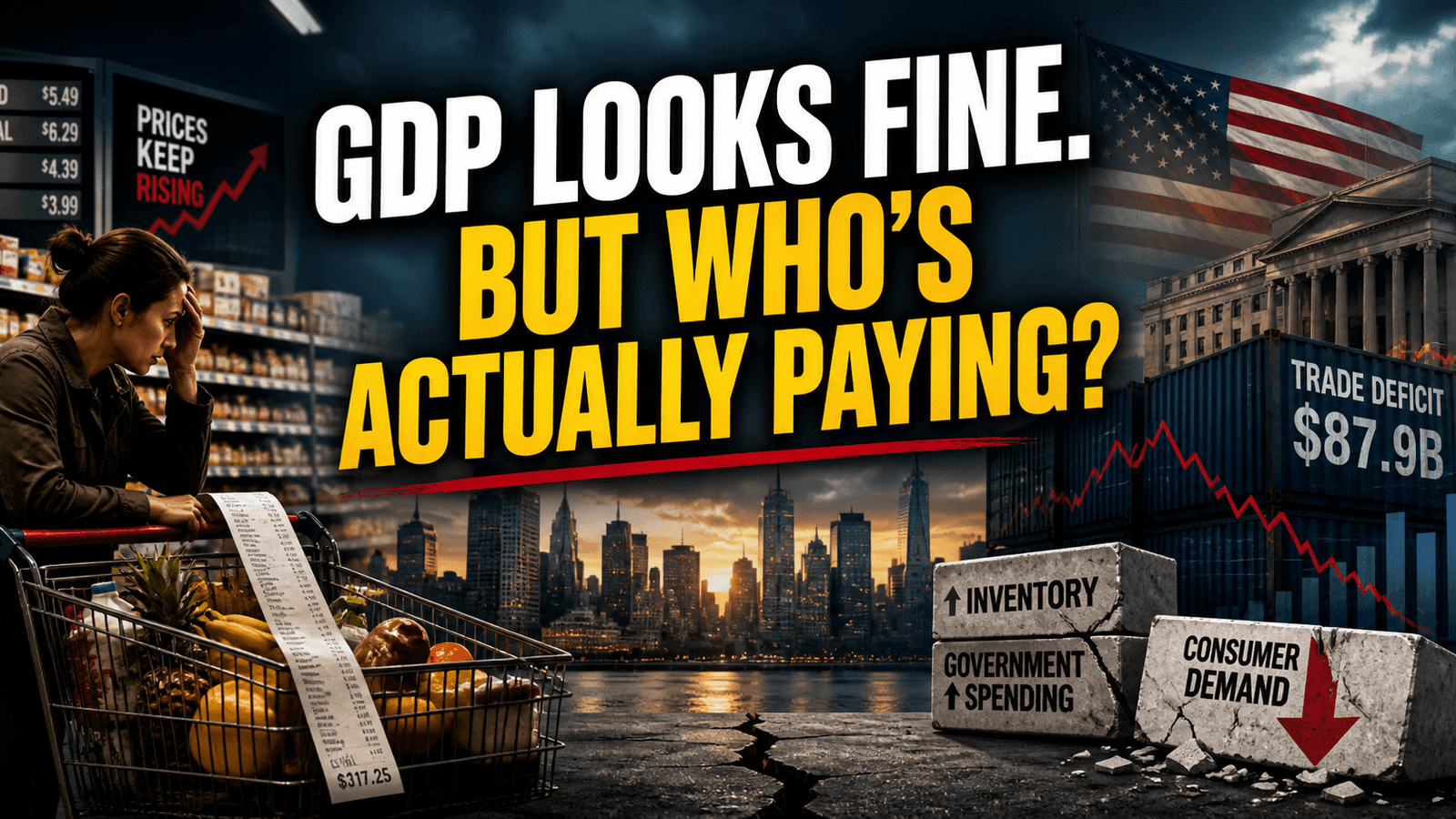
Now here’s where things get a little deceptive. GDP growth is hovering around ~2%, which sounds… respectable. Even reassuring. But GDP is like a recipe. And right now, the ingredients are doing some heavy lifting. What’s driving the growth?
- Businesses stockpiling inventory
- Continued government spending support
What’s not pulling its weight?
- Real consumer demand
- Private investment consistency
Inventory builds can inflate GDP—but they’re often a bet on future demand. If that demand doesn’t show up? Those inventories turn into a drag later. It’s like cooking a feast before confirming the guests are coming. Tactical Insight: 👉 Growth driven by inventory and policy support is structurally weaker than demand-driven growth. Don’t treat them equally.
🌍 The Trade Deficit Tells a Quiet Story
Another piece of the puzzle: the U.S. trade deficit expanding toward ~$87.9B. On paper, it’s just a number. In reality, it’s a signal.
- Imports are rising faster than exports
- Domestic demand still leans heavily on foreign goods
- Global demand isn’t strong enough to absorb U.S. exports at the same pace
So even as the U.S. grows, it still relies on external support to sustain that growth. Investor Radar: 👉 A widening trade deficit suggests imbalanced growth—and adds pressure to future GDP through net export drag.
🎯 The Bigger Picture: A Subtle Shift, Not a Sudden Break
Now connect the dots.
- Consumers are becoming selective.
- Growth is leaning on temporary supports.
- External imbalances are widening.
Individually, none of these screams "crisis." Together? They whisper something more nuanced. This is what a late-cycle economy often looks like. Not dramatic. Not chaotic. Just gradually losing momentum where it matters most. And here’s the twist: it’s happening during a period when seasonal spending—holidays, travel cycles, and retail pushes—should typically provide a lift. Instead, what you’re seeing is more calculated spending. More hesitation. Less impulse. Strategic Pulse: 👉 When seasonal demand doesn’t fully translate into broad-based spending strength, it signals underlying caution in the consumer psyche.
🧠 So… What Should You Actually Do With This?
You don’t overreact. But you don’t ignore it either. This isn’t a “sell everything” moment. It’s a “read the room carefully” moment.
- Be selective with consumer-exposed sectors
- Watch companies are dependent on discretionary demand
- Pay attention to inventory trends in earnings reports
- Track credit conditions—they often move before spending does
Because markets don’t wait for obvious weakness. They price in direction, not headlines.
🍽️ The Economy Still Looks Full—But What’s Actually on the Plate?
Here’s the clean takeaway. The economy isn’t empty. Not even close. But the composition has changed. Growth is still being served—but more of it is coming from inventory shelves and government kitchens, while the consumer—the real diner—is quietly ordering less. And as an investor, that distinction matters. Because sooner or later, the bill lands on the part of the economy that isn’t fully paying right now.
Sources
- US growth likely picked up in the first quarter, but consumer spending probably cooled.
- US consumer sentiment drops near four-year low; inflation expectations rise.
- US consumer confidence unexpectedly improves, but higher gasoline prices are still a worry.
- US growth picks up in first quarter on AI investment, government spending
- US core capital goods orders surge in March on AI boom
- US goods trade deficit widens in March as imports rise sharply
Market Munchies and Mode Mobile communications are for informational purposes only, and are not a recommendation, solicitation, or research report relating to any investment strategy, security, or digital asset. All investments involve risk including the loss of principal and past performance does not guarantee future results.
Any information contained in this commentary does not purport to be a complete description of the securities, markets, or developments referred to in this material. The information has been obtained from sources considered to be reliable, but we do not guarantee that the foregoing material is accurate or complete. There is no guarantee that any statements or opinions provided herein will prove to be correct.