Upbit Uncovers Critical Security Flaw After $30M Hack
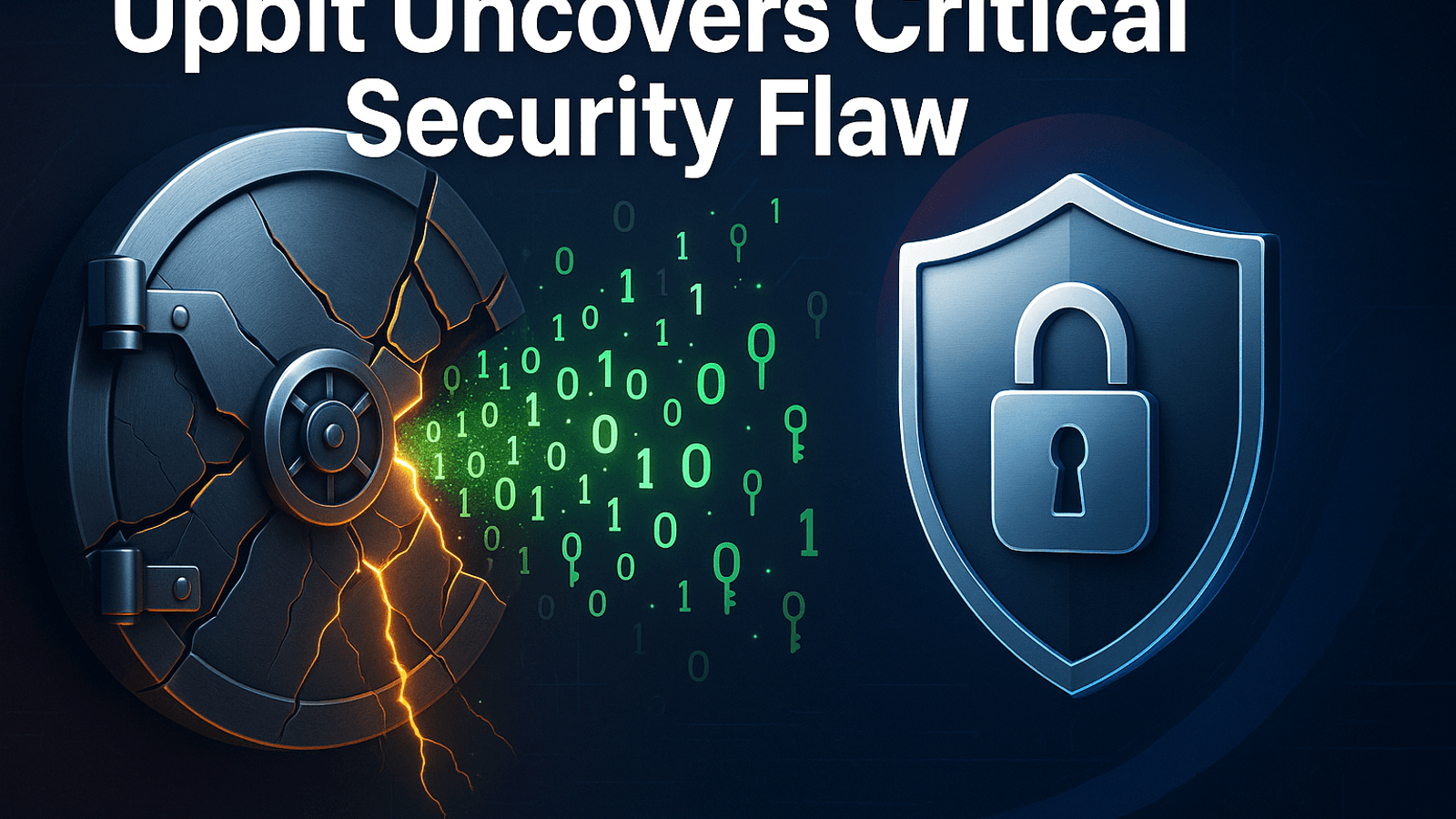
🚨 The Breach That Triggered an Emergency Audit South Korea's largest cryptocurrency exchange Upbit detected abnormal withdrawals from its Solana-based wallets on November 27, prompting an immediate halt to all deposits and withdrawals. The incident resulted in losses totaling…
🚨 The Breach That Triggered an Emergency Audit
South Korea's largest cryptocurrency exchange Upbit detected abnormal withdrawals from its Solana-based wallets on November 27, prompting an immediate halt to all deposits and withdrawals. The incident resulted in losses totaling approximately 44.5 billion KRW, roughly $30 million, including 38.6 billion KRW worth of customer assets. Tokens such as SOL, ORCA, RAY, and JUP were among the assets drained from the exchange. Upbit responded swiftly by moving remaining assets to cold storage and initiating a comprehensive wallet overhaul. The exchange froze approximately 2.3 billion KRW worth of stolen funds, representing about $1.5 million. For traders who held assets on the platform, the incident serves as a stark reminder of custodial risk, even on established exchanges with significant market share.
🔓 Private Key Vulnerability Discovered During Investigation
During the emergency system review, Upbit CEO Oh Kyung-seok disclosed a critical security vulnerability that could have exposed private keys to attackers analyzing blockchain transactions. According to the exchange's statement, the internal wallet software contained a flaw producing weak or predictable signature data. This implementation bug meant that someone analyzing Upbit's publicly visible wallet transactions on the blockchain could potentially use mathematical techniques to reconstruct certain private keys. While normal blockchain data does not reveal private keys, Upbit's flawed wallet implementation created an unintended attack vector. The exchange did not directly link this vulnerability to the November 27 breach but confirmed discovering and patching the issue during its comprehensive infrastructure inspection. This type of vulnerability represents a fundamental failure in cryptographic implementation, affecting the very foundation of digital asset security.
💰 Financial Impact and Customer Protection Measures
The total financial damage reached approximately $30 million, with the majority representing customer holdings rather than exchange reserves. Upbit immediately committed to covering all customer losses using its own capital, ensuring affected users would be made whole. The exchange suspended all deposit and withdrawal operations across its platform until final security verification is complete. CEO Oh Kyung-seok emphasized that the incident demonstrates how no security system can ever be considered absolutely perfect, pledging deeper infrastructure upgrades to prevent future breaches. For Upbit's operator Dunamu, which is currently preparing for a merger with internet conglomerate Naver ahead of a potential public listing, the timing presents reputational challenges. Investors in Dunamu will be watching closely to see how the company handles both the immediate response and long-term security improvements. The exchange has promised ongoing public updates and transparent communication throughout the recovery process.
🕵️ Lazarus Group Attribution Under Investigation
South Korean authorities have opened an investigation into the breach, with early intelligence assessments pointing toward North Korea's notorious Lazarus Group. Local media reports cite government sources suggesting the attack pattern resembles tactics used in previous nation-state operations, including rapid withdrawals, quick cross-chain transfers, and distribution across numerous wallets. Lazarus was previously linked to a 2019 breach at Upbit that resulted in the theft of 342,000 ETH. The group has been identified by the FBI as one of the most advanced persistent threats in cryptocurrency, with a track record of sophisticated exchange hacks aimed at generating foreign currency revenue for Pyongyang. However, neither Upbit nor regulators have publicly confirmed attribution. The exchange continues coordinating with law enforcement and blockchain projects to freeze and potentially recover stolen assets. For the broader cryptocurrency industry, confirmed nation-state involvement would underscore the strategic importance adversaries place on digital asset infrastructure.
🛡️ Industry-Wide Security Implications for Wallet Infrastructure
The vulnerability Upbit discovered highlights systemic risks in how exchanges implement cryptographic wallet systems. Recent research on scalar venom attacks and hardware security module vulnerabilities demonstrates that even industry-standard security practices can contain critical flaws. When wallet software produces weak signature data, it transforms the fundamental security assumption underlying cryptocurrency ownership. Private keys are meant to remain computationally infeasible to derive from public information, but implementation bugs can undermine this mathematical protection. Other exchanges should conduct comprehensive audits of their wallet signature generation processes to identify similar weaknesses. For institutional investors evaluating custodial solutions, this incident reinforces the importance of rigorous due diligence on not just security policies but actual cryptographic implementation quality. The technical sophistication required to identify and exploit signature weaknesses suggests that advanced adversaries are actively searching for these exact types of vulnerabilities across exchange infrastructure.
🎯 Conclusion: Lessons for Exchanges and Investors
The Upbit incident reveals how even large, established exchanges can harbor critical security vulnerabilities in their fundamental infrastructure. The discovery of a private key derivation flaw during post-breach analysis suggests that comprehensive security audits should be standard practice rather than emergency responses. For cryptocurrency exchanges, the incident underscores the necessity of regular third-party cryptographic audits, particularly for wallet signature implementations. Individual investors should consider the custodial risk inherent in keeping significant holdings on exchanges, regardless of platform size or reputation. Hardware wallet storage and multi-signature solutions provide alternatives for long-term holdings, while exchanges remain practical for active trading. The potential involvement of sophisticated nation-state actors like Lazarus Group demonstrates that cryptocurrency platforms face adversaries with substantial resources and advanced capabilities. As the industry continues maturing toward institutional adoption, security infrastructure must evolve beyond basic best practices to address implementation-level cryptographic vulnerabilities that could compromise the mathematical foundations of digital asset ownership.
Sources
https://www.theblock.co/post/380764/upbit-says-emergency-audit-of-30m-hack-uncovered-flaw-that-could-expose-private-keys https://upbit.com/service_center/notice?id=5803&view=share https://bitcoinist.com/upbits-32-million-mystery-theft-points-toward-lazarus-group/ https://perelmanwork.com/scalar-venom-attack/
Market Munchies and Mode Mobile communications are for informational purposes only, and are not a recommendation, solicitation, or research report relating to any investment strategy, security, or digital asset. All investments involve risk including the loss of principal and past performance does not guarantee future results.
Any information contained in this commentary does not purport to be a complete description of the securities, markets, or developments referred to in this material. The information has been obtained from sources considered to be reliable, but we do not guarantee that the foregoing material is accurate or complete. There is no guarantee that any statements or opinions provided herein will prove to be correct.
Hungry for the latest in crypto? Get fresh insights, breaking news, and hidden gems in the world of crypto—delivered straight to your inbox with our Crypto Cookies newsletter.Don’t miss out—sign up now and get your first bite of insider knowledge!