US Prosecutors Seek 12-Year Prison Sentence for Do Kwon Over Terra's $40 Billion Collapse
⚖️ Prosecutors Target Terra Founder With Lengthy Prison Term US prosecutors have recommended a 12-year prison sentence for Do Kwon, the founder of Terraform Labs, whose Terra and Luna tokens spectacularly imploded in May 2022. In a sentencing submission filed Thursday to US…
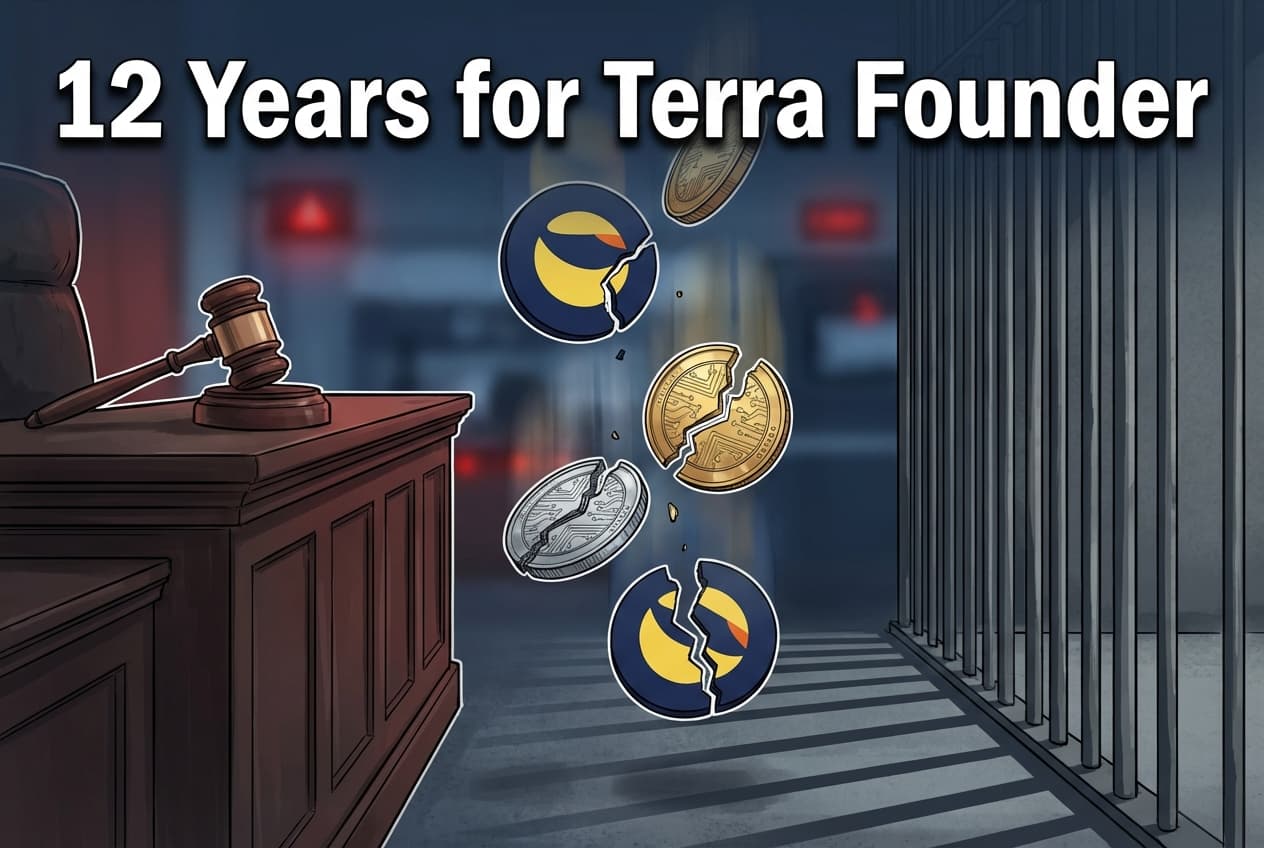
⚖️ Prosecutors Target Terra Founder With Lengthy Prison Term
US prosecutors have recommended a 12-year prison sentence for Do Kwon, the founder of Terraform Labs, whose Terra and Luna tokens spectacularly imploded in May 2022. In a sentencing submission filed Thursday to US District Judge Paul Engelmayer for the Southern District of New York, prosecutors cited the sheer scale of fraud as justification for the lengthy term. The submission comes after Kwon pleaded guilty in August to wire fraud and conspiracy to defraud, admitting he misled investors about the risks and stability of Terra's algorithmic stablecoin ecosystem. The prosecutors' recommendation stands in stark contrast to Kwon's defense team, which last week argued that a prison term of up to five years was sufficient. For crypto investors who lost billions in the collapse, the 12-year request signals that authorities are treating major crypto fraud with the seriousness of traditional financial crimes rather than dismissing it as mere market failure.
💥 The $40 Billion Collapse That Shook Crypto Markets
The Terra ecosystem's collapse in May 2022 marked one of the most devastating events in cryptocurrency history, wiping out over $40 billion in value within days and triggering a broader market contagion. Terra USD (UST) was an algorithmic stablecoin designed to maintain a $1 peg through a complex arbitrage mechanism with Luna, its native governance token. When UST lost its peg, the redemption mechanism failed catastrophically. Luna's supply hyperinflated from hundreds of millions to trillions of tokens as it tried to absorb fleeing capital, causing its price to plummet from over $100 to nearly zero. The collapse didn't stay contained. It triggered a domino effect that brought down crypto lenders like Celsius and hedge funds like Three Arrows Capital, ushering in the brutal 2022 crypto winter. For retail investors, the Terra collapse served as a harsh lesson about the risks of algorithmic stablecoins and yielded devastating financial losses across the industry.
🚨 From Tech Mogul to International Fugitive
Kwon's journey from celebrated crypto entrepreneur to convicted fraudster has been marked by dramatic twists and international intrigue. He was criminally charged in March 2023 with conspiracy to commit fraud, commodities fraud, wire fraud, securities fraud, and engaging in market manipulation and money laundering. By that time, Kwon had already fled, eventually being arrested in Montenegro in March 2023 for traveling with forged documents. What followed was a lengthy extradition battle between the US and South Korea, both seeking to prosecute him for his role in the collapse. Montenegro finally extradited Kwon to the United States in December 2024, with assistance from Interpol. Kwon also faced civil charges from the Securities and Exchange Commission, and in April 2024, a jury found both Terraform and Kwon liable for civil fraud. His legal troubles underscore how aggressively regulators are pursuing crypto executives they believe defrauded investors.
📊 Prosecutors Emphasize Scale and Deception
In their sentencing submission, prosecutors painted a picture of calculated deception rather than simple business failure. They argued that Kwon "deprived UST and Terra purchasers of the ability to make fully informed decisions about their purchases, and artificially inflated the value of Terraform's cryptocurrencies, which directly enriched and raised Kwon's profile." The prosecutors are seeking forfeiture of just over $19 million but notably are not pursuing restitution, citing the complexity and cost of calculating individual investor losses given the pending bankruptcy proceedings. They noted that determining victim compensation through bankruptcy would be more efficient than court-ordered restitution. The decision to forego restitution may frustrate some victims seeking direct compensation, but prosecutors argue it will ultimately deliver funds to victims faster and more efficiently. For crypto fraud victims, this sets an important precedent about how recovered assets will be distributed in major crypto collapse cases.
⚖️ Defense Arguments and Sentencing Precedents
Kwon's defense team has argued for a significantly lighter sentence, claiming that external factors beyond Kwon's control contributed to the collapse. Last week, his lawyers cited academic papers and Chainalysis reports suggesting that coordinated trades by third-party firms exploiting vulnerabilities played a role in the crash. They argue that five years in prison would be sufficient punishment. The 12-year recommendation places Kwon's potential sentence alongside other major crypto fraud cases. Former Celsius CEO Alex Mashinsky was sentenced to 12 years for fraud, while FTX founder Sam Bankman-Fried received 25 years for the $8 billion FTX collapse. For legal observers, these sentences signal a new era where crypto fraud is punished with serious prison time comparable to traditional financial crimes. The sentencing hearing is scheduled for December 11, when Judge Engelmayer will decide whether to follow prosecutors' recommendation or accept the defense's request for leniency.
🎯 Implications for Crypto Accountability and Investor Protection
The Kwon sentencing represents a pivotal moment in establishing criminal accountability for crypto fraud. The sentencing submission was notably signed by Jay Clayton, the US Attorney for the Southern District of New York who previously served as SEC chair under the first Trump administration and was appointed to his current position in November 2024. Clayton's involvement signals continuity in aggressive crypto enforcement despite changing administrations. For crypto investors, the case demonstrates that regulators are now treating major crypto frauds with the severity they deserve. The collapse of Terra wiped out life savings for many retail investors who were attracted by promises of stable yields and low risk. While no prison sentence can restore lost funds, the serious prosecution of Kwon and other crypto executives serves as a deterrent against future fraud. Investors should remain cautious about projects promising unrealistic yields or relying on complex algorithmic mechanisms that obscure fundamental risks. The Terra collapse and Kwon's prosecution will likely remain a cautionary tale for years to come.
Sources
https://www.theblock.co/post/381543/us-prosecutors-12-year-prison-terraform-do-kwon-role-40-billion-collapse https://www.ark-invest.com/articles/analyst-research/what-are-stablecoins-and-how-do-they-work https://www.coindesk.com/policy/2025/12/05/us-prosecutors-seek-12-year-sentence-for-terraform-founder-do-kwon-in-crypto-fraud-case https://www.theblock.co/post/332727/montenegro-extradites-terraform-labs-co-founder-do-kwon-to-the-us-with-help-from-interpol
Market Munchies and Mode Mobile communications are for informational purposes only, and are not a recommendation, solicitation, or research report relating to any investment strategy, security, or digital asset. All investments involve risk including the loss of principal and past performance does not guarantee future results.
Any information contained in this commentary does not purport to be a complete description of the securities, markets, or developments referred to in this material. The information has been obtained from sources considered to be reliable, but we do not guarantee that the foregoing material is accurate or complete. There is no guarantee that any statements or opinions provided herein will prove to be correct.
Get fresh insights, breaking news, and hidden gems in the world of crypto—delivered straight to your inbox with our Crypto Cookies newsletter. Don’t miss out—sign up now and get your first bite of insider knowledge!