Venezuela's Earthquake Crisis Is Growing. The Human Toll Is Still Rising.
Two powerful earthquakes struck near Caracas on Wednesday evening in the country's deadliest modern seismic disaster. Rescue teams are still working through the rubble. For global markets, the key question is oil.
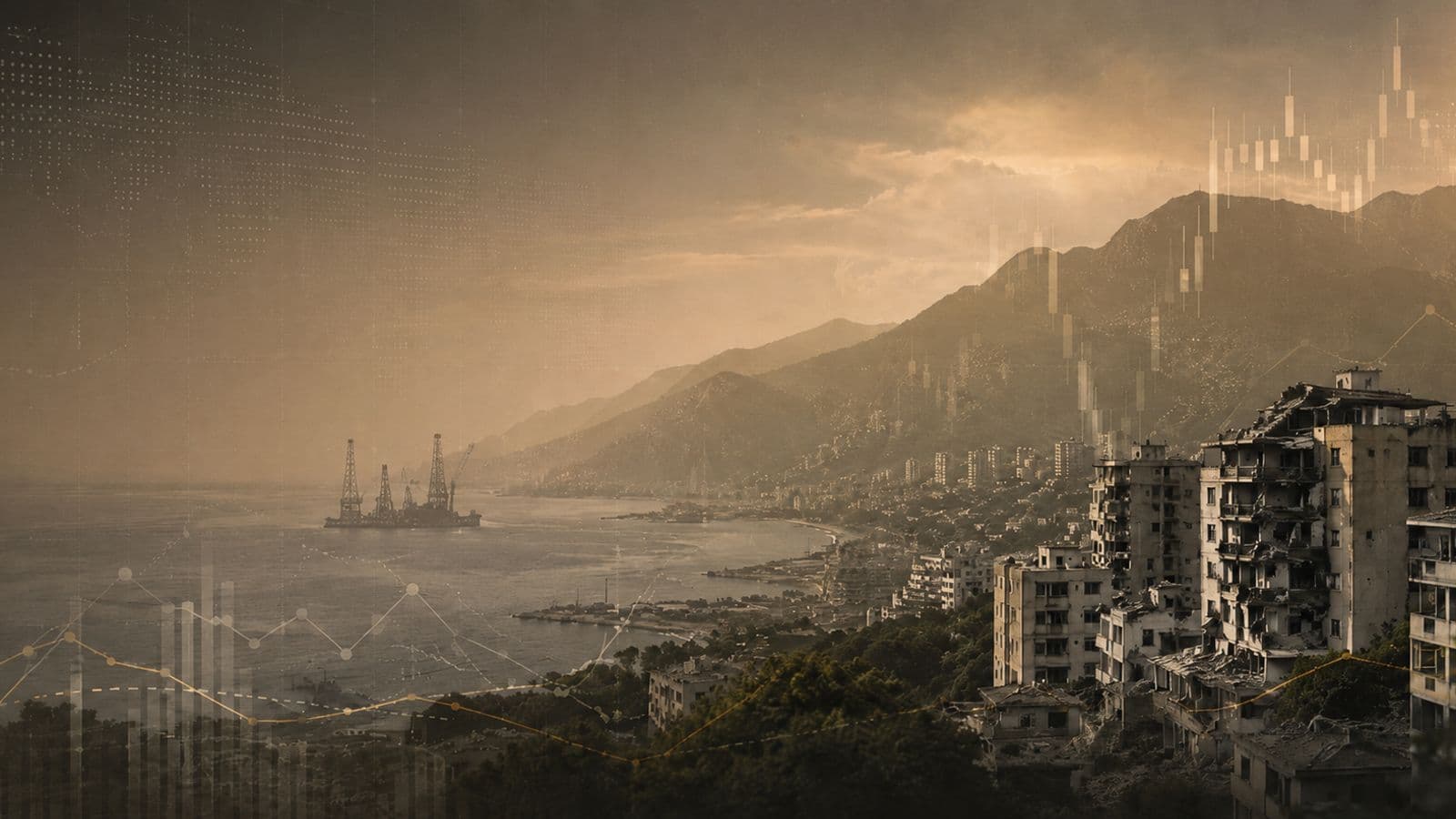
Two powerful earthquakes struck Venezuela on Wednesday evening in rapid succession, and two days later the scale of the catastrophe is still coming into focus. Reuters reported Friday that the government had confirmed 589 deaths and roughly 3,000 injuries, while an unofficial missing-persons registry listed tens of thousands of people as unaccounted for — a number that is highly uncertain and likely to change as communications improve and rescue teams reach more areas. The death toll has already surpassed Venezuela's 1967 earthquake near Caracas, which had been the country's deadliest modern seismic event.
The earthquakes came as a violent pair. A magnitude 7.2 foreshock struck approximately 175 miles west of Caracas, followed less than a minute later by a magnitude 7.5 earthquake nearby — the strongest to hit Venezuela since 1900, according to the US Geological Survey. The USGS describes the two events as a "doublet" and has warned there is a meaningful chance of another significant earthquake in the same region within a week. Dozens of aftershocks have already followed.
Acting President Delcy Rodríguez declared a nationwide state of emergency. The USGS, using predictive modeling based on earthquake parameters, estimated deaths could run into the thousands, with a substantial probability of exceeding 10,000. Those are statistical projections based on earthquake characteristics, not verified figures — the situation on the ground is still developing.
The destruction
The worst damage is concentrated in La Guaira, the coastal state north of Caracas that serves as the capital's main gateway. The UN's humanitarian agency reported more than 100 buildings collapsed in La Guaira alone. Simón Bolívar International Airport sustained structural damage and has been closed. Rescue teams are working through rubble across the capital and surrounding areas in a race to find survivors still trapped beneath collapsed buildings.
The human geography of the disaster has compounded the damage. Many collapsed buildings were constructed on soft sediment, which amplifies seismic shaking. Informal housing, common across many Venezuelan neighborhoods, is particularly vulnerable to earthquake damage. Restricted communications and damaged infrastructure have made the full scale of the disaster harder to assess, though some platforms were partially restored after the UN urged authorities to improve access.
The international response
Aid has arrived across political lines. The United States is deploying elite urban search-and-rescue teams from Fairfax County, Virginia, and Los Angeles County, with Washington easing some sanctions to allow assistance to flow. Mexico sent rescuers and medical personnel. Countries long at odds with Venezuela's government offered support. Starlink will provide free internet access to Venezuelan users for one month and is working to deploy terminals in hard-hit areas to help restore communications. The Caracas Stock Exchange closed and was converted into an aid collection center.
The market angle: oil
For global markets, the key question is whether Venezuela's oil infrastructure was disrupted. Venezuela is a founding member of OPEC and holds some of the world's largest crude reserves, so any significant damage to its energy system could ripple through supply at a moment when oil prices are already falling sharply on Iran deal developments.
Early assessments suggest the core export and production system avoided major disruption. Reuters reported that major export terminals were loading crude and fuel without interruption, and international energy companies said their projects were operational. However, power outages and some localized damage at storage and petrochemical facilities mean the evaluation is still ongoing. The oil-market impact looks contained so far — but not fully resolved.
The backdrop
The catastrophe lands on a nation already deeply strained. Venezuela has endured years of economic collapse and political instability that impoverished millions and drove a mass exodus of more than seven million people, leaving its infrastructure and health system severely weakened. The UN has warned that millions of people could be affected by the earthquake disaster, in a country where that infrastructure was already under severe strain before the first tremor struck.
What to watch
- Death toll and rescue timeline: The next 48 to 72 hours are the most critical window for finding survivors. Watch for updated official casualty figures as rescue teams reach more areas and communications improve.
- Oil infrastructure assessment: Early reports are cautiously reassuring, but the evaluation is ongoing. Watch for any reports of damage to production or export facilities that could affect global crude supply.
- International aid access: Coordination between Venezuela's government and international rescue teams will determine how quickly aid reaches the hardest-hit areas.
- Aftershock risk: The USGS flagged a meaningful probability of another significant earthquake in the same region within a week. Aftershocks have continued throughout Friday.
The bottom line
Venezuela's earthquake disaster is first and foremost a humanitarian crisis, with hundreds confirmed dead, thousands injured, and many still unaccounted for in a country that was already in crisis before the first tremor struck. For markets beyond Venezuela's borders, the key question is whether the country's oil system remains functional — and so far, the answer appears to be mostly yes, though the assessment is still incomplete.
The priority for now is saving lives, and the window for finding survivors in the rubble is closing. The road to recovery will be long and difficult for a nation that had already exhausted much of its capacity to respond.
Sources
- Reuters, Foreign rescue teams reaching quake-hit Venezuela where 589 dead, many missing: https://www.reuters.com/world/americas/rescuers-comb-venezuelan-quake-rubble-thousands-reported-missing-2026-06-26/
- Reuters, Damage from quakes limited at Venezuela's oil infrastructure: https://www.reuters.com/business/energy/petrochemical-complex-venezuela-restarting-following-quake-firefighters-say-2026-06-25/
- Reuters, Venezuela races to rescue hundreds trapped after twin earthquakes: https://www.reuters.com/business/environment/thousands-feared-dead-after-two-major-earthquakes-strike-venezuela-2026-06-25/
- Reuters, Starlink to provide free internet access to Venezuela users after earthquakes: https://www.reuters.com/business/media-telecom/starlink-provide-free-internet-access-venezuela-users-after-earthquakes-2026-06-25/
- NPR, Venezuela earthquakes death toll climbs as rescue efforts continue: https://www.npr.org/2026/06/26/nx-s1-5870651/venezuela-earthquakes-caracas
- NPR, Two major earthquakes strike northern Venezuela near Caracas: https://www.npr.org/2026/06/24/nx-s1-5869817/2-major-earthquakes-strike-northern-venezuela-near-caracas
- Al Jazeera, Venezuela earthquakes what happens in the first 72 hours: https://www.aljazeera.com/news/2026/6/26/venezuela-earthquakes-what-happens-in-the-first-72-hours
- Al Jazeera, Why is Caracas so vulnerable: https://www.aljazeera.com/news/2026/6/26/venezuela-earthquakes-why-is-caracas-so-vulnerable