Wall Street Heads Into Good Friday With a Warning
Markets are closed today for Good Friday, which is probably just as well. By Thursday’s close, Wall Street had spent the week bouncing from relief to realism, and it finished there with a look that felt less like panic than repricing: the Dow slipped 0.13%, the S&P 500…
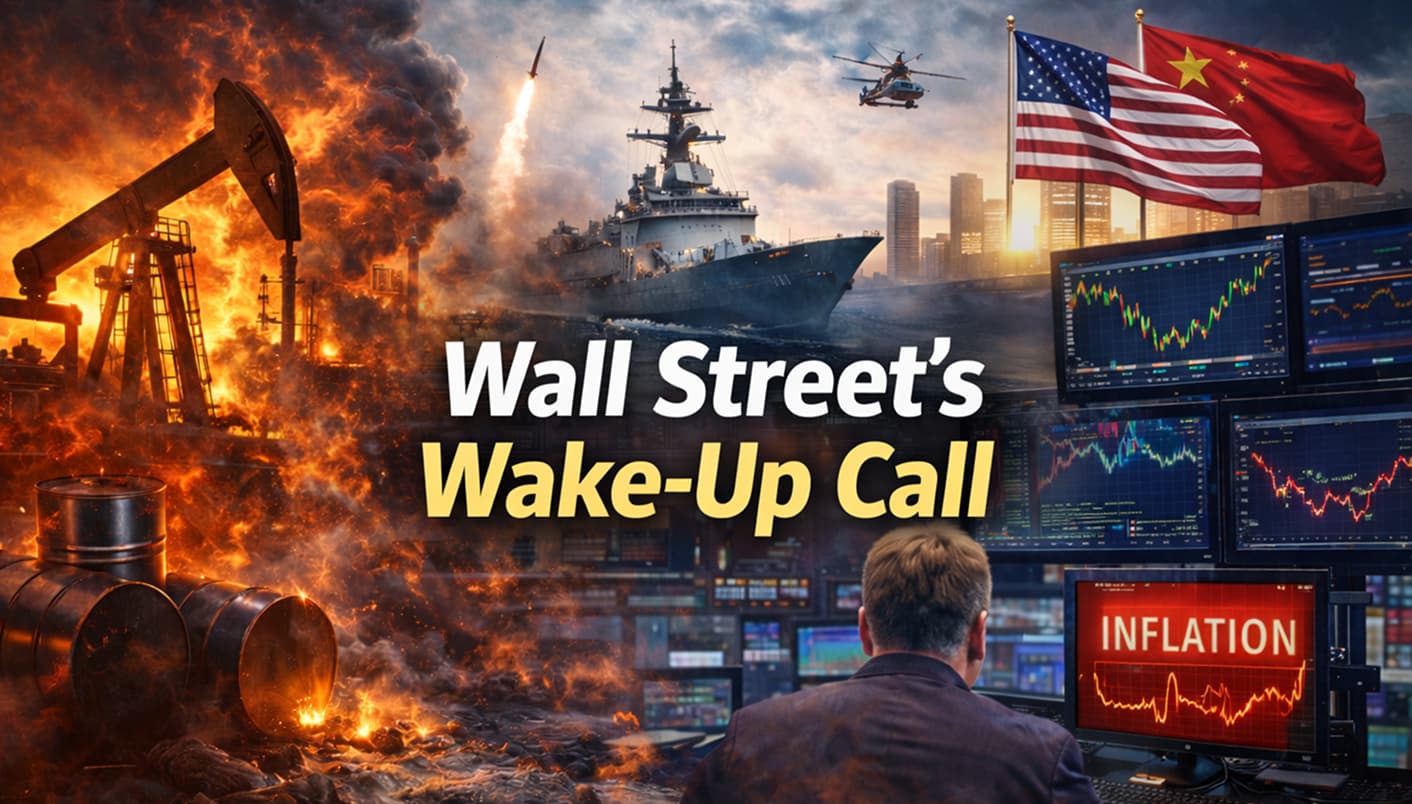
Markets are closed today for Good Friday, which is probably just as well. By Thursday’s close, Wall Street had spent the week bouncing from relief to realism, and it finished there with a look that felt less like panic than repricing: the Dow slipped 0.13%, the S&P 500 added 0.11%, the Nasdaq gained 0.18%, and all three still posted their strongest week in four months. Official U.S. equity markets are shut on Friday, April 3, for Good Friday.
That mix mattered. Thursday was not a clean fear trade. Oil exploded higher, the dollar firmed, and the rate backdrop stayed awkward, yet utilities and real estate led while consumer discretionary lagged. In other words, investors were not simply running away from risk. They were rotating toward cash flow, hard assets, and businesses that do not need a perfectly behaved macro backdrop to make sense.
The twist is that Friday’s jobs report arrived while stocks were closed. March payrolls rose by 178,000 and the unemployment rate fell to 4.3%, a sturdier result than economists expected, which means Monday will open with traders having to price two annoyances at once: energy inflation is back, and the labor market is not weak enough to bully the Fed into rescue mode.
Stock of Interest Today: Vistra Corp. (VST)
If this market is shifting from story stocks to systems stocks, Vistra looks unusually well placed. Reuters has reported that U.S. power demand is expected to hit record highs in 2026 and 2027 as AI data centers, crypto infrastructure, and broader electrification keep pushing load higher, and Vistra already showed in February that this demand surge is translating into earnings.
That setup looks even more interesting after a week like this one. When oil is volatile, rate relief is less certain, and investors start rewarding domestic infrastructure over elegant narratives, a power generator with real assets and direct exposure to rising electricity demand starts to look less like a sleepy utility trade and more like an economic scarcity trade. Thursday’s sector action backed that up.
The stock still carries real upside on paper. Vistra closed around $151 on Thursday, while MarketBeat’s compilation of analyst targets stood near $236.87, implying roughly 56.6% upside. That is not a promise, and power names can stay volatile, but it is the kind of asymmetry worth noticing when the market starts paying up for domestic energy security and visible demand rather than just multiple expansion.
Current price: $151Analyst expectation: $237
Five Market Themes to Watch
The market did not end this week with clarity. It ended with a hierarchy. Oil matters most. Rates matter second. And every equity story now has to explain itself in that language.
1) Oil reclaimed the steering wheel
Thursday’s most important move was not in the S&P. It was in crude. WTI settled at $111.54 and Brent at $109.03 after Trump signaled more attacks on Iran, while Reuters also reported that prompt U.S. crude traded at a record premium to the next month’s contract. That is not just a higher-price story. It is the market screaming that the near-term supply picture still looks tight and messy.
Once oil trades like that, it stops being an energy-sector curiosity and becomes an economy-wide tax. Transport costs rise, input costs rise, margins get uglier, and every inflation forecast starts looking like it was written in pencil.
2) The peace trade turned out to be a rental
The rally earlier in the week was built on the hope that the Iran war might be drifting toward an off-ramp. Thursday did not fully kill that idea, but it did expose how flimsy the market’s confidence was. Reuters’ Wednesday report captured the relief bid; Thursday’s wrap showed how quickly that optimism gave way to a more cautious read once the timetable for de-escalation got fuzzier.
Markets can live with bad news. What they hate is shapeless news. Traders do not need perfection, but they do need edges. Right now they have a conflict, a blocked chokepoint, and a series of headlines that keep changing the odds without quite resolving the plot.
3) Warflation is already leaking into the real economy
This is no longer just a screens-and-headlines problem. Reuters reported that average U.S. gasoline prices moved above $4 a gallon, with analysts warning they could climb further if the Strait of Hormuz disruption persists. Mortgage rates also jumped to 6.46%, their highest level since early September, as yields rose on inflation fears.
That is the part investors cannot wave away. When energy inflation starts showing up at the pump and in housing finance at the same time, it narrows the room for consumers, pressures rate-sensitive sectors, and makes the Fed’s job significantly less elegant.
4) Defensive leadership is telling you what the market trusts
Thursday’s sector winners were not exactly a vote for animal spirits. Utilities rose 0.6% and real estate gained 1.5%, while consumer discretionary stocks fell 1.5%, dragged down in part by Tesla’s post-delivery stumble. That is not the tape of a market leaning into boundless growth. It is the tape of a market looking for ballast.
There is a deeper point here. In a world of higher fuel costs and uncertain rate relief, investors tend to pay up for stable demand, visible cash flows, and hard assets. The week’s winners were not the most exciting companies. They were the ones that looked least likely to be mugged by the macro.
5) Liquidity risk is creeping back into the conversation
One of Thursday’s less flashy but more important stories was Blue Owl limiting withdrawals from two private credit funds after a surge in redemption requests. That does not mean private credit is suddenly 2008 in loafers. It does mean the market is rediscovering an old truth: when investors get nervous, the promise of smooth marks and tidy liquidity windows can start to look a bit theatrical.
For public-market investors, the takeaway is simple. Liquidity has value again. Transparent balance sheets have value again. And in a market where headlines can reprice commodities, rates, and growth expectations in a single session, that value is probably going to keep compounding.
Bottom Line
Wall Street did not end this week in retreat. It ended in re-sorting. Thursday’s close suggested investors are still willing to own risk, but only on stricter terms. They want earnings they can see, assets they can point to, and exposure to themes that benefit from scarcity rather than suffer from it. That is why oil mattered, why utilities held up, why private credit jitters felt louder than they might have a month ago, and why names tied to domestic power and infrastructure suddenly look more compelling than the usual momentum favorites.
Next week, the market has to reopen and digest a stronger-than-expected jobs report, looming CPI data, Fed minutes, and the opening beats of earnings season, including results from Delta Air Lines and Constellation Brands. The bullish case is that the economy remains firm enough to absorb the shock. The bearish case is that investors are about to discover that firm growth, sticky energy costs, and delayed rate relief are not a charming trio. Monday will not answer everything, but it should tell investors whether this week was just turbulence or the start of a more demanding regime.
Sources:
- https://www.nyse.com/markets/hours-calendars
- https://www.nasdaq.com/market-activity/stock-market-holiday-schedule
- https://www.reuters.com/business/wall-st-futures-slide-trump-signals-tougher-iran-strikes-oil-jumps-6-2026-04-02/
- https://www.reuters.com/world/china/global-markets-wrapup-1-2026-04-02/
- https://www.reuters.com/world/us/us-employment-growth-rebounded-march-unemployment-rate-falls-43-2026-04-03/
- https://www.reuters.com/world/us/wall-st-week-ahead-inflation-focus-markets-jostled-by-middle-east-war-signals-2026-04-03/
- https://www.reuters.com/business/energy/oil-prices-drop-hopes-us-pullback-iran-war-2026-04-02/
- https://www.reuters.com/business/energy/prompt-oil-prices-hit-record-premium-next-month-delivery-after-trump-vows-keep-2026-04-02/
- https://www.reuters.com/business/energy/trump-speech-unleashes-more-pain-us-consumers-with-5-gasoline-record-diesel-2026-04-02/
- https://www.reuters.com/markets/us/us-fixed-30-year-mortgage-rate-rises-646-amid-iran-war-2026-04-02/
- https://www.reuters.com/sustainability/boards-policy-regulation/feds-logan-says-us-oil-producers-unlikely-provide-near-term-relief-for-consumers-2026-04-02/
- https://www.reuters.com/business/finance/blue-owl-limits-withdrawals-two-funds-investors-flee-2026-04-02/
- https://www.reuters.com/business/us-asset-manager-shares-drop-after-blue-owl-limits-withdrawals-two-funds-2026-04-02/
- https://www.reuters.com/business/energy/us-power-use-beat-record-highs-2026-2027-ai-use-surges-eia-says-2026-03-10/
- https://www.reuters.com/legal/litigation/vistra-beats-fourth-quarter-core-profit-estimates-ai-driven-power-demand-2026-02-26/
- https://www.marketbeat.com/stocks/NYSE/VST/forecast/
- https://www.reuters.com/business/us-stock-futures-climb-iran-war-de-escalation-optimism-lifts-sentiment-2026-04-01/
- https://www.reuters.com/world/asia-pacific/trumps-fresh-iran-threats-give-investors-risk-off-reality-check-2026-04-02/
Market Munchies and Mode Mobile communications are for informational purposes only, and are not a recommendation, solicitation, or research report relating to any investment strategy, security, or digital asset. All investments involve risk including the loss of principal and past performance does not guarantee future results.
Any information contained in this commentary does not purport to be a complete description of the securities, markets, or developments referred to in this material. The information has been obtained from sources considered to be reliable, but we do not guarantee that the foregoing material is accurate or complete. There is no guarantee that any statements or opinions provided herein will prove to be correct.