Why Learning a Language Could Make You a Smarter Investor
In global markets, the first draft of the trade often is not written in English. One of the nastier little truths in modern markets is that local investors usually get the first draft of the story, and everyone else gets the recap. A study comparing Chinese- and…
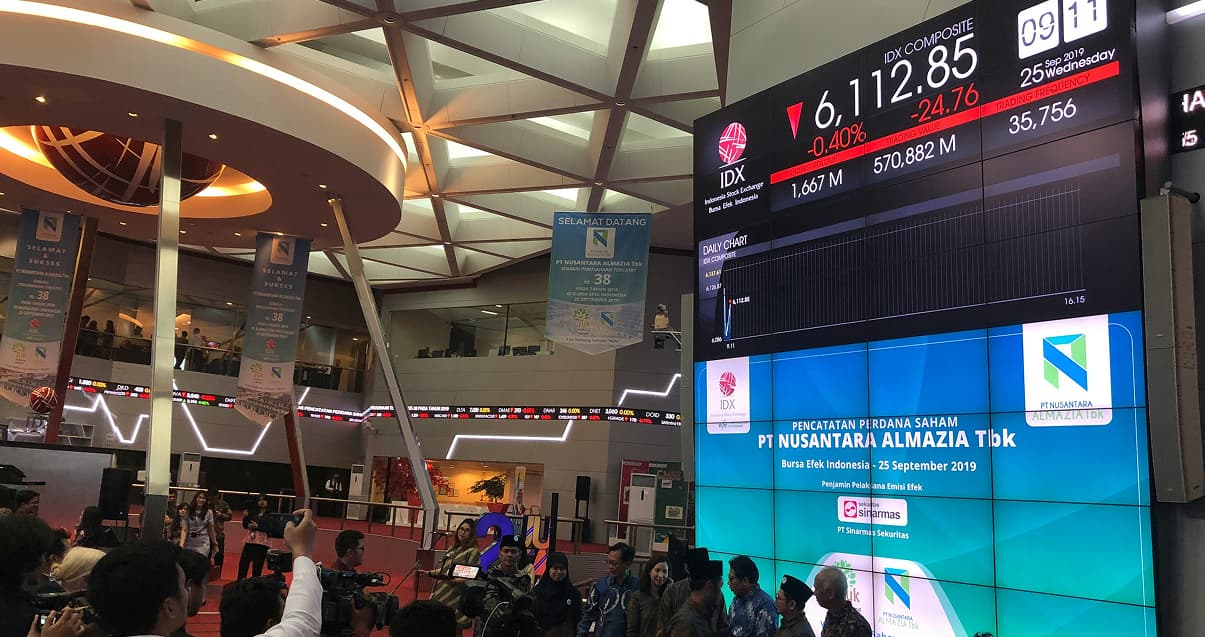
In global markets, the first draft of the trade often is not written in English.
One of the nastier little truths in modern markets is that local investors usually get the first draft of the story, and everyone else gets the recap. A study comparing Chinese- and English-language investor attention found that Chinese-language attention tended to lead English-language attention, reacted faster to news shocks, and showed stronger return predictability. That is not just a media quirk. It is an information gap that can show up in price.
And sometimes the bill arrives quickly. On February 4, 2026, Chinese solar stocks surged after local reports said delegations linked to Elon Musk had visited companies in the sector. JinkoSolar hit its daily 20% limit. Later, JinkoSolar and other firms clarified there was no formal cooperation agreement in place. That is the real lesson. Language is not just about spotting upside sooner. It is also about getting enough context soon enough to know whether the first move is real, rumor-driven, or already starting to wobble.
That is why learning another language, or at least respecting the advantage of investors who can process one, matters more than it first appears. The hidden cost of only investing in English is not just that you miss a few foreign names. It is that you can wind up trading the translated version of events after the local market has already priced the surprise, tested the rumor, and started moving on. By the time it hits your feed in clean English prose, the easy money may already be gone.
The Information Gap Is a P&L Problem
If this still sounds too theoretical, the 2026 tape has already supplied a few reminders. Tokyo Electric Power, better known as TEPCO, jumped 12.85% on March 18 after the Asahi newspaper reported that KKR, Bain Capital, and other groups were eyeing its capital-alliance plan as part of a restructuring process. Earlier in the year, Japan’s Nikkei surged to a record and was up as much as 3.6% intraday as traders reacted to reports that the government might call a snap election. These were not obscure blog rumors floating around some forgotten message board. They were local-language catalysts that moved markets before most English-speaking retail investors had fully processed them.
This is why the “small delay” framing undersells the problem. The cost is not a few seconds. It is sequence. Local-language reporting can break the story, shape the first interpretation, move the local names, and trigger sector or index sympathy before the English version reaches the average investor. Reuters and LSEG explicitly offer local-language financial news alongside English because professional investors understand that the order in which information arrives can matter almost as much as the information itself.
For the English-only investor, that often means entering the story at the least attractive point. Too late to own the surprise, too early to know whether the local market has overreacted, and just in time to buy somebody else’s first move. That is a bad place to do business.
Home Bias, Now With Better Branding
Classic home bias used to be obvious. It was the investor who owned only domestic stocks and called it prudence. Modern home bias is more sophisticated-looking and therefore more dangerous. It is the investor who owns a few multinational U.S. names, maybe an international ETF, maybe one famous foreign semiconductor stock, and then consumes almost all of their market information through an English-language, U.S.-centered lens. That is not a global process. That is domestic investing with better public relations.
And the global opportunity set is too large for that kind of selective blindness. As of January 31, 2026, the United States accounted for 61.79% of the MSCI ACWI IMI. That means roughly 38% of the investable global equity market sat outside the U.S. Japan was 5.69%, the U.K. 3.52%, Canada 3.16%, China 2.88%, Taiwan 2.49%, France 2.24%, and Germany 2.03%. If your information diet leaves that slice of the market functionally under-read, you are not neutral. You are running a large country bet and calling it normal.
The Multinational Illusion
This is where the most common excuse usually enters the chat: “I already own global companies.” Apple sells everywhere. Microsoft sells everywhere. Coca-Cola sells everywhere. Problem solved, apparently.
Not quite. Federal Reserve research found that U.S. multinationals do provide some “home-grown” foreign exposure, but that this only reduces home bias rather than eliminating it. Foreign revenue is not the same thing as foreign securities, foreign investor bases, or foreign market behavior. You may be renting some international demand through the income statement while still living entirely inside a U.S. valuation, policy, and sentiment regime.
Dimensional makes the point more memorably, arguing that U.S. multinationals are “no more successful at global diversification than a faux mane is at turning a golden retriever into a lion.” Funny line, serious point. When investors most want diversification to matter, what counts is not where revenue comes from, but how the stock actually trades, who owns it, and which market’s psychology sets the marginal price.
That problem gets worse when the U.S. index itself is unusually concentrated. S&P Global noted that by mid-2025, the 10 largest companies in the S&P 500 represented almost 40% of the index, a level of concentration not seen since the mid-1960s. So when investors say they will just own U.S. multinationals for global exposure, what they are often really doing is doubling down on the same handful of giant U.S. growth names everyone else already owns. That is not broad international exposure. It is concentration wearing a fake mustache.
What This Means for Passive Investors
If you are a passive investor, the main takeaway is not that you need to start reading Japanese filings before coffee. Your problem is not that you are late on single-stock headlines in Shanghai. Your problem is that English-language comfort can make a highly concentrated U.S. portfolio feel neutral when it is anything but.
The smarter move is to start with benchmark humility. A global market-cap framework is not perfect, but it is at least honest about what exists. A 100% U.S. allocation is not the natural resting state of rational investing. It is an active country bet layered on top of a language comfort bet. AQR has argued that most U.S. equity outperformance since 1990 can be explained by rising relative valuations, and warned that extrapolating that experience indefinitely is dangerous.
For passive investors, that is the “learn a language” lesson in portfolio form. You do not need fluency. You need enough humility to recognize that the market is larger than your media diet. The point is not to out-report local investors. It is to stop building a portfolio that assumes what feels familiar is all that matters.
What This Means for Active Investors
If you are an active investor, the implication is sharper. You are trying to understand something before it becomes consensus. In that game, language can be an actual edge rather than an abstract virtue. The Chinese-language attention study found exactly that kind of asymmetry: faster reaction, stronger predictive power, and evidence that translation lag can slow how quickly information gets incorporated into prices.
Just as importantly, language helps with filtering, not only speed. The JinkoSolar episode is a good example. The same news cycle that helped drive the stock to its daily limit also included denials that any formal cooperation agreement existed. That distinction matters. It is one thing to be early to a real repricing. It is another to be late to a rumor and early to the disappointment. Investors who can process local context sooner are in a better position to tell the difference.
That does not mean every active investor needs to become multilingual overnight. It means the ones who take language seriously are less likely to be trapped trading secondhand narratives. In markets, context ages badly. The farther you are from the original language and the original sequence of events, the easier it is to mistake the cleaned-up summary for the whole story.
Bottom Line
The easiest mistake in global investing is assuming access has already solved the problem. Your brokerage gives you international ETFs. Your app shows foreign stocks. Your news feed serves up translated headlines. It all feels seamless. But the friction did not disappear. It just moved upstream, into language, timing, and who gets to interpret the first version of the story.
That is why learning a language, or at least respecting what language barriers do to price discovery, has a real investing angle. For passive investors, it is a reminder that comfort can disguise concentration. For active investors, it is a reminder that the most important part of a trade is often not the headline itself, but how early you can understand whether the local market is treating it as fact, fiction, or something in between.
English is still the dominant language of global finance, and that is not changing tomorrow. But it is not the whole market. The investor who understands that does not need to become a linguist. They just need to stop assuming the translated version is the original version, and stop assuming comfort is free. In global markets, comfort usually invoices you later.
Sources
- https://papers.ssrn.com/sol3/Delivery.cfm/SSRN_ID3834964_code1473876.pdf?abstractid=3416002&mirid=1
- https://www.reuters.com/sustainability/climate-energy/chinese-solar-shares-surge-after-reports-tesla-visits-2026-02-04/
- https://www.reuters.com/world/asia-pacific/kkr-bain-capital-others-eye-tokyo-electrics-capital-alliance-plan-asahi-reports-2026-03-18/
- https://www.reuters.com/world/asia-pacific/japans-nikkei-hits-all-time-high-markets-track-wall-street-rally-2026-01-13/
- https://www.ssga.com/library-content/products/factsheets/etfs/emea/factsheet-emea-en_gb-spyi-gy.pdf
- https://papers.ssrn.com/sol3/papers.cfm?abstract_id=222169
- https://www.federalreserve.gov/pubs/ifdp/2004/793/ifdp793.htm
- https://www.federalreserve.gov/econres/ifdp/international-diversification-at-home-and-abroad.htm
- https://www.dimensional.com/ie-en/insights/global-diversification-still-requires-international-securities
- https://www.spglobal.com/en/research-insights/special-reports/look-forward/partner-perspectives/unlocking-potential-ahead-with-vanguard/in-the-shadows-of-giants
- https://corporate.vanguard.com/content/dam/corp/research/pdf/partner_perspectives_unlocking_potential_spglobal_vanguard.pdf
- https://www.aqr.com/-/media/AQR/Documents/Journal-Articles/AQR-JPM-Jun23-Internal-Diversification.pdf?sc_lang=en
- https://www.aqr.com/Insights/Research/Journal-Article/International-Diversification-Still-Not-Crazy-after-All-These-Years
- https://ssrn.com/abstract=5825343
Market Munchies and Mode Mobile communications are for informational purposes only, and are not a recommendation, solicitation, or research report relating to any investment strategy, security, or digital asset. All investments involve risk including the loss of principal and past performance does not guarantee future results.
Any information contained in this commentary does not purport to be a complete description of the securities, markets, or developments referred to in this material. The information has been obtained from sources considered to be reliable, but we do not guarantee that the foregoing material is accurate or complete. There is no guarantee that any statements or opinions provided herein will prove to be correct.